
How often to feed your dog for optimal health
TL;DR:
- Feeding frequency significantly impacts a dog’s digestion, weight, energy, and wellbeing throughout life stages.
- Consistent, appropriately timed meals tailored to age and health needs promote better digestion, weight management, and behavioral stability.
Choosing how often to feed your dog is one of those questions that seems straightforward until you’re standing in the pet food aisle, second-guessing everything. One meal a day? Two? Should you leave food out all day and let them graze? The uncertainty is completely understandable, and you’re far from alone in feeling it. What we do know is that feeding frequency has a genuine impact on your dog’s digestion, weight, energy levels, and even their emotional wellbeing. Whether you feed a natural diet, a grain-free formula, or a standard complete food, getting the routine right is just as important as getting the ingredients right.
Table of Contents
- Understanding your dog’s feeding frequency needs
- Why the feeding routine matters
- How to set meal portions and timings for your dog
- Grain-free and natural diets: Does it change the feeding schedule?
- Special situations: Adjusting feeding for puppies, seniors, and health conditions
- What most owners miss when planning dog feeding routines
- Discover tailored nutrition for your dog’s needs
- Frequently asked questions
Key Takeaways
| Point | Details |
|---|---|
| Twice daily meals | Most adult dogs do best with two meals per day for health and routine. |
| Tailored for life stage | Feeding frequency should change as puppies grow and for dogs with special needs. |
| Routine beats free-feeding | Structured meal times support better digestion and help prevent obesity. |
| Food quality matters most | The right balance and portion size are more important than exact meal timing. |
| Natural or grain-free guidance | Feeding frequency is set by your dog’s stage and tolerance, not only by diet type. |
Understanding your dog’s feeding frequency needs
Every dog is different, but there are clear, evidence-based starting points based on life stage. Age is the single biggest factor in determining how many meals your dog needs each day, and understanding this makes the whole process much less overwhelming.
| Age group | Recommended meals per day | Notes |
|---|---|---|
| Puppies (under 3 months) | 4 meals | Small, frequent meals support growth |
| Puppies (3 to 6 months) | 3 meals | Gradual reduction as stomach capacity grows |
| Puppies (6 to 12 months) | 2 to 3 meals | Transition period toward adult schedule |
| Adult dogs (1 to 7 years) | 2 meals | Morning and evening works well for most |
| Senior dogs (7 years and over) | 2 meals | Smaller portions may suit slower metabolisms |
Twice-daily feeding is the most widely recommended starting point for adult dogs, supported by veterinary guidance. It suits the digestive rhythm of most breeds and helps you keep a close eye on appetite and intake. For puppies, the picture is a little more nuanced. Puppies transition gradually from four small meals a day down to roughly twice daily by around six to twelve months, as their stomachs grow and their nutritional needs shift.
Health conditions can change everything. Dogs with diabetes, gastrointestinal sensitivities, or kidney disease may need a more tailored approach. Always factor in your vet’s advice alongside general guidance, and pay close attention to portion control for dogs to avoid over or underfeeding at each sitting.
“Consistency is key. Feeding at the same times each day helps regulate your dog’s digestive system and can reduce anxiety around mealtimes.” — General veterinary consensus
Why the feeding routine matters
Knowing how often to feed is only part of the picture. Understanding why a structured routine matters will help you stick to it, even on busy days. A regular feeding schedule does far more than keep your dog from pestering you at dinnertime.
Improved digestion is one of the most immediate benefits. When your dog eats at predictable times, their digestive system prepares accordingly, producing gastric acid and enzymes at the right moments. This leads to better nutrient absorption and fewer digestive upsets like bloating or loose stools.
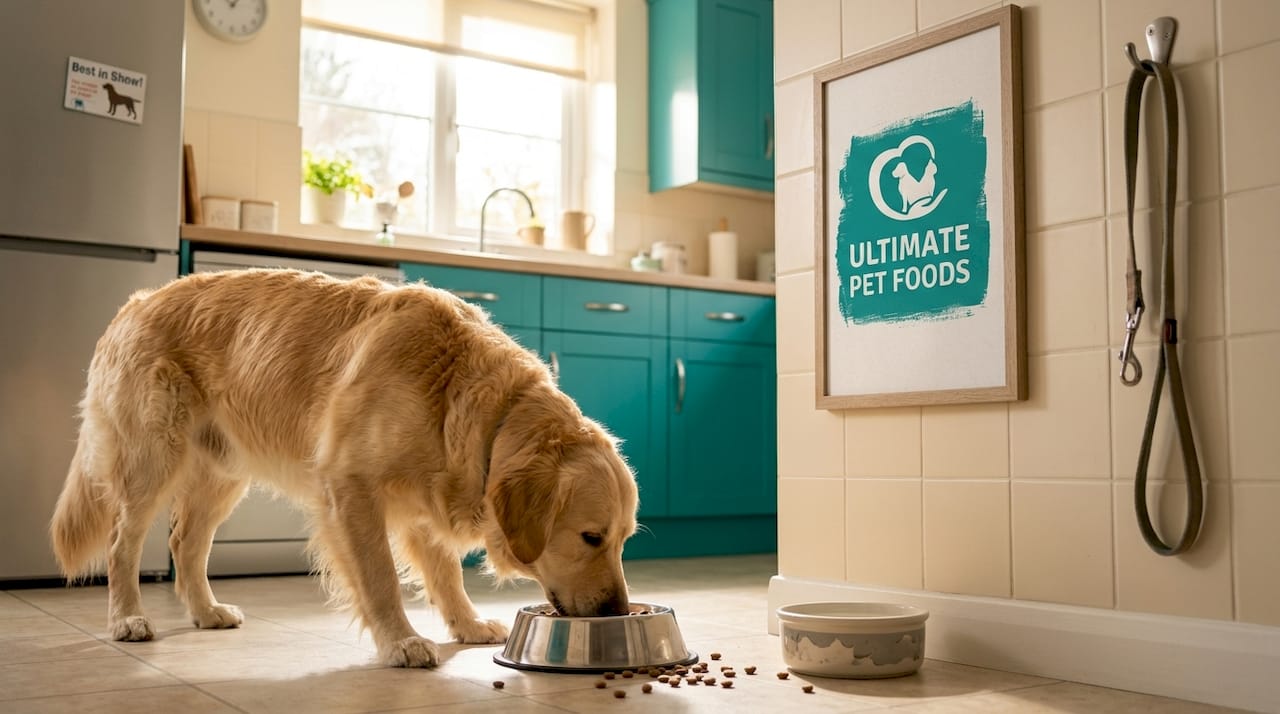
Weight management becomes significantly easier with set mealtimes. You know exactly how much your dog is eating, which means you can spot changes in appetite early. Free-feeding, where food is left out all day, makes it very difficult to monitor intake and can contribute directly to obesity, a growing problem in UK dogs.
Behavioural benefits are often underestimated. Dogs are creatures of habit, and a predictable routine reduces anxiety, supports training, and gives your dog a sense of security. Mealtimes become moments of calm anticipation rather than frantic begging. Feeding once or twice per day is widely recommended, with many dogs doing particularly well on two to three smaller meals daily.
Common mistakes owners make with feeding routines include:
- Leaving food down all day without monitoring intake
- Feeding at inconsistent times, which disrupts digestive rhythm
- Giving large portions once a day to save time, which can cause bloating in larger breeds
- Ignoring changes in appetite because “they always eat eventually”
- Forgetting to account for treats and extras when calculating daily calorie requirements for dogs
Pro Tip: Use mealtimes as a bonding opportunity. Ask your dog to sit or wait before placing the bowl down. It reinforces calm behaviour, strengthens your relationship, and turns feeding into a positive, structured interaction rather than a rushed transaction.
How to set meal portions and timings for your dog
Once you know the frequency that suits your dog’s life stage, the next step is getting the portions and timings right. This is where many owners feel most uncertain, but a clear, step-by-step approach makes it very manageable.
-
Start with the feeding guide on your dog food packaging. This gives you a baseline portion based on your dog’s weight. Treat it as a starting point, not a fixed rule.
-
Factor in your dog’s activity level. A working Border Collie burns far more energy than a retired Greyhound spending most of the day on the sofa. Active and working dogs may need up to 20 to 30% more calories, while less active dogs may need less.
-
Assess body condition regularly. Run your hands along your dog’s ribs. You should be able to feel them easily without pressing hard, but they shouldn’t be visibly prominent. This simple check tells you more than any chart.
-
Split the daily portion across meals. If your dog needs 300g per day and you feed twice daily, each meal is 150g. Consistency in portion size per meal is just as important as consistency in timing.
-
Set meal times and stick to them. Morning and early evening works well for most households. Try to keep within 30 minutes of the same time each day.
-
Adjust gradually, not suddenly. If you’re increasing or decreasing portions, do so over one to two weeks to avoid digestive upset.
Total daily calories matter far more than the precise number of meals. Veterinary guidance consistently emphasises tailoring portions to your dog’s age, body condition, and health status rather than following a rigid schedule. For a more detailed breakdown of energy needs, our guide on calculating dog calorie needs walks you through the process clearly.
Pro Tip: Weigh your dog’s food rather than scooping by eye. Even small daily overestimates add up significantly over weeks and months, and it’s one of the most common causes of gradual weight gain in dogs.
Grain-free and natural diets: Does it change the feeding schedule?
If you’ve made the switch to a grain-free or natural diet, or you’re considering it, you may be wondering whether the feeding schedule needs to change too. The reassuring answer is: not significantly.
Meal frequency is guided by your dog’s life stage and digestive tolerance, not by whether the food is grain-free or standard. What matters most is choosing a complete and balanced diet, then splitting the total daily portion into the right number of meals for your dog’s age and needs.
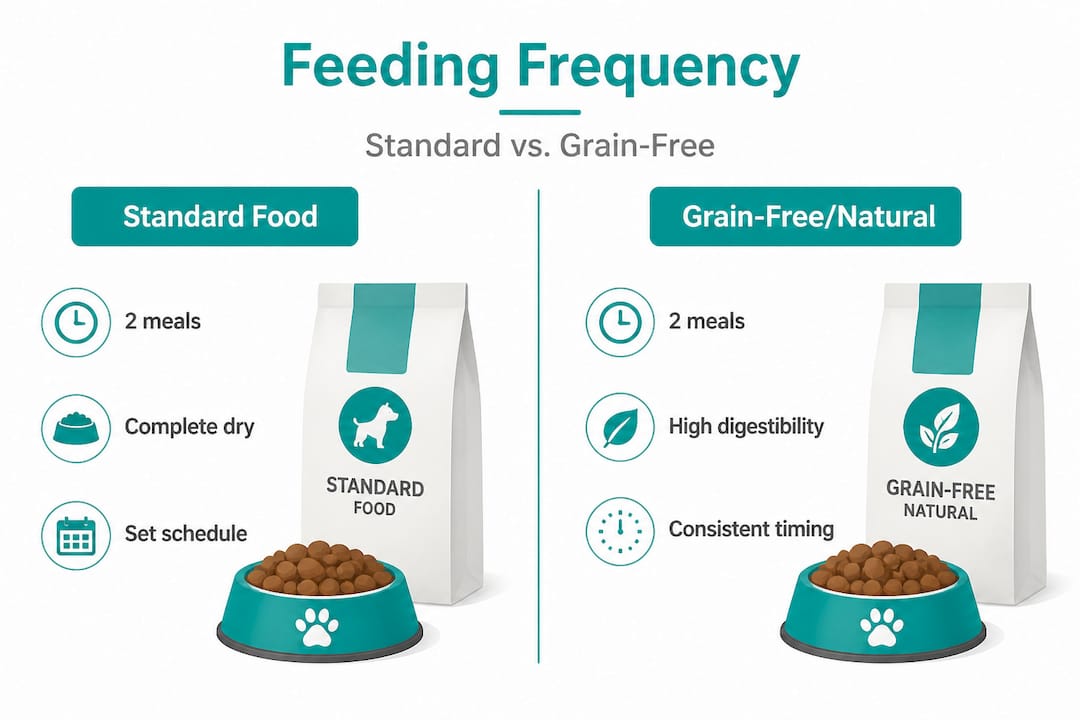
| Diet type | Feeding frequency guidance | Key consideration |
|---|---|---|
| Standard complete dry food | 2 meals per day for adults | Follow pack guidelines for portion size |
| Grain-free dry food | 2 meals per day for adults | Calorie density may be higher; adjust portions |
| Natural wet or raw food | 2 meals per day for adults | Moisture content affects volume; weigh portions |
| Mixed feeding (wet and dry) | 2 meals per day for adults | Balance total calories across both food types |
What can change when switching to grain-free or natural food is the calorie density of the food itself. Many high-quality grain-free recipes use more protein and healthy fats, which means the portion size may be smaller than you’re used to. Always recalculate portions when switching foods.
Key points to keep in mind with grain-free and natural diets:
- Digestibility is often higher in natural, grain-free recipes, meaning your dog may absorb more nutrients per gram
- Stool volume and frequency may reduce slightly, which is normal and a sign of good digestibility
- Transition gradually over seven to ten days to avoid digestive upset
- Our guide on grain-free dog feeding covers this in detail
- If you’re new to this approach, our resource on transitioning to grain free provides a practical step-by-step plan
The schedule stays the same. The food does the rest.
Special situations: Adjusting feeding for puppies, seniors, and health conditions
Standard guidance covers most dogs well, but certain life stages and health conditions call for a more tailored approach. Recognising when your dog falls into one of these categories is important for their long-term health.
Puppies have small stomachs and high energy demands. They genuinely need more frequent meals to maintain stable blood sugar and support rapid development. Dropping to fewer meals too early can cause hypoglycaemia (low blood sugar) in smaller breeds, which is a medical concern.
Senior dogs often experience changes in appetite, digestion, and metabolism. Some do well continuing on two meals a day, while others benefit from slightly smaller, more frequent meals if they show signs of digestive discomfort or reduced appetite.
Dogs with health conditions such as diabetes, pancreatitis, inflammatory bowel disease, or kidney disease may need a feeding schedule specifically designed by a vet. For these dogs, more frequent smaller meals are often recommended to support medical management and reduce strain on organs.
Warning signs that your dog’s current feeding schedule may need adjusting:
- Persistent begging or food-seeking behaviour between meals
- Unexplained weight loss or weight gain over a few weeks
- Vomiting bile in the morning, which can indicate a dog is going too long without food
- Changes in stool consistency or frequency
- Lethargy or low energy that doesn’t improve with rest
- Gulping food very quickly, which can increase bloat risk in larger breeds
“Feeding frequency is not a one-size-fits-all decision. For puppies, senior dogs, and those with specific health needs, individual assessment is always the right approach.” — Veterinary nutritional guidance
Our resource on natural food for unique needs can help you navigate food choices when your dog has specific dietary requirements.
What most owners miss when planning dog feeding routines
Here’s something we’ve observed time and again: owners spend a lot of energy worrying about when to feed their dog and very little time checking whether the routine is actually working. The best feeding schedule is the one your individual dog genuinely thrives on, and that requires regular reassessment, not just setting a timer and forgetting about it.
We’d encourage you to step back every two to three months and ask a few honest questions. Is your dog maintaining a healthy weight? Are their energy levels consistent throughout the day? Is their coat in good condition? Are stools firm and regular? These are the real indicators of whether your feeding routine is right, not whether you’re hitting a precise time on the clock.
The obsession with timing can actually distract from what matters most: total daily nutrition and food quality. A dog fed premium, balanced diet ingredients at slightly irregular times will almost always be healthier than a dog fed poor-quality food on a perfect schedule.
We also see owners stick rigidly to the same portion size for years, even as their dog ages, becomes less active, or changes weight. Autopilot feeding is one of the most common contributors to gradual weight gain in dogs. Build in a routine review. Weigh your dog every month or two. Adjust portions as needed. The schedule is a framework, not a fixed rule.
Quality food supports the rhythm you create. When your dog is eating natural, digestible ingredients, their body responds more predictably, making it easier to spot when something is off.
Discover tailored nutrition for your dog’s needs
Getting the feeding schedule right is a brilliant first step, and pairing it with the right food makes all the difference. 🐾
At Ultimate Pet Foods, we believe every dog deserves food that genuinely supports their health from the inside out. If you’re ready to explore why a grain-free diet could be the best choice for your dog, or if you’d like to understand exactly what goes into each recipe, our detailed guide to grain-free dog food ingredients is a great place to start. We’re here to help you build a feeding plan that works for your dog’s unique needs, life stage, and lifestyle. Because every wag starts with the right bowl. 🐶
Frequently asked questions
Is it bad to feed my dog once a day?
Feeding once daily can work for some adult dogs, but most dogs benefit from two meals a day for steadier digestion and to prevent hunger-related anxiety or gulping behaviour.
How does puppy feeding frequency change as they grow?
Puppies begin on four meals a day and gradually reduce to around twice daily by six to twelve months as their stomach capacity and digestive maturity increase.
Does a grain-free diet require a different feeding schedule?
No, meal frequency is guided by life stage and digestive needs rather than diet type. Focus on complete, balanced portions split appropriately for your dog’s age and activity level.
Are there warning signs my dog’s meal schedule needs changing?
Yes. Persistent begging, unexplained weight changes, or altered stool consistency are key signals. Consult your vet promptly if you notice these, particularly in puppies or dogs with known health conditions.