
Calculating Dog Calorie Needs Naturally for Optimal Health
Nearly half of all British households include a dog, yet many pet owners remain confused about daily calorie needs and nutrition. Each dog’s requirements differ and guessing the right amount can have serious effects on their weight, energy, and long term health. By understanding your dog’s individual needs, you can create a tailored approach that supports their wellbeing and avoids the common risks linked to underfeeding or overfeeding.
Table of Contents
- Step 1: Gather Essential Details About Your Dog
- Step 2: Determine Your Dog’s Ideal Weight And Activity Level
- Step 3: Calculate The Base Daily Calorie Requirement
- Step 4: Adjust Calories For Health, Age, And Sensitivities
- Step 5: Verify Results And Monitor Your Dog’s Condition
Quick Summary
| Key Point | Explanation |
|---|---|
| 1. Gather Your Dog’s Details | Measure weight, age, and activity level to tailor nutritional needs effectively. |
| 2. Assess Ideal Weight and Activity | Conduct a body condition assessment to determine appropriate calorie intake for your dog’s lifestyle. |
| 3. Calculate Daily Caloric Needs | Use the resting energy requirement formula to establish base caloric needs based on your dog’s profile. |
| 4. Adjust for Life Changes | Modify calorie intake as your dog ages or faces health conditions, ensuring nutrition supports their evolving needs. |
| 5. Monitor Health Regularly | Regularly evaluate your dog’s body condition and consult a vet for adjustments to maintain optimal health. |
Step 1: Gather essential details about your dog
Calculating your dog’s calorie needs starts with understanding their unique profile. Dogs are not one-size-fits-all creatures - their nutritional requirements vary dramatically based on specific individual characteristics. By collecting key details about your canine companion, you can develop a precise nutritional strategy that supports their optimal health and vitality.
Begin by measuring your dog’s current body weight, age, and assessing their activity level. These fundamental metrics provide crucial insights into their metabolic needs. Understanding your dog’s nutritional requirements involves considering factors like breed size, metabolism, and daily exercise patterns. Smaller breeds typically burn energy faster and require more calories per kilogram compared to larger dogs, while working or highly active dogs need significantly more fuel than sedentary pets.
A comprehensive assessment should also include evaluating your dog’s body condition score. Look for clear indicators: can you easily feel their ribs without excess fat covering? Is there a visible waistline when viewed from above? These physical cues help determine whether your current feeding approach supports healthy weight management. Veterinary professionals recommend regular monitoring and potential dietary adjustments to prevent obesity and maintain optimal nutritional balance.
Step 2: Determine your dog’s ideal weight and activity level
Determining your dog’s optimal weight and activity level is fundamental to calculating accurate nutritional needs. This process involves more than simply stepping on a scale - it requires a comprehensive evaluation of your dog’s overall physical condition and daily energy expenditure.
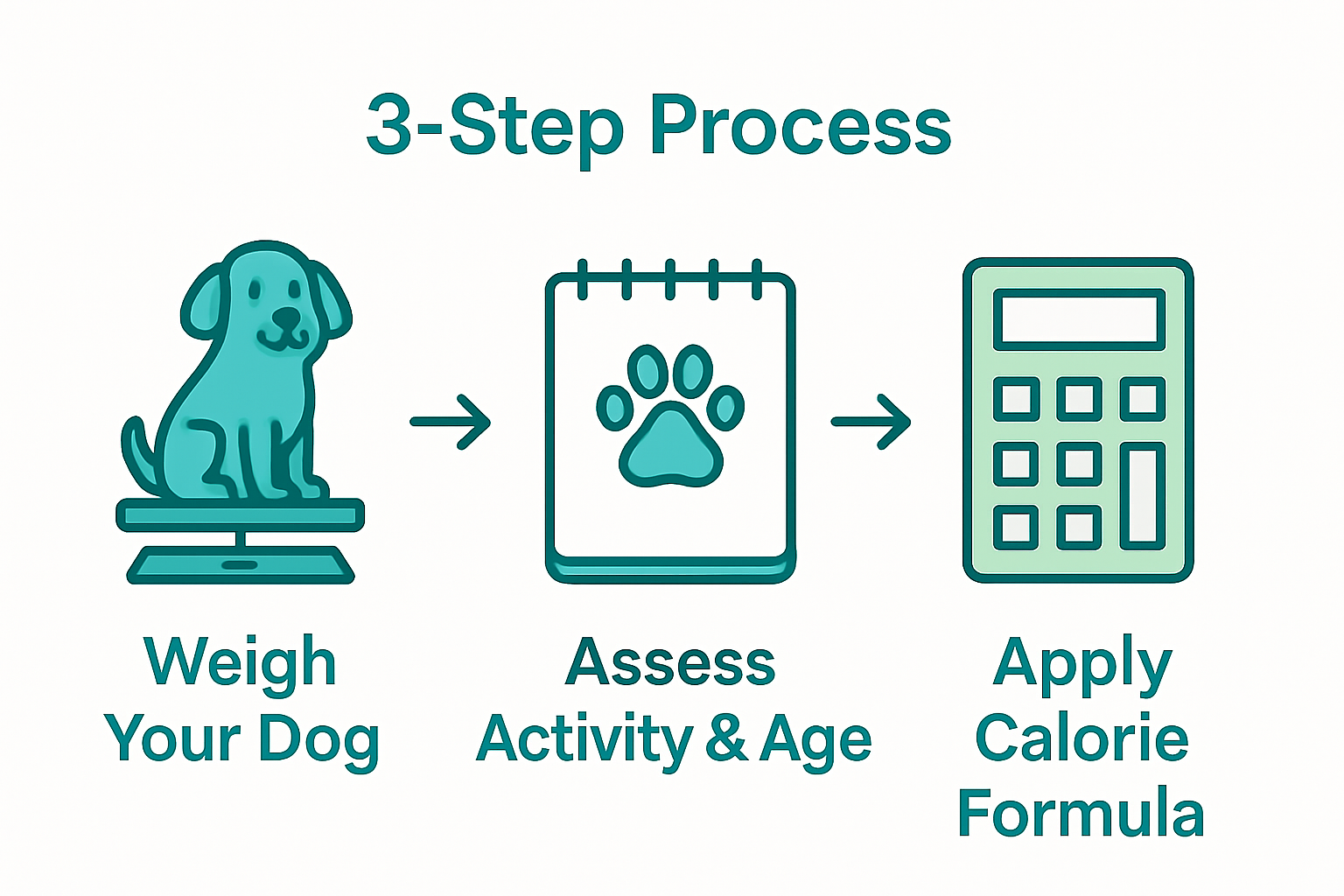
Begin by conducting a thorough body condition assessment. Managing your dog’s weight involves carefully examining their physical structure and evaluating muscle tone and fat distribution. Veterinary professionals recommend using a standardised body condition scoring system that assesses factors like rib visibility, waist definition, and overall muscle mass. A healthy dog should have a visible waist when viewed from above, with ribs that are easily felt but not prominently visible.
To accurately calculate your dog’s daily energy requirements, consider their activity level meticulously. Dogs with different exercise patterns have dramatically different caloric needs. A sedentary dog lounging at home requires significantly fewer calories compared to an active working or sporting breed. Professional guidance suggests that low activity dogs need approximately 95 kilocalories per kilogram of metabolic weight, while highly active dogs might require up to 175 kilocalories per kilogram. Regular monitoring and potential dietary adjustments will help maintain your dog’s optimal weight and overall health.
Step 3: Calculate the base daily calorie requirement
Calculating your dog’s base daily calorie requirement demands precision and understanding of their unique metabolic profile. This crucial step transforms generic nutritional guidelines into a personalised feeding strategy tailored specifically to your canine companion’s individual needs.

The foundation of calorie calculation begins with the resting energy requirement (RER) formula. Nutritional science suggests calculating RER by using the mathematical equation 70 x (body weight in kg)^0.75. This baseline provides a fundamental starting point from which you can adjust based on specific factors such as age, activity level, and physiological status. For instance, typical household dogs might require 1.2 to 1.4 times their RER, while working or highly active breeds could need up to 1.8 to 2.0 times their baseline metabolic rate.
Precision is paramount when translating these calculations into actual feeding portions. Professional nutritionists recommend using specific multipliers that account for your dog’s unique characteristics. A sedentary neutered adult dog will have dramatically different caloric needs compared to an intact working breed or a growing puppy. By carefully applying these nuanced calculations and regularly monitoring your dog’s body condition, you can fine tune their nutritional intake to maintain optimal health and prevent potential issues related to under or overfeeding.
Step 4: Adjust calories for health, age, and sensitivities
Nutritional requirements are not static but dynamic, changing throughout your dog’s life stages and in response to various health conditions. Crafting a personalised nutritional approach demands careful consideration of multiple factors that influence your canine companion’s metabolic needs.
Puppy nutrition requires significantly different strategies compared to adult or senior dogs. Young puppies demand higher protein levels and more frequent feeding to support rapid growth, while older dogs experience a natural metabolic slowdown that necessitates reduced calorie intake. For instance, as dogs age, their activity levels typically decrease, requiring careful calorie reduction to prevent weight gain and maintain muscle mass. This means gradually adjusting portion sizes and potentially switching to senior specific formulations that support joint health and slower metabolism.
Healthcare sensitivities play a critical role in nutritional planning. Dogs with specific medical conditions such as diabetes, kidney disease, or food allergies require tailored nutritional approaches. Some may need lower fat content, while others might require hydrolysed protein sources to minimise potential inflammatory responses. Regular veterinary consultations can help you fine tune these dietary adjustments, ensuring your dog receives optimal nutrition that supports their unique physiological requirements while addressing any underlying health challenges.
Step 5: Verify results and monitor your dog’s condition
Validating the effectiveness of your carefully calculated nutritional plan requires ongoing observation and systematic assessment of your dog’s overall health and physical condition. This critical monitoring phase transforms mathematical calculations into tangible well-being for your canine companion.
Creating healthy feeding habits involves more than simply measuring food portions. Regularly assess your dog’s body condition by performing weekly weigh-ins and conducting visual and tactile evaluations. A healthy dog should have a visible waist when viewed from above, with ribs that can be felt without excessive fat covering. Pay close attention to subtle indicators such as energy levels, coat quality, muscle tone, and digestive consistency.
Professional veterinary consultations provide the most comprehensive method of verification. Schedule quarterly check-ups to professionally assess your dog’s weight, metabolic health, and nutritional status. These assessments allow for precise adjustments to your feeding strategy, ensuring that your calculated calorie requirements continue to meet your dog’s evolving physiological needs. Remember that individual metabolism varies, and what works perfectly today might require refinement in the coming months.
Fuel Your Dog’s Health with Naturally Tailored Nutrition
Understanding your dog’s unique calorie needs is the first step towards supporting their vitality and well-being. Many dog owners struggle with balancing meal portions and choosing the right foods that match their pet’s age, activity level and health sensitivities. This article highlights how calculating calories naturally, using formulas like the resting energy requirement, can help prevent common issues such as overfeeding or nutritional imbalances.
Take confident action now by exploring our premium range of Weight Loss Dog Food UK designed to assist dogs needing controlled calories without compromising natural, wholesome ingredients.

Give your dog the personalised feeding experience they deserve and enjoy peace of mind knowing you are supplying optimum nutrition with every meal. Visit Ultimate Pet Foods to discover fresh, grain-free options specifically crafted for all life stages including Blends for our Senior Dogs. Act today and turn calculated calorie needs into real health benefits with natural ingredients and expert formulations.
Frequently Asked Questions
How can I determine my dog’s daily calorie needs?
Calculating your dog’s daily calorie needs begins by measuring their body weight, age, and activity level. Use the formula for resting energy requirements to get a baseline, and adjust according to their activity level and individual characteristics.
What is the resting energy requirement (RER) formula for dogs?
The resting energy requirement (RER) formula is calculated as 70 x (body weight in kg)^0.75. Start with this calculation to determine your dog’s baseline calorie needs, then multiply by 1.2 to 2.0 based on their activity levels.
How do I assess my dog’s body condition?
You can assess your dog’s body condition by checking if you can easily feel their ribs and whether they have a visible waist when viewed from above. Use these indicators to gauge whether your feeding strategy supports a healthy weight management plan.
Should I adjust my dog’s calorie intake as they age?
Yes, calorie intake should be adjusted as dogs age, particularly as their metabolism slows down. Gradually reduce their portion sizes or switch to a senior dog food formulation to prevent weight gain and support joint health.
What should I do if my dog has health sensitivities?
If your dog has specific health sensitivities, such as diabetes or food allergies, you need to tailor their diet accordingly. Work with your veterinarian to determine the best nutritional strategy, focusing on required protein content and any necessary dietary restrictions.
How often should I monitor my dog’s weight and health?
Regular monitoring of your dog’s weight and health is vital; aim for weekly weigh-ins and visual assessments. Schedule quarterly veterinary check-ups to ensure their nutritional needs continue to be met, allowing for timely adjustments to their feeding plan.