
Guide to supplementing dog meals naturally: safe and balanced
TL;DR:
- Most homemade dog diets lack essential nutrients like calcium, omega-3s, trace minerals, and vitamins without deliberate supplementation. Proper natural supplements should target specific deficiencies, be measured precisely, and adjusted with professional guidance; stacking supplements can cause toxicity. Using a veterinary-formulated recipe as a base and revisiting supplement doses regularly ensures balanced, safe nutrition for dogs.
Natural supplementation of dog meals means adding carefully measured whole-food ingredients and nutrients to ensure a complete, balanced diet that supports your dog’s long-term health. This guide to supplementing dog meals naturally is built on one core principle: natural does not automatically mean safe or sufficient. Whether you are adding fish oil to a homemade bowl or sprinkling eggshell powder over fresh meat, every addition must be measured, purposeful, and matched to your dog’s specific nutritional needs. We have put this guide together to help you do exactly that, with confidence and care.
Why most homemade dog meals need precise natural supplementation
Homemade diets are rarely nutritionally complete without deliberate, measured supplementation. Research from Texas A&M University’s College of Veterinary Medicine found that only 6% of homemade diets are potentially nutritionally complete. That figure is striking. It means the vast majority of home-prepared meals, however lovingly made, leave dogs at risk of deficiencies over time.
The nutrients most commonly missing from homemade meals include:
- Calcium — especially when no bones or bone meal are included
- Omega-3 fatty acids — rarely present in sufficient amounts from meat alone
- Trace minerals — such as zinc, copper, manganese, and iodine
- Fat-soluble vitamins — particularly vitamins D and E
- B vitamins — including thiamine and folate, which degrade with cooking
Calcium is the most critical gap. Without it, dogs fed boneless meat diets develop a dangerously low calcium-to-phosphorus ratio. The recommended Ca:P ratio for adult dogs is approximately 1.1:1 to 2:1. Fall below that range and you risk bone problems, including a condition known as nutritional secondary hyperparathyroidism, sometimes called “rubber jaw,” as well as potential kidney damage.
“Homemade diets require supplements not just as an optional upgrade but as an integral part of balanced feeding.” — Dog Aging Project research, Texas A&M University
Veterinary nutritionists also caution against guessing doses. The AAHA nutritional assessment framework identifies micronutrient ratio errors, not ingredient quality, as the primary risk in home-prepared diets. Good ingredients do not guarantee correct nutrient levels. That distinction matters enormously.
How to choose the right natural supplements for your dog’s diet
Choosing natural supplements safely means treating them as a system, not a collection of healthy extras. The best natural supplements for dogs address specific nutritional gaps identified in the recipe, not general wellness trends.
Here are the most evidence-supported natural supplement sources and their primary roles:
- Eggshell powder — A reliable, bioavailable calcium source. One teaspoon of finely ground eggshell powder provides roughly 2,000 mg of calcium. Use it to correct calcium deficits in boneless meat recipes.
- Fish oil (sardine or salmon) — Supplies EPA and DHA omega-3 fatty acids, which support skin, coat, and joint health. Dose by weight and recipe, not by the bottle’s generic instructions.
- Organ meats (liver, kidney) — Natural sources of vitamins A, B12, and iron. Liver should not exceed 5% of the total diet due to vitamin A toxicity risk.
- Probiotics — Probiotics support canine digestion, nutrient absorption, and stool quality across all diet types. Choose a canine-specific strain rather than a human product.
- Dog-formulated multivitamin and mineral blends — These fill trace mineral gaps that whole foods alone cannot reliably cover. Products formulated to AAFCO standards are the safest choice.
The danger of stacking multiple supplements is real. Overlapping supplements can push trace minerals such as zinc and copper above safe upper limits, even when each individual supplement appears modest. Treat every supplement as part of a coordinated recipe system, not a standalone addition.
Pro Tip: Always update your supplement quantities when you change your recipe. Switching from chicken to beef, or doubling a batch size, changes the nutrient profile. Failing to recalculate is one of the most common causes of mineral imbalance in home-prepared diets.

The Ultimatepetfoods Ultimate+ Functional Health range uses hydrolysed proteins and targeted nutrient profiles to support specific health needs, including Digestive Care, Skin & Coat Care, and Weight Control & Joint Care. For dog owners who want targeted nutritional support without the complexity of home supplementation, it is a well-considered everyday option.
Step-by-step process for adding natural supplements to homemade meals
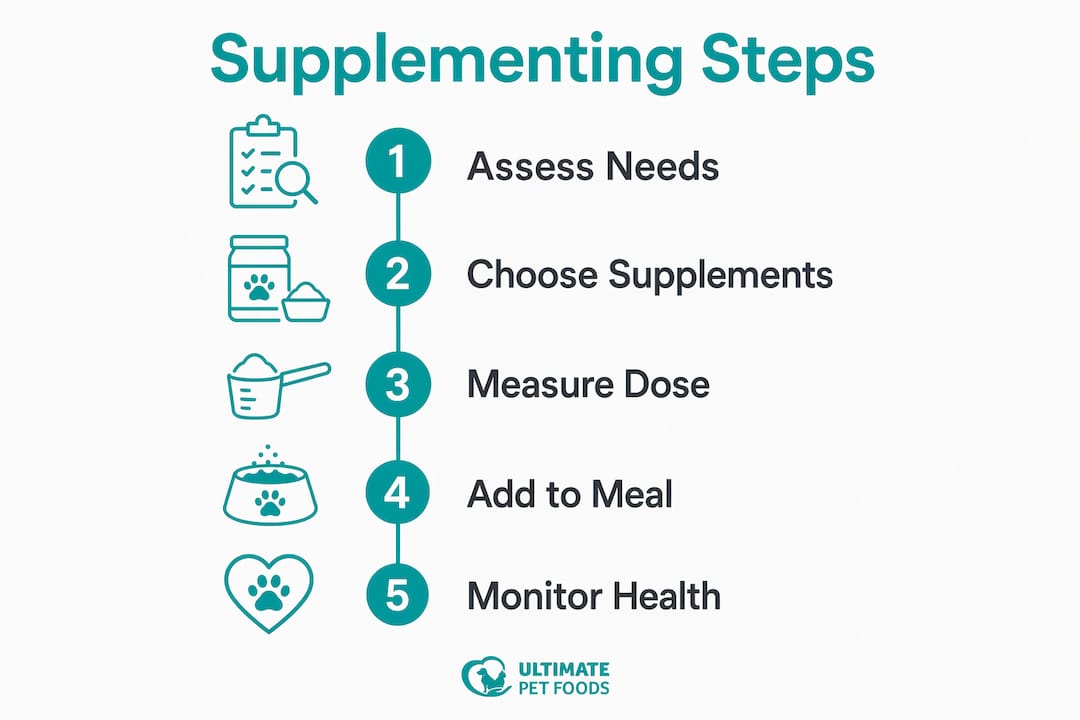
Safe supplementation follows a clear sequence. Skipping steps is where problems begin.
- Start with a professionally formulated recipe. A recipe designed by a veterinary nutritionist accounts for your dog’s weight, life stage, and activity level. The safest supplementation workflow begins here, not with a general internet recipe.
- Identify nutritional gaps in your current diet. Use a canine diet formulation tool such as Recipe4Pet or consult a board-certified veterinary nutritionist. Do not guess which nutrients are missing.
- Select supplements matched to those specific gaps. If calcium is low, add eggshell powder at the recipe-specified dose. If omega-3 is insufficient, add fish oil at the weight-appropriate amount.
- Measure precisely every time. Generic dosing instructions like “a pinch” are unsafe. Exact, recipe-specific dosing is the only approach that reliably prevents deficiency or toxicity.
- Introduce supplements gradually. Transition over five to seven days to monitor your dog’s tolerance, digestion, and stool quality before committing to the full dose.
- Observe and adjust with professional input. Watch for changes in coat condition, energy, stool consistency, and appetite. Any concerns warrant a veterinary review before continuing.
Pro Tip: Keep a simple feeding log for the first four weeks of any new supplementation plan. Note the recipe, supplement doses, and your dog’s daily condition. This record is invaluable if you need to troubleshoot with your vet.
The table below summarises the most common nutritional gaps in homemade diets and the natural supplement sources that address them:
| Nutritional gap | Natural supplement source | Key caution |
|---|---|---|
| Calcium | Eggshell powder, bone meal | Dose precisely to avoid Ca:P imbalance |
| Omega-3 fatty acids | Sardine or salmon fish oil | Dose by body weight, not bottle label |
| Trace minerals (zinc, copper) | Dog-formulated mineral blend | Do not stack with other mineral supplements |
| Vitamin D | Fish oil, formulated multivitamin | Fat-soluble; toxicity risk if overdosed |
| Gut health support | Canine-specific probiotics | Choose dog-formulated strains only |
Understanding life stage feeding differences is also critical here. Puppies, pregnant dogs, and seniors have different calcium, phosphorus, and vitamin requirements. A supplement dose correct for an adult dog may be harmful for a growing puppy.
Common mistakes in natural supplementation and how to avoid them
The most frequent errors in natural supplementation are not about choosing the wrong ingredient. They are about dosing, consistency, and failing to reassess.
- Over-supplementation of trace minerals. Zinc, copper, and selenium all have narrow safe ranges. Exceeding them causes toxicity, not better health. This risk increases sharply when dog owners stack multiple supplements with overlapping mineral profiles.
- Ignoring calcium-phosphorus balance. Feeding boneless meat without a calcium source is the single most common nutritional error in home-prepared diets. The consequences, including bone deformity and kidney stress, develop slowly but are serious.
- Using human supplements without veterinary approval. Human multivitamins often contain xylitol, iron doses unsafe for dogs, or vitamin D levels far above canine requirements. Always use products formulated specifically for dogs.
- Adding unsafe natural ingredients. Grapes, raisins, onions, garlic in large amounts, macadamia nuts, and whole cooked bones are all harmful. Natural does not mean safe by default.
- Drifting from the formulated recipe. Swapping one protein for another, changing batch sizes, or adding extra vegetables without recalculating supplements causes nutrient imbalances even when the meal looks similar.
“Natural sourcing preferences do not guarantee dosing safety. Measured nutrient levels relative to life stage and safe upper limits matter most.” — Veterinary Practice News
Pro Tip: Schedule a dietary review with your vet or a veterinary nutritionist every six months, or whenever you make a significant recipe change. Testing your dog’s diet composition is possible through services like the University of California Davis Veterinary Medicine nutrition team.
Exploring dog-safe herbs and spices is a worthwhile addition to your knowledge, particularly for owners who want to add flavour and mild nutritional benefits without disrupting the core supplement plan.
Key takeaways
Supplementing dog meals naturally works only when every addition is measured, recipe-specific, and verified against your dog’s life stage requirements.
| Point | Details |
|---|---|
| Homemade diets are rarely complete | Only 6% of home-prepared dog meals meet full nutritional requirements without supplementation. |
| Calcium is the most critical gap | Boneless meat diets require precise calcium supplementation to maintain a safe Ca:P ratio of 1.1:1 to 2:1. |
| Supplements must be a coordinated system | Stacking supplements with overlapping minerals risks trace mineral toxicity, even at individually modest doses. |
| Recipe changes require recalculation | Changing protein sources or batch sizes means supplement quantities must be recalculated to maintain balance. |
| Professional guidance is non-negotiable | A veterinary nutritionist-approved recipe is the safest foundation for any natural supplementation plan. |
Glenn’s honest view on natural supplementation
Natural supplementation is one of the most well-intentioned areas of dog care, and also one of the most frequently misunderstood. Dog owners who cook for their dogs are doing something genuinely caring. The problem is that caring and correct are not the same thing.
What I have observed repeatedly is that owners focus on ingredient quality and overlook dosing precision entirely. They buy the best salmon oil, the finest organic liver, and the most expensive kelp powder, then add them all by feel. That approach creates a diet that looks natural but functions unpredictably. The AAFCO nutritional adequacy standard exists precisely because good intentions do not guarantee complete nutrition.
My honest recommendation is this: use a complete, balanced commercial food as your dog’s daily foundation, and add natural whole-food toppers for variety and enrichment. This removes the risk of deficiency while still giving your dog the fresh food experience you want for them. If you are committed to full home preparation, work with a veterinary nutritionist from the start. The cost of a consultation is far lower than the cost of treating a nutritional deficiency.
Natural supplementation, done responsibly, genuinely does enhance dog wellbeing. Every wag and bounce your dog gives you is worth getting the details right.
— Glenn
Natural nutrition made simple with Ultimatepetfoods
If you want the benefits of natural, complete nutrition without the complexity of home supplementation, Ultimatepetfoods has you covered every day.
Our dry dog food recipes are made with freshly prepared meat and fish, gently cooked at 82°C to lock in freshness and nutrients. We use human-grade ingredients and every recipe is formulated to be complete and balanced for lifelong daily feeding. Added prebiotics, MOS and FOS, support digestion and gut health from the inside out. For dogs with specific needs, our Ultimate+ Functional Health range offers targeted support across Digestive Care, Skin & Coat Care, Weight Control & Joint Care, Dental Care, and Healthy Living. You can also browse our full dry dog food comparison to find the right everyday recipe for your dog.
FAQ
What nutrients are most commonly missing from homemade dog meals?
Calcium, omega-3 fatty acids, trace minerals such as zinc and copper, and fat-soluble vitamins are the most frequently deficient nutrients in home-prepared dog diets. Without deliberate supplementation, these gaps accumulate and cause health problems over time.
Is it safe to use human supplements for dogs?
Human supplements are not safe for dogs without veterinary approval. Many contain xylitol, excessive iron, or vitamin D levels that exceed safe canine limits. Always use supplements formulated specifically for dogs.
How do I know if my dog’s homemade diet is nutritionally complete?
Use a canine diet formulation tool or consult a board-certified veterinary nutritionist. The AAFCO nutritional adequacy standard is the recognised benchmark for completeness, and it cannot be assumed simply because vitamins or minerals are present in the recipe.
Can I add natural supplements to a commercial dog food?
Adding whole-food toppers such as fish oil or plain cooked vegetables to a complete commercial food is generally safe in small amounts. Avoid adding mineral supplements on top of a complete commercial diet, as this risks exceeding safe upper limits for trace minerals.
How often should I review my dog’s supplementation plan?
Review your dog’s supplementation plan every six months, or immediately after any significant recipe change. Changing protein sources, batch sizes, or cooking methods all affect nutrient levels and require recalculation of supplement quantities.