
Age appropriate dog foods: a life stage feeding guide
TL;DR:
- Choosing age-appropriate dog foods is essential because their nutritional needs change with each life stage, from puppyhood to senior years. Reading food labels carefully, especially the AAFCO adequacy statement, helps ensure you select formulas suited for your dog’s specific age and health requirements. Transitioning gradually between foods over 7 to 10 days minimizes digestive upset and supports long-term health.
Choosing the right food for your dog is one of the most meaningful things you can do for their health, yet it is also one of the most misunderstood. Age appropriate dog foods are not just a marketing concept. They reflect genuine shifts in how your dog’s body works, what it needs, and what it can efficiently process at each stage of life. Many owners assume that a quality food is a quality food, regardless of age. The reality is more nuanced. This guide walks you through exactly what changes as your dog grows, how to read labels confidently, and how to make every meal count from the first weeks of puppyhood to the golden senior years.
Table of Contents
- Key takeaways
- How nutritional needs change across life stages
- Reading dog food labels with confidence
- Comparing nutrient profiles: puppy, adult, and senior foods
- Transitioning between life-stage foods safely
- Special considerations for senior dog nutrition
- My honest take on age-appropriate feeding
- Feed your dog well, every day
- FAQ
Key takeaways
| Point | Details |
|---|---|
| Nutritional needs change with age | Puppies, adults, and seniors have distinct requirements for protein, fat, and calories that generic foods cannot cover equally well. |
| Labels tell the real story | AAFCO adequacy statements on packaging are more reliable than ingredient order or marketing claims when choosing a life-stage food. |
| Transition gradually | Switching foods over 7 to 10 days protects gut health and helps your dog accept the new diet without digestive upset. |
| Senior diets vary widely | There is no standardised senior dog formula, so individual health monitoring matters more than the label alone. |
| Functional ingredients add real value | Prebiotics, omega-3s, and joint-supporting nutrients make a measurable difference to long-term health at every life stage. |
How nutritional needs change across life stages
Understanding why age appropriate dog foods differ starts with understanding what is happening inside your dog’s body at each stage. It is not just about size or activity level. It is about physiology.
Puppies: building everything from scratch
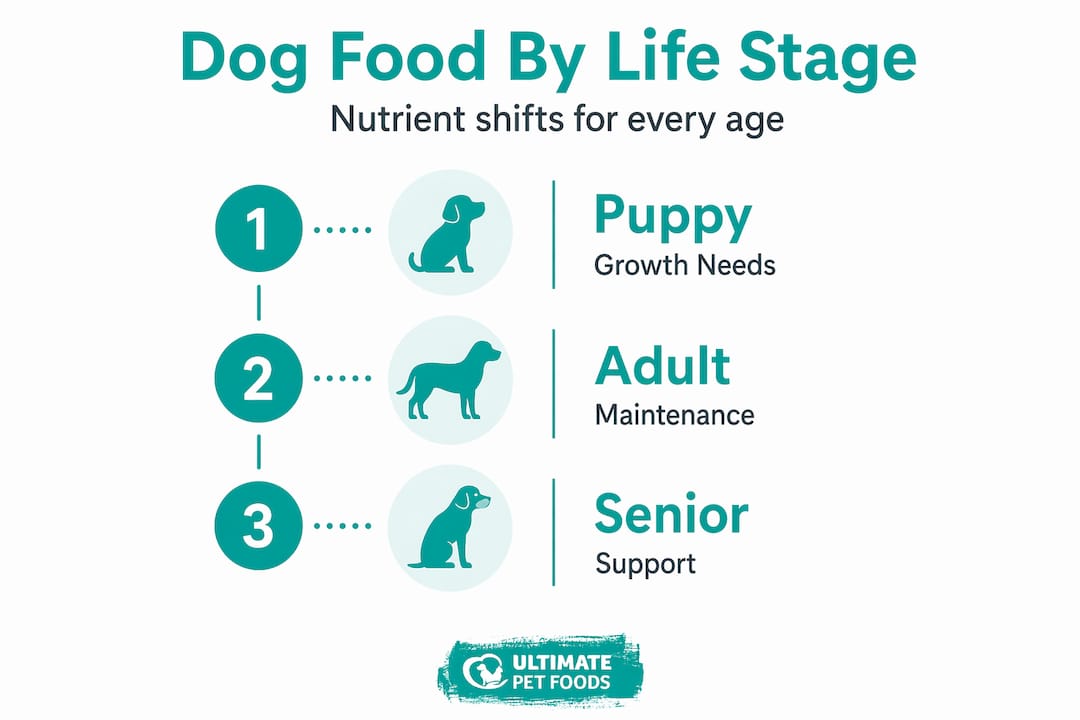
Puppy foods are higher in protein, fat, and calories because rapid growth demands a lot of fuel. DHA supports brain and eye development. Calcium and phosphorus are needed in precise ratios for strong bones and teeth. Getting the balance wrong, particularly overfeeding calcium to large-breed puppies, can actually contribute to skeletal problems rather than prevent them.
Puppies typically need three to four meals per day during their early months, scaling back to twice daily as they mature. This frequent feeding supports their small stomachs and fast metabolisms.
- Protein: Higher than adult requirements to support muscle and tissue development
- Fat and DHA: Calorie-dense fat supports energy and brain development
- Calcium and phosphorus: Critical for bone formation, especially in large breeds
- Feeding frequency: Three to four meals daily for young puppies
Adult dogs: maintaining what they have built
The adult phase is about maintenance rather than growth. Energy requirements stabilise, and the focus shifts to sustained muscle mass, healthy organ function, and consistent body condition. The best adult dog diet avoids the excess calories of puppy food while still delivering high-quality protein and balanced fats.
Most adult dogs thrive on twice-daily feeding, though breed size and activity level influence portion requirements. A Border Collie working daily has very different caloric needs from a relaxed Basset Hound.
Pro Tip: If your dog has finished growing but you are still feeding a puppy formula, you may be overfeeding calories and certain minerals. Transition to an adult maintenance diet at around 12 months for smaller breeds and up to 24 months for large and giant breeds.
Senior dogs: adjusting for an ageing body
As dogs age, metabolism slows, muscle mass can decline, and organs like the kidneys and liver become less efficient. Joints may stiffen, and cognitive function can change too. What to feed ageing dogs requires careful thought, because overloading ageing organs with excess phosphorus or calories creates real problems over time.
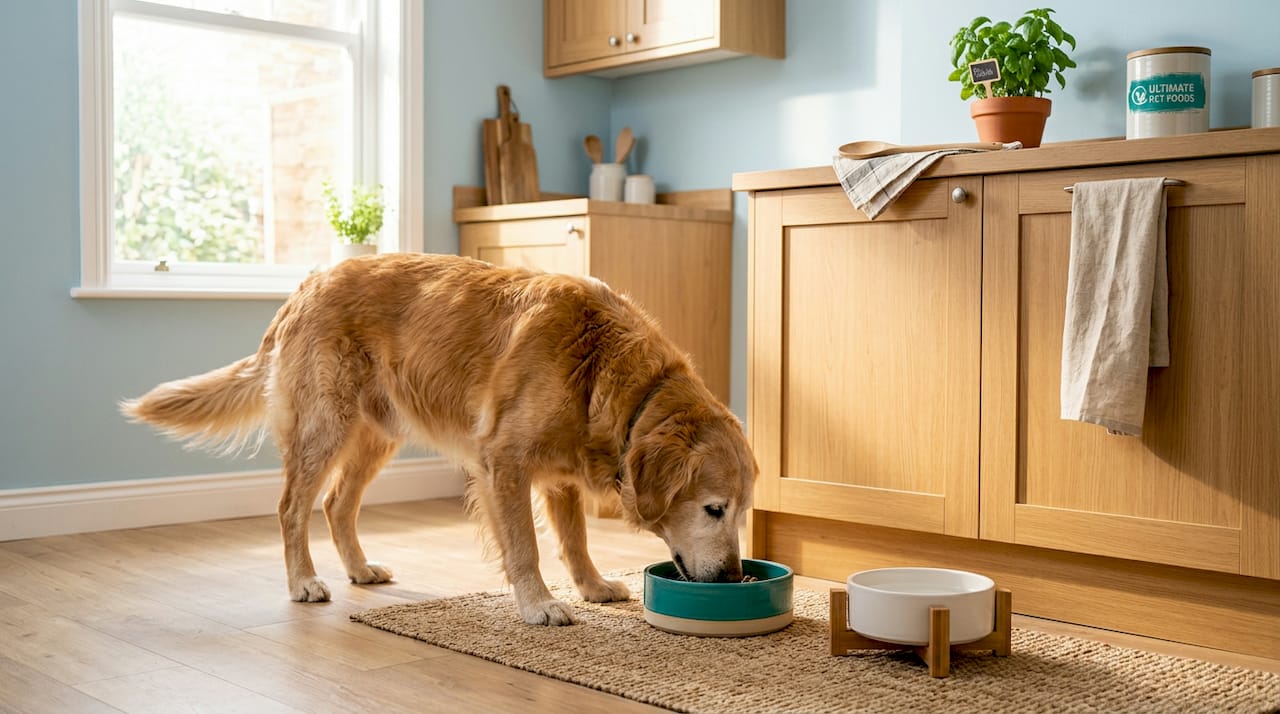
Interestingly, senior dogs often fare better on adult maintenance diets than on puppy or all-life-stages formulas. The mineral content in adult maintenance foods tends to be more appropriate for ageing kidneys and livers, making this a smarter default choice unless your vet recommends otherwise.
Effective age-appropriate feeding always accounts for life stage, breed size, and individual health status together. Rigid age cutoffs alone are not enough.
Reading dog food labels with confidence
The ingredient list on a bag of dog food gets a lot of attention, but it is one of the least reliable tools for assessing nutritional quality on its own. Here is how to read labels in a way that actually helps you choose the right food.
-
Look for the AAFCO adequacy statement. This is the most important piece of text on the entire package. It tells you whether the food is complete and balanced, and crucially, which life stage it is formulated for. Words like “for growth,” “for maintenance,” or “for all life stages” are specific and meaningful. AAFCO statements are the best practical tool for identifying whether a food genuinely suits your dog’s stage of life.
-
Understand the difference between life-stage categories. “All life stages” foods must meet the highest nutritional thresholds, which makes them suitable for puppies but potentially too rich for adult or senior dogs. “Adult maintenance” foods are calibrated for less demanding life phases and are often better suited to senior dogs than a product marketed specifically as senior food.
-
Assess protein quality, not just quantity. Named animal proteins such as chicken, beef, or fish indicate better digestibility and a stronger amino acid profile. Look for these near the top of the ingredient list, but remember that the overall formulation matters more than the order alone.
-
Check the fat sources. Omega-3-rich fats from fish oil or flaxseed are especially valuable across all life stages and particularly important for senior dogs.
-
Watch for marketing language that means nothing. Terms like “premium,” “gourmet,” or “natural” have no regulated definition in pet food. They should not influence your decision. Let the AAFCO statement do the heavy lifting.
Pro Tip: Ask your vet to review the AAFCO statement and nutrient analysis panel on your dog’s current food. This ten-minute conversation can reveal whether your dog is being under or overfed for their specific life stage and health condition.
Comparing nutrient profiles: puppy, adult, and senior foods
Research gives us a clearer picture of how age-specific dog meals actually differ nutritionally, and the results are more nuanced than most owners realise.
| Nutrient | Puppy food | Adult food | Senior food |
|---|---|---|---|
| Crude protein (g/1000 kcal) | Higher | ~76 | ~76 (similar to adult) |
| Crude fat | High | Higher than senior | More variable |
| Crude fibre | Lower | Median ~7.2 | Median ~8.5 (higher) |
| Calorie density | High | Moderate | Moderate to lower |
Senior diets tend to have higher fibre than adult diets, with protein content remaining broadly similar. This extra fibre supports bowel regularity, satiety, and weight management in older dogs who may be less active. Fat content, however, is more variable across senior brands than many owners expect.
What this means practically:
- Do not assume every food labelled “senior” meets your ageing dog’s specific needs. The lack of a standardised senior nutrient profile means huge variation between brands.
- A food with higher fibre and moderate fat can support a senior dog’s weight and digestive health better than a general-purpose formula.
- Protein quality matters more in senior dogs than in younger ones, because older dogs process nutrients less efficiently. You want fewer, better proteins, not just more of them.
- Compare the actual nutrient analysis panel rather than the life-stage label to find the best dog food by age for your individual dog.
Transitioning between life-stage foods safely
Moving your dog from one age-appropriate food to another is not something to rush. A sudden change disrupts the gut microbiota, which can cause loose stools, gas, and reduced appetite. The digestive system needs time to adapt its enzyme production and bacterial balance.
- Days 1 to 2: Serve 75% of the old food mixed with 25% of the new food.
- Days 3 to 4: Move to a 50/50 mix of old and new.
- Days 5 to 6: Shift to 25% old food and 75% new food.
- Days 7 to 10: Complete the transition to 100% of the new food.
Transitioning over 7 to 10 days gives the gut microbiota time to adapt, which reduces digestive disturbance and supports good stool quality throughout the switch. For dogs with sensitive stomachs, extending this process to two weeks is entirely sensible.
Watch for signs that the transition is not going smoothly. Loose stools for more than a few days, vomiting, or a complete refusal to eat warrant slowing down the process or speaking to your vet. For picky eaters, try warming the new food slightly or mixing in a small amount of warm water to release the aroma.
Pro Tip: Keep a simple feeding diary during any diet transition. Note stool quality, appetite, and energy levels each day. This gives you and your vet a clear picture of how well your dog is adapting, rather than relying on memory when something seems off.
For detailed, step-by-step guidance, the food transition tips on the Ultimatepetfoods blog are a genuinely useful resource to bookmark.
Special considerations for senior dog nutrition
Senior feeding is where nutrition becomes most individual. Age is only the starting point. A healthy, active seven-year-old Labrador and a seven-year-old Chihuahua with kidney disease need very different approaches.
The question of whether to feed a “senior” labelled product or stick with adult maintenance is more nuanced than it appears. Many senior dogs do better on adult maintenance diets because the mineral and calorie levels suit ageing organs more precisely than foods designed to meet all life stages.
Key areas to address in an older dog’s diet:
- Joint health: Glucosamine, chondroitin, green-lipped mussel, and omega-3 fatty acids support joint integrity and reduce inflammation. Look for these in the ingredient list or consider targeted supplementation.
- Gut health and fibre: Soluble and insoluble fibre together support digestion, regulate bowel movements, and help manage weight in less active seniors. Ingredients like chicory root (a natural prebiotic) and pea fibre are worth seeking out.
- Cognitive support: Antioxidants from ingredients like blueberries, spinach, and fish oil support brain health in ageing dogs.
- Kidney and heart health: If your dog has been diagnosed with either condition, your vet may recommend a specific therapeutic diet. Do not make those changes without professional guidance.
- Weight monitoring: Weigh your senior dog monthly. Weight loss can indicate muscle wasting or illness, while gradual weight gain often signals too many calories for their reduced activity level.
Dry food, wet food, or a combination all have merit for senior dogs. The right choice depends on dental health, hydration needs, and palatability. Understanding your options is easier with a dedicated guide to older dog food that covers these factors in full.
My honest take on age-appropriate feeding
I’ve worked with hundreds of pet owners over the years, and I see the same pattern repeatedly. Someone switches their dog to a senior food at seven years old because the bag said so, and they assume the job is done. What I’ve learned is that switching a label is the beginning of the conversation, not the end of it.
The dogs I’ve seen thrive long-term are the ones whose owners pay attention. They notice when their dog’s coat starts losing its shine, when stools change in consistency, when energy dips or appetite wavers. Those observations are just as diagnostic as any label claim.
What actually works is treating your dog’s diet as something dynamic. Age is a prompt to reassess, not a fixed prescription. Breed size, activity level, existing health conditions, and even individual gut sensitivity all shape what a particular dog needs at a particular moment. A blanket “senior diet” will serve some dogs well and underserve others.
I also think we underestimate the difference that ingredient quality makes across all life stages. Foods made with freshly prepared, human-grade meat that is gently cooked to preserve nutrients perform differently from those built on heavily processed protein meals. That difference shows up in digestion, coat quality, energy, and over time, in long-term health. It is not a marketing claim. It is basic food science.
— Glenn
Feed your dog well, every day
At Ultimatepetfoods, we believe that great nutrition is an everyday commitment, not a short-term fix. Our dry dog food recipes are made with freshly prepared meat or fish, gently cooked at 82°C to lock in natural goodness and nutrients. We use human-grade ingredients throughout, and every recipe is complete and balanced for daily feeding across all breeds and life stages.
Our formulas include added prebiotics (MOS and FOS) to actively support digestive health and a thriving gut microbiome. Every wag and bounce really does start from the inside out.
For dogs with specific health needs, our Ultimate+ Functional Health range offers targeted support through hydrolysed protein recipes across five areas: Digestive Care, Skin & Coat Care, Weight Control & Joint Care, Dental Care, and Healthy Living. These are everyday foods designed to support long-term wellbeing, not quick fixes.
Whether your dog is a playful pup, a settled adult, or a wise senior, explore our full dry dog food range to find the right fit. You can also learn more about the benefits of grain-free feeding and why it suits so many dogs so well.
FAQ
What is the difference between puppy and adult dog food?
Puppy foods are higher in protein, fat, and calories to support rapid growth, brain development, and bone formation. Adult dog diets are formulated for maintenance, with a more moderate calorie and mineral profile suited to a fully grown dog.
When should I switch from puppy to adult dog food?
Most small and medium breeds can transition to an adult diet at around 12 months of age. Large and giant breeds may continue on puppy food until 18 to 24 months because their growth phase is longer.
Are senior dog foods actually better for older dogs?
Not always. There is no standardised senior dog nutrient profile, meaning quality and composition vary widely between brands. Many vets recommend adult maintenance diets for senior dogs because the mineral levels are often more appropriate for ageing organ function.
How long should a dog food transition take?
A gradual switch over 7 to 10 days is the standard recommendation. This allows the gut microbiota to adapt and significantly reduces the risk of digestive upset during the change.
What should I look for in age-specific dog meals?
Check the AAFCO adequacy statement first. It tells you the life stage the food is formulated for. Beyond that, look for named animal proteins, appropriate fat sources including omega-3s, and fibre levels suited to your dog’s age and activity level.