
Good diet dog food: what really matters
TL;DR:
- Not all dog foods are equal, and labels like “natural” or “grain-free” can be misleading.
- Choosing a quality diet requires evaluating standards such as feeding trials and veterinary nutritionist involvement, not just marketing claims.
Not all dog food is created equal, and the labels can be genuinely confusing. Words like “natural,” “grain-free,” and “human-grade” appear on bags that range from outstanding to barely adequate. If you’re trying to find a truly good diet dog food for your dog, you deserve more than clever packaging. This article cuts through the noise and gives you a clear, science-backed way to evaluate what’s actually in your dog’s bowl, what nutritional standards to look for, and how to choose a complete, balanced diet that supports your dog’s health every single day.
Table of Contents
- Key takeaways
- What defines a good diet dog food
- Core ingredients to look for in quality dog food
- Weight management and functional health needs
- How to transition your dog safely
- How Ultimatepetfoods meets the standard
- My honest take on the dog food market
- Find the right food for your dog
- FAQ
Key takeaways
| Point | Details |
|---|---|
| Standards matter more than labels | Look for brands that conduct feeding trials and employ veterinary nutritionists, not just those with appealing marketing terms. |
| Ingredients tell a story | Freshly prepared meat or fish, added prebiotics, and balanced fatty acids are reliable signs of quality nutrition. |
| Weight management needs precision | Calorie density and fibre content are the most reliable markers for effective weight management dog food, not terms like “light.” |
| Transition gradually | Moving to a new food over 7 to 10 days protects your dog’s gut and reduces the risk of digestive upset. |
| Functional health ranges offer targeted support | Hydrolysed protein recipes can address specific needs like sensitive digestion, skin health, and joint care without switching away from dry food. |
What defines a good diet dog food
There is a real difference between a food that meets minimum legal requirements and one that genuinely supports your dog’s long-term health. Understanding that difference starts with knowing which standards actually mean something.
Veterinary nutrition frameworks
The WSAVA framework is one of the most trusted tools for evaluating dog food quality. Importantly, WSAVA does not approve specific brands. Instead, it gives pet owners a set of questions to ask: Does the manufacturer employ a qualified veterinary nutritionist? Do they conduct feeding trials? Do they own their manufacturing facilities? Do they publish peer-reviewed research? A brand that answers yes to all four is treating nutrition as a science rather than a marketing exercise.
AAFCO statements are another key marker. Not all AAFCO claims are equal. A food formulated to meet AAFCO nutrient profiles has been checked on paper, but feeding trials test the finished product on real dogs for 26 weeks or more. They reveal absorption issues, palatability problems, and health effects that a spreadsheet simply cannot predict. When a brand has completed feeding trials, that is a meaningful signal of quality.
“The WSAVA framework filters brands treating nutrition as medical science rather than marketing trends.” This distinction matters enormously when you are choosing what your dog eats every day for years.
Ingredient transparency and human-grade claims
Transparency in ingredient sourcing helps you make confident, informed choices. That said, human-grade ingredients do not automatically mean better nutrition. What they do offer is greater confidence in sourcing standards and safety. When a brand uses human-grade meat and is open about where it comes from, that transparency is genuinely valuable.
You can read more about how complete dog food is defined and what balanced, premium formulations actually look like in practice.
Key questions to ask when reading a label:
- Is a named meat or fish listed as the first ingredient?
- Does the brand publish nutritional analysis and feeding trial results?
- Are the carbohydrate and fibre sources clearly identified?
- Is there a named veterinary nutritionist involved in the formulation?
Core ingredients to look for in quality dog food
Once you understand the standards, the next step is knowing which ingredients signal genuine quality. The best diet dog food does not just avoid bad ingredients. It actively includes the right ones.
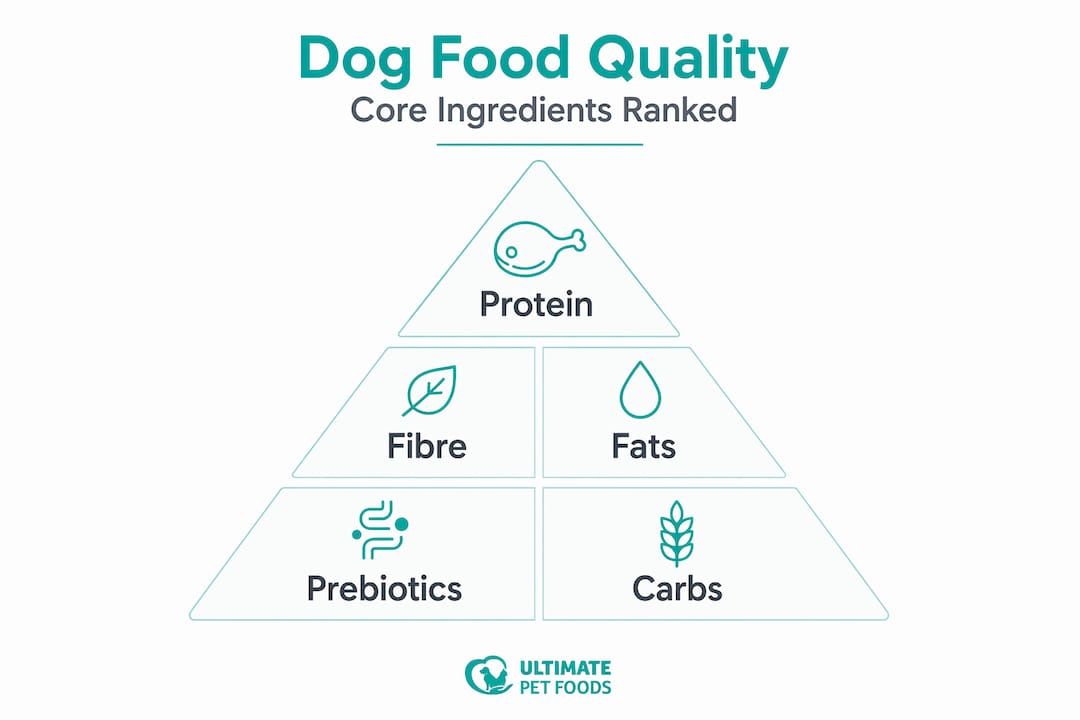
Protein: the foundation of every meal
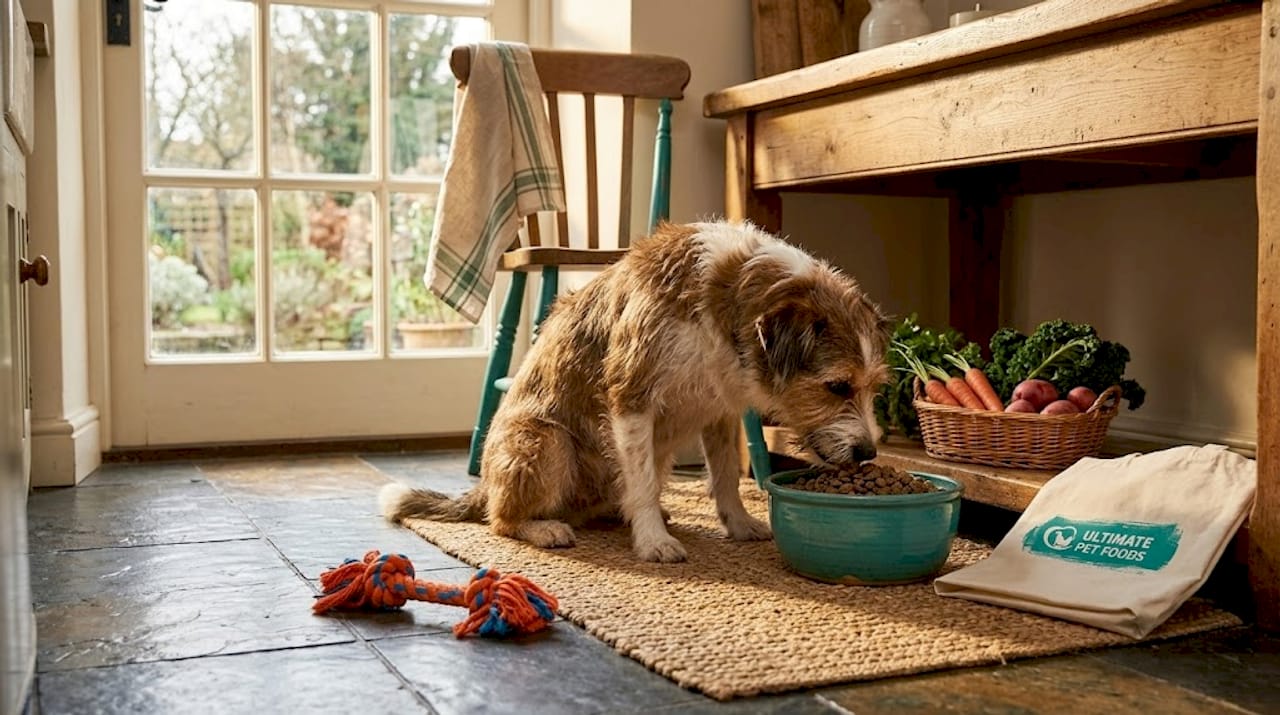
Freshly prepared meat or fish, gently cooked to preserve nutrients, is the gold standard for protein sources in dry dog food. At Ultimatepetfoods, our recipes use freshly prepared meat and fish cooked at 82°C. This gentle process locks in natural flavour and nutrients without the harsh processing that strips quality from cheaper alternatives. High-quality animal protein supports lean muscle maintenance, healthy organ function, and sustained energy throughout the day.
It is also worth knowing that organ meats and byproducts are not automatically inferior. They are rich in essential vitamins and minerals and are used by responsible manufacturers to enhance nutritional completeness. The key is sourcing transparency.
Prebiotics, fats, and carbohydrates
Every wag, bounce, and cuddle starts with great gut health. Added prebiotics, specifically MOS (mannan-oligosaccharides) and FOS (fructo-oligosaccharides), feed the beneficial bacteria in your dog’s digestive system. This supports better nutrient absorption, firmer stools, and a stronger immune response over time.
Balanced omega-3 and omega-6 fatty acids, sourced from quality fish oils and plant-based oils, support skin condition, coat shine, and joint mobility. For more on how quality fats contribute to canine health, fresh organic olive oil offers an interesting perspective on functional fats for dogs.
Wholesome carbohydrates like sweet potato and peas provide steady energy release and contribute to digestive regularity. Grain allergies in dogs are genuinely rare, so the focus should always be on proven nutritional adequacy rather than avoiding grains simply because it is fashionable.
Pro Tip: When comparing foods, look at the guaranteed analysis for crude protein, crude fat, and crude fibre rather than relying on the ingredient list alone. The analysis tells you what is actually in the bowl in measurable terms.
Weight management and functional health needs
Not every dog needs the same diet. Some need support with weight control. Others have sensitive digestion, skin issues, or ageing joints. The best dog diet for your individual dog depends on their specific health profile.
Choosing a weight management dog food
Calorie density and fibre content are the most reliable metrics when choosing a dog food for weight management, not marketing terms like “light” or “slimming.” A food with lower calorie density per 100g keeps your dog feeling satisfied without overloading them calorically. Higher fibre content slows digestion and helps regulate appetite naturally.
| Feature | What to look for | What to avoid |
|---|---|---|
| Calorie density | Lower kcal per 100g for weight loss | Vague “light” claims without calorie data |
| Protein content | High lean protein to preserve muscle | Reduced protein in favour of cheap fillers |
| Fibre source | Named sources like chicory or beet pulp | Generic “vegetable fibre” with no detail |
| Fat content | Controlled but not eliminated | Very low fat with no omega balance |
For vet recommended dog food for weight loss, look for brands that publish calorie counts per serving and have had their weight management formulas validated through feeding trials rather than just formulated on paper.
Targeted functional health support
The Ultimate+ Functional Health range from Ultimatepetfoods uses hydrolysed proteins to reduce allergenic potential and support sensitive digestion. Hydrolysed protein means the protein molecules have been broken down into smaller fragments, making them less likely to trigger an immune response in dogs with food sensitivities.
The range covers five specific areas of everyday support:
- Digestive Care: gentle on the gut, supports healthy microbiome balance
- Skin & Coat Care: targeted omega support and reduced allergen load
- Weight Control & Joint Care: controlled calories with added joint support nutrients
- Dental Care: texture and ingredients designed to support oral hygiene
- Healthy Living: broad-spectrum everyday wellness support
These are not short-term therapeutic diets. They are complete, balanced recipes designed for lifelong daily feeding.
How to transition your dog safely
Switching your dog’s food too quickly is one of the most common causes of digestive upset. A gradual transition protects the gut microbiome and gives your dog’s digestive system time to adapt.
- Days 1 to 3: Feed 75% old food and 25% new food.
- Days 4 to 6: Move to 50% old food and 50% new food.
- Days 7 to 9: Shift to 25% old food and 75% new food.
- Day 10 onwards: Feed 100% new food.
A standard 7 to 10 day transition works well for most dogs. Sensitive dogs, senior dogs, and those with digestive conditions may need 14 to 21 days. For older dogs with specific dietary needs, our guide on senior dog food explains why a slower approach is often better.
If your dog develops soft stools during the transition, pause at the current ratio for one to two days before continuing. This gives the gut microbiome time to catch up without causing full digestive upset.
Pro Tip: Ultimatepetfoods recipes are gently cooked at 82°C, which improves palatability and digestibility from day one. Dogs tend to accept the flavour readily, which makes the transition smoother overall.
For a full step-by-step plan, our guide on transitioning dog foods successfully covers everything you need.
How Ultimatepetfoods meets the standard
At Ultimatepetfoods, we have built our entire range around the principles this article describes. Every recipe is formulated to be complete and balanced, suitable for daily feeding across all breeds and life stages. Here is what sets our approach apart:
- 🥩 Freshly prepared meat or fish cooked gently at 82°C to lock in nutrients and natural flavour
- 🌿 Human-grade ingredients for greater sourcing confidence and safety
- ✅ Complete and balanced formulations meeting AAFCO nutritional standards for everyday lifelong feeding
- 🦠 Added prebiotics MOS and FOS to support gut health, nutrient absorption, and immune function
- 💊 Ultimate+ Functional Health range using hydrolysed proteins for targeted everyday support across five health areas
- 🐾 Grain-free recipes across our core range, with full ingredient transparency on every bag
Dry dog food options from Ultimatepetfoods are designed to be the last food you ever need to search for. Not a quick fix, but a genuine long-term solution.
My honest take on the dog food market
I’ve spent years looking closely at how dog food is marketed versus how it is actually formulated, and the gap is often wider than most pet owners realise. The brands that shout loudest about “natural” or “ancestral” diets are not always the ones investing in feeding trials or employing veterinary nutritionists. Marketing budgets and nutrition budgets are not the same thing.
What I’ve learned is this: the most reliable signal of quality is not the ingredient list. It is the process behind the food. Did real dogs eat this recipe for six months under controlled conditions? Is there a qualified nutritionist whose name is attached to the formulation? Does the manufacturer own the facility where it is made? Those questions cut through the noise faster than any label claim.
I’ve also seen dog owners make the mistake of chasing trends. Grain-free became a buzzword, and suddenly every brand had a grain-free option, regardless of whether the formulation was actually better. The grain-free benefits are real when the recipe is properly formulated. But grain-free for its own sake, without the nutritional rigour behind it, is just marketing.
My advice is to treat your dog’s food the way you would treat your own: ask who made it, how, and whether it has been tested properly. A lifelong, complete, balanced diet from a transparent brand will always outperform a trendy recipe that looks impressive on the bag.
— Glenn
Find the right food for your dog
If this article has helped you think more clearly about what goes into a genuinely good diet dog food, the next step is simple. At Ultimatepetfoods, we offer a full range of premium, grain-free dry dog food recipes made with freshly prepared meat and fish, complete nutritional formulations, and added prebiotics for everyday gut health. Whether your dog needs weight management support, targeted functional care, or simply the best daily diet you can give them, we have a recipe designed for exactly that.
Explore our grain-free dog food range to see how our recipes are built, or browse our dry dog food comparison to find the right match for your dog’s breed, age, and health needs. Every recipe is complete, balanced, and made for lifelong feeding. 🐾
FAQ
What makes a dog food truly complete and balanced?
A complete and balanced dog food meets established nutritional standards for all essential nutrients your dog needs daily. The most reliable indicator is a brand that conducts feeding trials rather than relying on formulation alone.
What is the best diet dog food for weight management?
Look for a food with lower calorie density per 100g, high lean protein to preserve muscle, and named fibre sources to support satiety. Avoid foods that use vague terms like “light” without publishing actual calorie data.
How long should a dog food transition take?
Most dogs transition well over 7 to 10 days, increasing the new food by roughly 25% every two to three days. Sensitive or senior dogs may need up to 21 days to avoid digestive upset.
Are grain-free diets better for dogs?
Grain allergies in dogs are genuinely rare, so grain-free is not automatically superior. When a grain-free recipe is properly formulated with complete nutrition and quality protein sources, it can be an excellent choice for everyday feeding.
What is the best diet dog food for small dogs?
Small dogs benefit from calorie-controlled recipes with high-quality protein, balanced fatty acids, and added prebiotics. Look for complete formulations with smaller kibble sizes and clear calorie counts per serving to avoid overfeeding.