
UK Vet Backed Dog Diarrhoea Diet: MOS and FOS for Steady Gut Health
If your dog has diarrhoea but is not vomiting, feed small, bland, highly digestible meals such as boiled rice with plain chicken, keep water available at all times, and watch for red flags. Most mild cases settle within 24 to 48 hours with this approach. Once things settle, a consistent everyday kibble containing prebiotics does far more for long-term gut stability than repeated home fixes.
TL;DR:
- Most mild dog diarrhoea cases resolve within 24 to 48 hours with small, bland, highly digestible meals and continuous water access.
- Avoid feeding fatty, seasoned, or human foods and never give human medication without veterinary advice to prevent worsening symptoms.
- Probiotics and prebiotics like MOS and FOS show evidence of supporting gut health by increasing beneficial bacteria and reducing pathogens.
- Recurrent diarrhoea often requires veterinary diagnostics, exclusion diets, or hydrolysed protein supports to identify underlying causes.
- Maintaining hydration and switching to a stable, complete prebiotic diet like Ultimate Pet Foods can promote long-term digestive resilience.
Table of Contents
- What to feed right now: bland foods and safe options
- Fasting, feeding schedule and reintroduction to normal diet
- Hydration and when to contact a vet
- Probiotics and prebiotics: MOS, FOS and what the evidence supports
- Chronic or recurrent diarrhoea: exclusive trials, hydrolysed diets and diagnostics
- Why Ultimate Pet Foods is a practical everyday choice for digestive resilience
- Nutritional needs during different diarrhoea causes
- Signs that diet alone is insufficient
- Author’s checklist and short perspective
- Practical next steps: try Ultimate Pet Foods products and samples
- Sources
- FAQ
What to feed right now: bland foods and safe options
A bland dog diarrhoea diet works because it asks less of an inflamed gut. Boiled white rice, plain boiled chicken or white fish, and a spoonful of plain canned pumpkin are low in fat, easy to digest, and gentle enough not to reignite symptoms. This combination is widely recommended by UK vets and charities as the first practical step for dogs with acute, uncomplicated diarrhoea.
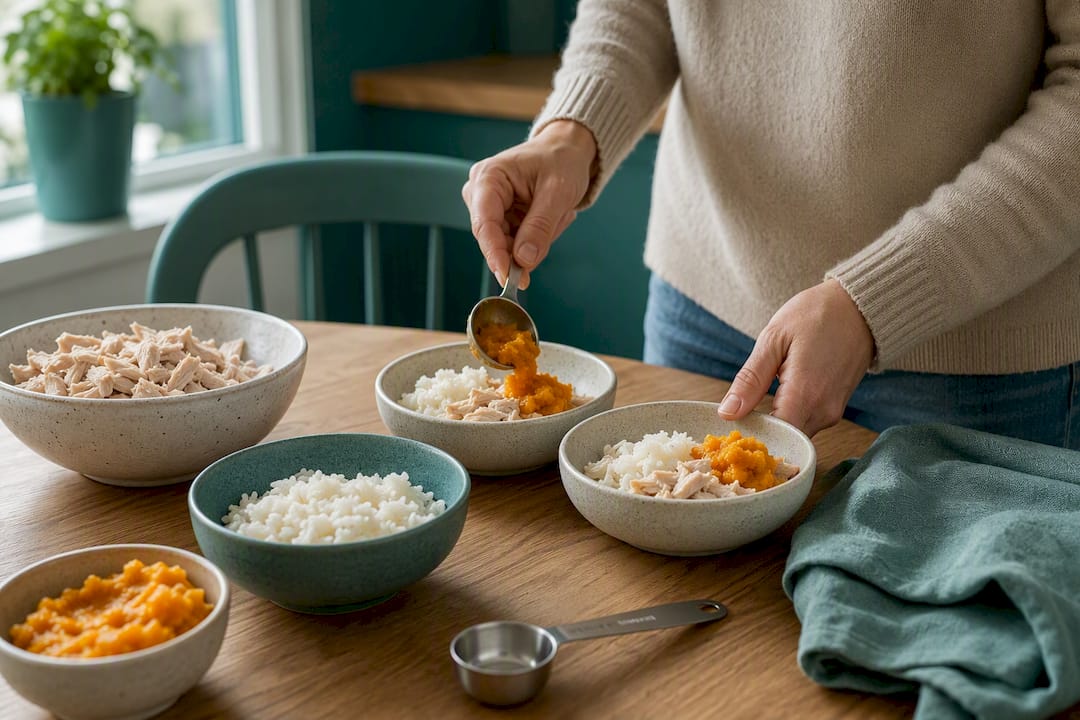
Portion size depends on your dog’s normal intake rather than a fixed rule, with smaller, more frequent meals recommended to reduce gut workload compared with usual feeding patterns.
Certain foods make things worse, not better. Avoid fatty foods, dairy, onions, garlic, rich sauces, cooked bones, and anything seasoned for human tastes. Never give human medication, including anti-diarrhoeal tablets, without veterinary advice, since several common over-the-counter options are unsafe for dogs.
Pro Tip: Keep a small bag of plain, unseasoned white rice and a tin of pumpkin purée in the cupboard specifically for digestive upsets. Having it ready means you can start the bland diet within minutes rather than making an evening supermarket run while your dog is uncomfortable.
Fasting, feeding schedule and reintroduction to normal diet
Short fasting used to be the default advice, but that thinking has shifted. If your dog is eating and not vomiting, feeding through the diarrhoea with a bland, highly digestible diet may actually help preserve the gut’s mucosal lining. A brief 12 to 24 hour fast can still suit an adult dog who is refusing food and not otherwise unwell, but skip fasting entirely for puppies, elderly dogs, toy breeds, or anyone vomiting.
- Days 1 to 2: bland diet only, small frequent meals.
- Days 3 to 5: mix in growing amounts of the usual food, roughly a quarter increase each day.
- Days 6 to 7: normal food should make up most of the bowl, with stools firming and consistent.
- Days 7 to 10: full return to the regular diet if stools stay solid for at least 48 hours.
If loose stools return at any stage, drop back to the previous ratio for another day or two before trying again.
Hydration and when to contact a vet
Diarrhoea drains fluid fast, and dehydration is the real danger, not the loose stool itself. Check hydration by lifting the skin at the scruff. Skin that springs back quickly is fine; skin that stays tented suggests dehydration. Pale, tacky gums point the same way. Offer fresh water constantly, and ask your vet about a canine oral electrolyte solution if your dog seems flat or is drinking poorly.
Watch for these red flags:
- Blood in the stool or black, tarry motions.
- Repeated vomiting alongside diarrhoea.
- Severe lethargy, collapse, or refusal to drink.
- A puppy, senior dog, or any dog showing symptoms beyond 24 to 48 hours.
That 24 to 48 hour window comes from Royal Veterinary College research into UK dogs with diarrhoea, and it’s a genuinely useful marker: past that point without improvement, home management has done what it can.
Probiotics and prebiotics: MOS, FOS and what the evidence supports
Probiotics add live beneficial bacteria to the gut. Prebiotics, including mannan-oligosaccharides (MOS) and fructo-oligosaccharides (FOS), feed the beneficial bacteria already there. Both aim at the same outcome: a more balanced gut microbiome and firmer, more consistent stools.
The evidence for MOS and FOS is genuinely encouraging. A 2023 review in Fermentation found that these prebiotics increase populations of Lactobacillus and Bifidobacteria while reducing pathogenic bacteria such as Clostridium perfringens and E. coli in the canine gut.
Prebiotic fibres don’t just pass through a dog’s digestive system. They selectively feed the bacterial species associated with healthy digestion, while starving out the ones linked to upset stomachs and loose stools.
A few practical notes: dosing varies by product and dog size, so follow the packaging or your vet’s guidance rather than guessing. Introduce any new supplement gradually, and always check with your vet before starting one if your dog is on other medication. Ultimatepetfoods covers the mechanics of why MOS and FOS matter for dogs in more depth, and for owners who prefer a treat-based top-up, our probiotic digestive treats are worth a look too.
Chronic or recurrent diarrhoea: exclusive trials, hydrolysed diets and diagnostics
When diarrhoea keeps coming back, food itself may be the trigger rather than a passing bug. Vets often recommend an exclusion diet trial lasting 2 to 3 months, feeding a single novel or hydrolysed protein source under veterinary supervision to rule out a food intolerance.
Hydrolysed diets break proteins down into fragments too small for the immune system to react to, which is why they’re used for dogs with suspected sensitivities. Ultimatepetfoods’ Ultimate+ Digestive Care range uses hydrolysed protein for exactly this kind of everyday, ongoing support rather than a one-off fix.
- Faecal testing to check for parasites or pathogenic bacteria.
- Blood tests to assess organ function and rule out systemic disease.
- Imaging, such as ultrasound, if the vet suspects a structural cause.
Recurrent cases deserve a vet’s input before you experiment further at home. That RVC research also found that a substantial proportion of acute diarrhoea cases in the UK were treated with antibiotics despite limited evidence of benefit, which is worth raising with your vet if antibiotics are suggested without a clear bacterial cause identified.
Why Ultimate Pet Foods is a practical everyday choice for digestive resilience
Repeated bland-diet rescues treat the symptom, not the pattern. A stable, complete diet is what actually protects a sensitive gut long-term, and that’s the thinking behind every recipe we make.
- Fresh meat or fish gently cooked at 82°C to help lock in nutrients rather than cook them away.
- Human-grade ingredients in every complete and balanced recipe, suitable for daily feeding across breeds and life stages.
- Built-in MOS and FOS prebiotics supporting the same beneficial bacteria covered above, every single meal.
- Sample packs and the Ultimate+ Digestive Care range for dogs needing extra sensitivity support.
Nutritional needs during different diarrhoea causes
Not every case of diarrhoea calls for the same dietary response, and lumping them together is where a lot of owners go wrong. Infectious diarrhoea, caused by bacteria, viruses, or parasites, often needs a short period of intensive bland feeding while the gut clears the pathogen, and your vet may want a faecal sample before deciding on antibiotics at all, given how often they’re prescribed unnecessarily for cases that would resolve on their own.
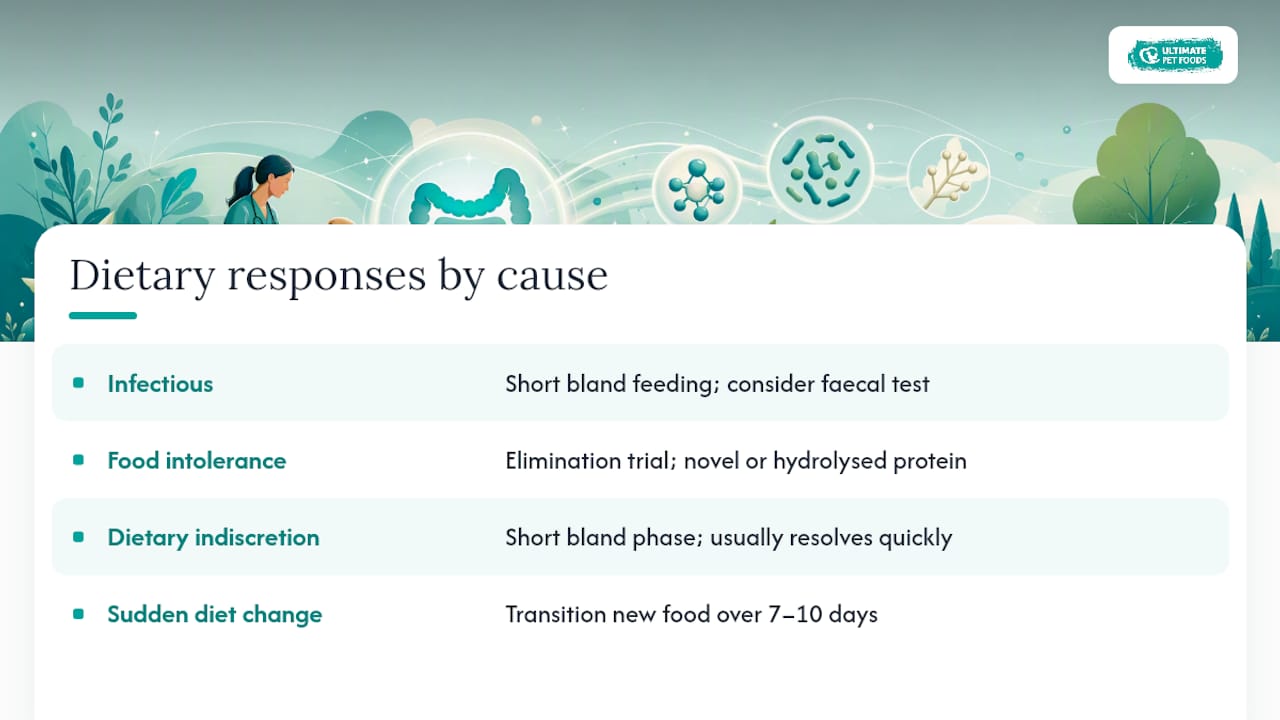
Food intolerance behaves differently. There’s no infection to clear, so the priority shifts to identifying and removing the trigger ingredient, usually through an elimination trial with a novel or hydrolysed protein rather than repeated rounds of rice and chicken. Dietary indiscretion, meaning your dog raided the bin or scoffed something unsuitable, typically settles fastest of the three once the offending item has passed through, and a short bland phase is usually sufficient.
Sudden diet changes are their own category entirely. Switching foods too quickly disrupts the gut’s bacterial balance regardless of what the new food actually contains, which is why Animal Trust’s veterinary guidance recommends transitioning any new food over 7 to 10 days rather than swapping bowls overnight. The practical takeaway: match your response to the likely cause rather than defaulting to the same bland fix every time, and involve your vet early if you’re not sure which category you’re dealing with.
Signs that diet alone is insufficient
Diet is the right first response for mild, uncomplicated diarrhoea, but it isn’t a universal fix, and knowing when to stop relying on it matters as much as knowing what to feed. If stools haven’t firmed up after the 24 to 48 hour window that typically resolves mild cases, dietary management alone has likely done what it can.
Weight loss despite normal eating, diarrhoea that recurs every few weeks regardless of what you feed, or stools that stay soft even on a strict bland diet all point towards something diagnostics need to catch, whether that’s parasites, inflammatory bowel disease, or an underlying organ issue. Straining without producing much, mucus-coated stools, or a noticeably swollen abdomen are worth flagging too.
Puppies and senior dogs deserve a lower threshold for concern generally, since both groups dehydrate faster and have less reserve to cope with prolonged fluid loss. If you’ve already tried a bland diet, then a careful reintroduction, then a hydrolysed or novel protein trial, and diarrhoea still isn’t resolving, that pattern itself is the signal. Repeated dietary attempts without lasting improvement mean it’s time for faecal testing, bloodwork, or imaging rather than another rice and chicken cycle.
Author’s checklist and short perspective
Three things matter more than anything else: hydration first, small bland meals second, and a stable prebiotic kibble once things settle, rather than lurching between diets every time symptoms flare.
— Glenn
Practical next steps: try Ultimate Pet Foods products and samples
Ultimatepetfoods gives you a simpler alternative to the cycle of bland diets, guesswork, and repeated flare-ups: one consistent, complete recipe with MOS and FOS built in, so your dog’s gut isn’t constantly adjusting to something new.
If your dog has settled after an upset and you want to move onto something that supports steady digestion day to day, our high meat chicken recipe is a solid everyday option, gently cooked at 82°C with human-grade ingredients and complete nutrition for all life stages. For dogs with ongoing sensitivity, the hydrolysed dog food for sensitive stomachs gives you a no-prescription-needed option designed for exactly this kind of case. Order a sample pack today and see how your dog settles on a diet built for consistency, not quick fixes.
Sources
The RVC VetCompass study underpins the 24 to 48 hour home-management guidance throughout this article. The Fermentation review of canine prebiotics backs the MOS/FOS evidence. Blue Cross’s bland diet guidance and Animal Trust’s clinical advice shaped the practical feeding steps. For ingredient-level detail on gut bacteria, this digestive health guide is useful further reading.
- New RVC study gets to the bottom of what causes doggy diarrhoea - News - VetCompass - Royal Veterinary College, RVC
- Fermentation (2023) — review of prebiotics effects in dogs
- Bland diet for dogs and cats
FAQ
What foods help stop diarrhoea in dogs?
Plain boiled white rice, boiled chicken or white fish, and canned pumpkin are the most commonly recommended foods, as they’re low in fat and easy to digest.
What should I feed a dog with diarrhoea?
Feed small, frequent portions of a bland diet like rice and chicken for 24 to 48 hours, then gradually reintroduce their normal food over 3 to 7 days once stools firm up.
What foods will firm up dog poop?
Bland, low-fat foods such as rice, plain chicken, and pumpkin help firm stools in the short term, while a consistent complete kibble with MOS and FOS prebiotics supports firmer stools long-term.
What if my dog has diarrhoea but is still eating and drinking?
If your dog is eating, drinking, and not vomiting, continue offering small bland meals rather than fasting, since feeding through mild diarrhoea can help protect the gut lining, and monitor for improvement within 24 to 48 hours.