

Optimise your working dog's health with expert nutrition

TL;DR:
- Working dogs require two to three times the calories and higher protein levels than sedentary pets due to their unique physiological demands. Their diet must support sustained energy, muscle repair, joint health, and thermoregulation, especially during intensive work seasons. Selecting high-quality, species-appropriate diets and adjusting portions seasonally optimizes their performance and longevity.
Working dogs are built differently, and they deserve to eat differently too. Whether your dog is a Border Collie rounding up sheep at dawn or a German Shepherd on patrol, their bodies burn through energy at a rate that most standard dog foods simply cannot match. Working dogs need two to three times the calories of sedentary pets, yet many owners are still feeding the same off-the-shelf kibble they’d give any household dog. This guide cuts through the confusion to give you science-backed, practical nutritional advice that matches what your working dog actually needs.
Table of Contents
- What makes working dogs’ nutrition different?
- Macronutrients and supplements for sustained energy
- Premium grain-free diets: benefits and cautions
- Putting it all together: feeding for optimal performance
- Why evidence-based feeding trumps fads and labels
- Find the perfect nutrition for your working dog
- Frequently asked questions
Key Takeaways
| Point | Details |
|---|---|
| Working breeds need more energy | Active dogs require two to three times more calories than pets for peak condition. |
| Balance protein, fat, and carbs | Ideal nutrition for working dogs means higher protein and fat, supported by digestible carbs. |
| Premium grain-free is not always better | Grain-free diets can help some dogs but aren’t essential for all—choose based on your dog’s needs and vet advice. |
| Supplements support joint and coat health | Omega-3s and joint support supplements help your dog recover, stay agile, and maintain a healthy coat. |
| Monitor and adapt | Regularly assess workload, weight, and body condition to fine-tune your working dog’s feeding plan. |
What makes working dogs’ nutrition different?
The gap between a working dog and a companion dog is not just about how much exercise they get. It runs deeper, right down to how their muscles work, how quickly they metabolise energy, and how much strain their joints and organs endure over a lifetime of sustained effort.
Understanding energy needs for working dogs starts with recognising that their physiology is genuinely different. A Labrador sitting on a sofa all day has very different fuel requirements from the same breed working as a gun dog across moorland for six hours. The distinction matters enormously when you are building a daily feeding plan.
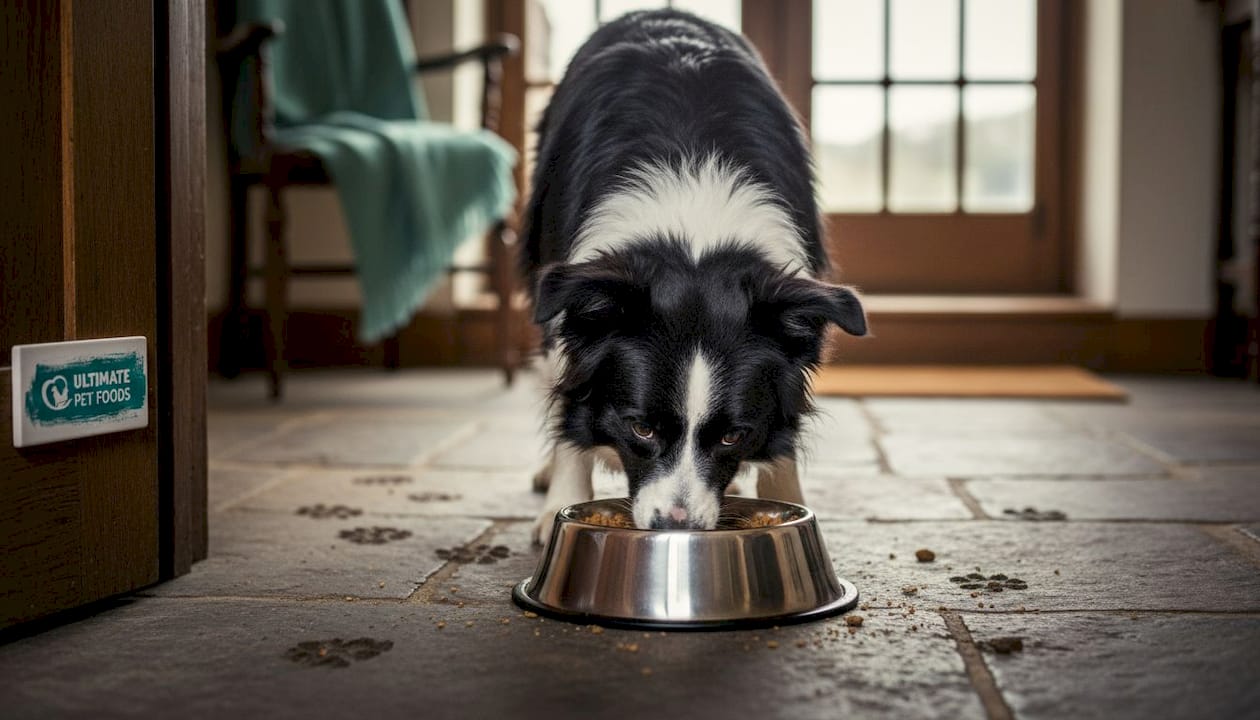
Research from Antarctic sled dog expeditions makes this vivid. Sledge dogs required up to 5,000 kcal per day during heavy pulling, compared to just 2,500 kcal when idle. High-fat diets demonstrated superior recovery in these dogs, and seal meat showed exceptional digestibility, pointing clearly to the value of high-quality animal protein sources.
Here is what sets working dog nutrition apart from ordinary pet feeding:
- Energy demand: Sustained physical activity raises caloric needs by 100 to 200 percent above baseline.
- Muscle turnover: Repeated exertion breaks down muscle tissue faster, requiring more protein to rebuild and maintain lean mass.
- Joint loading: Daily physical stress accelerates wear on cartilage, making supportive nutrients non-negotiable.
- Thermoregulation: Dogs working outdoors in cold conditions burn extra energy simply maintaining body temperature.
- Recovery rate: Working dogs need efficient post-exercise recovery, which depends on nutrient density and digestibility rather than mere volume of food.
“Working dogs are not just pets that exercise more. They are athletes with genuinely distinct physiological demands. Feeding them like a companion animal is like fuelling a marathon runner on a desk worker’s diet.”
The most common mistake we see is owners underestimating protein and caloric needs during peak working seasons. When a sheepdog moves from light duties in winter to intensive lambing-season work in spring, their daily ration should shift accordingly. Treating feeding as a fixed constant rather than a dynamic variable is where many well-meaning owners go wrong. From here, nutrition for peak performance becomes the natural next focus.
Macronutrients and supplements for sustained energy
Getting the macronutrient balance right is the single most impactful thing you can do for your working dog’s performance and long-term health. The good news is that the research here is clear and consistent.
Optimal protein for working dogs sits in the range of 28 to 40 percent, with fat providing 15 to 30 percent and digestible carbohydrates contributing 20 to 40 percent for quick-release energy. These are not arbitrary figures; they reflect how a working dog’s body actually prioritises fuel during different phases of effort.
According to NRC protein guidelines, adult maintenance requires a minimum of 2.62 g of crude protein per kg of bodyweight to the power of 0.75, but working dogs benefit from considerably higher levels. Stable isotope methods are now recommended over traditional nitrogen balance studies for more precise protein assessment in active animals.
Here is a practical breakdown of how macronutrient needs shift by work intensity:
| Work level | Protein (DM%) | Fat (DM%) | Carbohydrates (DM%) |
|---|---|---|---|
| Light (1-2 hours/day) | 28-30% | 15-18% | 30-40% |
| Moderate (2-4 hours/day) | 30-35% | 18-24% | 25-35% |
| Heavy (4+ hours/day) | 35-40% | 24-30% | 20-30% |
| Extreme endurance (e.g., sled) | 40%+ | 28-35% | 20-25% |
Beyond the core macronutrients, key supplements for working dogs include omega-3 fatty acids in the form of EPA and DHA for anti-inflammatory support and coat health, glucosamine and chondroitin for joint integrity, and antioxidants including vitamins E and C to aid recovery from oxidative stress.
Here is how we recommend prioritising supplementation for active working breeds:
- Omega-3 fatty acids (EPA/DHA): Reduce systemic inflammation caused by repeated physical stress and support a healthy, weather-resistant coat. Look for foods that include oily fish such as salmon or herring as primary ingredients.
- Glucosamine and chondroitin: Essential for maintaining cartilage in breeds that spend years running on hard terrain. These compounds support joint health for dogs by slowing cartilage breakdown and supporting synovial fluid production.
- Vitamin E and C: Neutralise free radicals produced during intense exercise, reducing recovery time and supporting immune function year-round.
- B vitamins: Support energy metabolism at the cellular level, helping convert protein and fat into usable fuel more efficiently.
- Zinc and biotin: Maintain skin barrier function and coat quality, both of which take a battering in dogs working in wet, cold, or rough terrain.
Pro Tip: Adjust your working dog’s ration upward by 10 to 20 percent during peak working seasons such as lambing, harvest, or winter patrol, and reduce proportionally during quieter periods. Keeping portions static all year leads to either underfeeding in heavy work periods or unnecessary weight gain in quieter months.
Premium grain-free diets: benefits and cautions
Grain-free diets have been heavily marketed as the gold standard for working dogs, and in some cases, that reputation is earned. But the full picture is more nuanced, and making the right call for your dog requires understanding both the genuine advantages and the very real cautions.
The benefits of grain-free vs grain-inclusive food come into sharp focus for dogs with diagnosed sensitivities. A working Cocker Spaniel suffering from chronic itching and loose stools due to grain intolerance will very likely thrive on a well-formulated grain-free diet. For that dog, the improved digestibility and reduced allergenic load can make a genuine and measurable difference to both comfort and performance.
However, grain-free diets carry cautions that should not be dismissed. The potential link between grain-free diets high in legume substitutes and dilated cardiomyopathy (DCM), a serious heart condition, has drawn attention from veterinary cardiologists. While the science is still evolving, it is enough to counsel caution when grain-free diets are chosen for marketing reasons rather than genuine medical need.
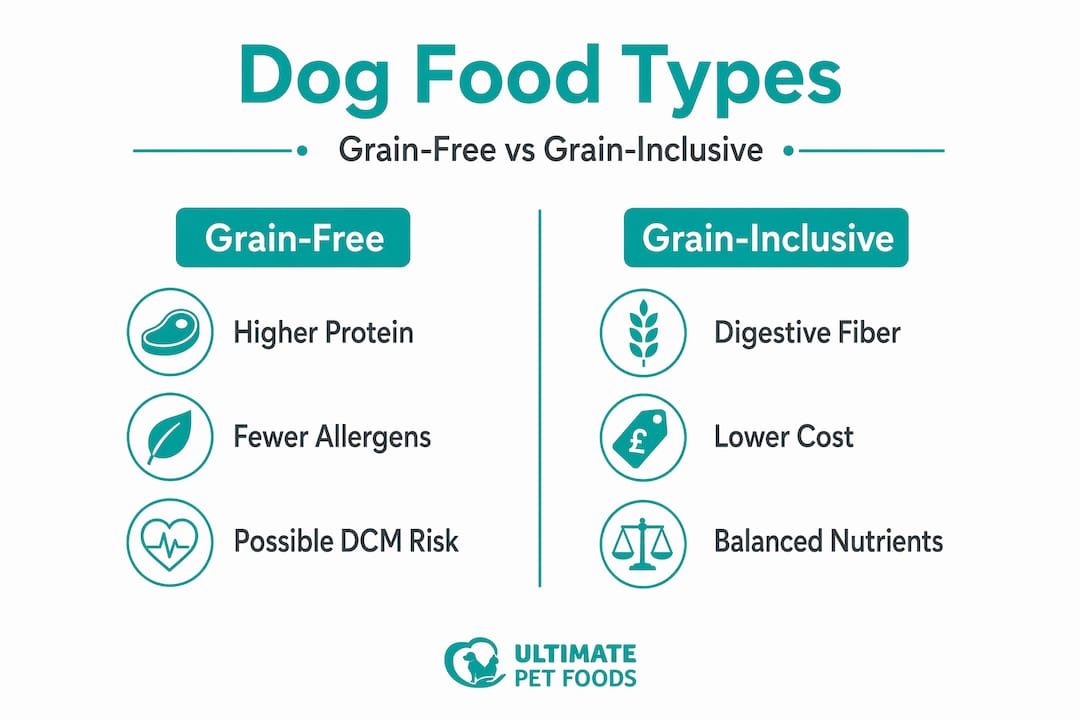
Here is a clear comparison of both approaches to help you decide:
| Feature | Premium grain-free | Quality grain-inclusive |
|---|---|---|
| Protein density | Typically higher | Moderate to high |
| Digestibility | High (with quality protein sources) | Good with whole grains |
| Suited for allergy-prone dogs | Yes, if grain sensitivity confirmed | Less suitable |
| DCM risk concern | Under investigation for legume-heavy formulas | Lower |
| Cost | Generally higher | More accessible |
| Ideal for | Dogs with sensitivities, high-performance athletes | Most healthy working dogs |
WSAVA guidelines emphasise that feeding decisions should be guided by full-time board-certified nutritionists, feeding trials, and transparent ingredient sourcing rather than buzzwords on a bag. The most important principle is: choose based on your dog’s individual needs, not based on marketing trends.
The key benefits of grain-free options for allergies are real and clinically meaningful for affected dogs. Improved stool consistency, reduced skin inflammation, and better energy utilisation are all genuinely observed when the right dog gets the right formula. The critical phrase is “the right dog.”
Looking at contrasting views on grain-free reveals that true grain allergies are relatively uncommon in dogs. Many owners who believe their working dog is grain-intolerant are actually dealing with a protein sensitivity or a general food quality issue. Understanding the broader benefits of grain-free diets requires honest assessment rather than assumption.
Pro Tip: Before switching to grain-free, complete an elimination diet under veterinary guidance to confirm whether grains are genuinely the culprit. Switching on a hunch can complicate diagnosis and introduce unnecessary nutritional risk.
When to consult your vet:
- Your working dog has persistent digestive issues, itching, or poor coat quality despite a good-quality diet.
- You are considering a significant dietary change such as moving to raw, grain-free, or a specialist performance formula.
- Your dog’s work intensity or life stage is changing substantially, such as moving from working to retirement.
Putting it all together: feeding for optimal performance
Translating nutrition science into a practical daily feeding routine is where many owners feel uncertain. The steps below give you a clear, structured approach that takes your dog’s workload, body condition, and seasonal changes into account.
AAFCO-compliant performance formulas with high animal-based protein and fat are the recommended foundation. For dogs doing extreme endurance work, rations may need to double compared to a standard maintenance diet. Start here and build from the following steps.
- Assess your dog’s body condition score (BCS): Use a 1 to 9 scale. Working dogs should sit between 4 and 5, with ribs easily felt but not visually prominent. A BCS that is too low signals underfeeding; too high suggests overfeeding relative to workload.
- Calculate baseline caloric needs: Use your dog’s ideal bodyweight and activity multiplier. A working Border Collie of 20 kg doing four hours of active herding daily needs roughly 1,600 to 2,000 kcal per day, not the 900 kcal a pet of the same size might need.
- Choose a formula matched to work intensity: Explore active dog food options that are specifically developed for high-performance breeds rather than general maintenance.
- Divide daily rations appropriately: For most working dogs, two meals per day work well. Avoid feeding large portions immediately before intense work to reduce the risk of bloat, particularly in deep-chested breeds.
- Monitor and adapt weekly: Look for changes in coat quality, stool consistency, energy during work, and lean muscle retention. These are your most reliable real-time indicators of dietary success.
- Review seasonally: Reduce portions during rest periods, increase them during peak work. Do not assume a single feeding plan covers the whole year.
Pro Tip: Keep a simple weekly log noting your dog’s body condition, work hours, stool quality, and any changes to diet. After four to six weeks of any dietary change, reviewing the log gives you objective evidence of what is working and what needs adjustment. This habit separates elite working dog management from guesswork.
Why evidence-based feeding trumps fads and labels
We have spent years working with owners of working breeds, and if there is one lesson we keep learning, it is this: the gap between what the packaging says and what the food actually delivers is wider than most people realise.
Labels like “premium,” “natural,” and “grain-free” are poorly regulated in the UK pet food market. They carry no standardised legal definition. A bag labelled “premium grain-free” could contain low-quality legume fillers that replace one digestibility problem with another, particularly the DCM-linked concern with excessive lentils or chickpeas. WSAVA-supported principles exist precisely because marketing language has outpaced nutritional science in too many product ranges.
What genuinely works for working dogs is feeding built around individual assessment rather than category assumptions. A Border Collie doing intensive trials has different needs from a Labrador on a rough shoot, even if both are technically “working dogs.” Body weight, breed, specific task, climate, and health history all shift what optimal feeding looks like.
We also see owners making one-off dietary changes, which are far less effective than building a review cycle into their routine. Feeding is not a “set it and forget it” task for a working dog. It is an ongoing, responsive process that rewards consistency and honest observation. Using practical nutrition guidance as a framework, combined with regular vet check-ins, produces measurably better outcomes than relying on one product’s marketing claims.
The most important shift is moving from reactive feeding (changing the diet when something goes wrong) to proactive feeding (adjusting regularly to keep the dog thriving). Every strong performance at the end of a long day in the field starts with what goes into the bowl the night before.
Find the perfect nutrition for your working dog
Your working dog puts everything into their role, and their food should do the same. At Ultimate Pet Foods, we have developed a range of grain-free diet options specifically formulated with the energy, protein, and recovery needs of active and working breeds in mind.

Whether you are looking for guidance on nutrition for peak performance or want to compare dry dog food options side by side, our tools and guides make the decision straightforward. Our recipes are built on fresh, natural ingredients with transparent sourcing, so you always know exactly what is fuelling your dog’s best work. 🐾
Frequently asked questions
How much food should I feed my working dog daily?
A working dog may need 2 to 3 times the calories of a sedentary pet, so portion sizes should be adjusted based on work intensity, body condition score, and seasonal workload changes.
Is a grain-free diet always better for working dogs?
Not always. Grain-free foods can benefit dogs with confirmed grain sensitivities, but most working dogs with no diagnosed intolerance thrive equally well on a high-quality grain-inclusive performance formula; always consult your vet before switching.
What supplements should working dogs get?
Omega-3 fatty acids, glucosamine and chondroitin, and antioxidants such as vitamins E and C are the core supplements that support joint health, systemic recovery, and inflammation management in high-activity breeds.
How do I tell if my working dog’s diet is optimal?
Monitor energy levels during and after work, stool consistency, coat condition, and body condition score weekly, then adjust portions and formula as their workload or season shifts.
Can working dogs have protein overload?
Working dogs genuinely benefit from higher protein than pets, but formulations should still meet AAFCO performance standards to ensure balance rather than excess in any single macronutrient.


