
Dog food for gas: what to feed and how to fix it fast
The fastest way to reduce dog flatulence is a highly digestible, low-residue diet or a hydrolysed digestive-care formula with added prebiotics (MOS and FOS), paired with slower eating and zero table scraps. Most gassy dogs improve within a few weeks once the gut gets less fermentable material to work with. We recommend our everyday kibbles as a daily foundation, and our Ultimate+ Functional Health Digestive Care formula, made with hydrolysed protein, for dogs who need more targeted support.
Start today with these three changes:
- Swap fast eating for a slow-feeder bowl or puzzle feeder
- Cut out dairy, fatty scraps, and anything from the bin
- Split meals into two smaller portions rather than one large feed
Pro Tip: A frozen puzzle feeder does double duty. It slows gulping and gives your dog something satisfying to work at, rather than something to guard or gobble.
Key Takeaways
A diet-first approach, built on high digestibility, added prebiotics, and slower eating, resolves excessive dog flatulence in most cases without needing supplements or vet intervention.
| Point | Details |
|---|---|
| Two root causes | Gas comes from swallowed air (aerophagia) or bacterial fermentation of undigested food in the colon. |
| Smell signals fermentation | Odourless gas usually means swallowed air; foul-smelling gas points to fermentation of protein or fibre. |
| Avoid key ingredients | Limit soy, peas, dairy, and heavy fermentable fibres, which increase colonic fermentation. |
| Transition gradually | Switch food over 7 to 10 days and monitor stool and gas for three full weeks before judging results. |
| Choose the right everyday diet | Ultimatepetfoods’ freshly prepared kibble with MOS and FOS suits daily feeding; Ultimate+ Digestive Care offers hydrolysed support for suspected intolerance. |
Table of Contents
- What causes dog food for gas problems in the first place?
- Which ingredients make dog flatulence worse?
- Simple feeding fixes that cut gas without changing brand
- How do you choose a low-gas dog food?
- Switching your dog’s diet safely: a step-by-step plan
- When should you call the vet about dog gas?
- Getting portion sizes and meal timing right
- Do probiotics and digestive enzymes actually help?
- Our recommendation: everyday kibble or Ultimate+ Digestive Care
- Sources
What causes dog food for gas problems in the first place?
Two mechanisms sit behind nearly every gassy dog: swallowed air and gut bacteria. Aerophagia happens when a dog gulps food (or water) too quickly and drags air down with it. The second cause, bacterial fermentation in the colon, happens when undigested protein, starch, or fibre reaches the large intestine and gut bacteria break it down, releasing gas as a by-product.
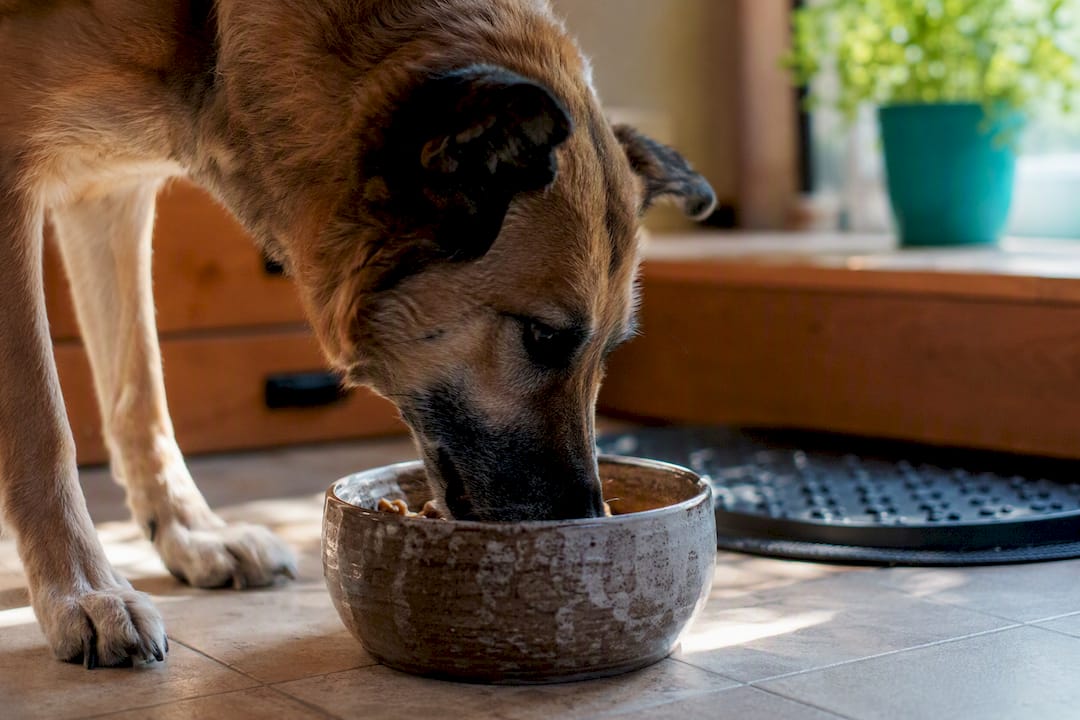
Here’s the detail that surprises most owners: over 99% of intestinal gas is odourless. The smell comes from a small fraction of sulfur-containing gases, produced specifically during bacterial fermentation of protein and fibre. A loud but odourless fart usually points to swallowed air. A quiet, foul one usually points to something fermenting that shouldn’t be.
Common triggers stack on top of these two mechanisms:
- Eating too fast, especially in multi-dog households
- A sudden diet change instead of a gradual switch
- Low-digestibility ingredients like soy, peas, or dairy
- Underlying gut conditions such as IBD, EPI, or SIBO
Which ingredients make dog flatulence worse?
Some ingredients are simply harder for a dog’s gut to process cleanly, and what doesn’t get absorbed in the small intestine ends up feeding bacteria further down. If you’re checking a label, these are the usual suspects:
- Soy and soybean meal. Cheap plant protein that’s harder to digest fully than named animal meat.
- Peas and other legumes. Common in grain-free budget formulas, but high in fermentable starches and oligosaccharides.
- Dairy. Most adult dogs have reduced lactase activity, so milk-based treats or cheese scraps often ferment rather than digest.
- High-fermentable fibres. Inulin, beet pulp, and psyllium are added for stool quality but can backfire in sensitive dogs when used too heavily.
- Fatty table scraps. Rich, fatty food slows gastric emptying and gives bacteria more raw material to work on.
Vets generally point owners toward diets built around a single, named animal protein and easily digestible carbohydrates such as rice, with total fibre kept modest, often around 5% dry matter for gas-prone dogs.
Pro Tip: Turn the bag over before you buy. If “pea protein” or “soy” appears in the first five ingredients, that formula is working against you, not with you.
Simple feeding fixes that cut gas without changing brand
Before you touch the food itself, feeding habits are worth fixing first, because they’re free and immediate.
- Use a slow-feeder bowl, especially for dogs who finish a meal in under a minute
- Feed multiple dogs separately if one is a food guard or a speed-eater
- Split daily food into two or three smaller meals instead of one big one
- Skip the post-dinner treat binge and the table scraps altogether
- Take a short walk after eating to help settle digestion
- Keep bins secured and discourage scavenging on walks, a major hidden source of swallowed air and rubbish ingestion
Small changes here often bring visible improvement before you’ve even opened a new bag of food.
How do you choose a low-gas dog food?
Once feeding habits are sorted, the diet itself needs to earn its keep. Diet, swallowed air, and treats are consistently flagged as the most common, most fixable causes of gas, which means the food you choose does most of the heavy lifting.
Look for:
- A single named animal protein (chicken, salmon, or similar) rather than a blend of plant proteins
- Added prebiotics like MOS and FOS, which support a healthier gut bacterial balance rather than feeding the wrong bacteria
- No soy, no peas as a primary protein source, and no unnecessary fermentable fibres
- A hydrolysed protein option if you suspect a genuine food intolerance rather than just poor digestibility
Hydrolysed diets break protein down into fragments too small for the immune system to react to, which is why they’re a standard therapeutic option when a straightforward elimination diet isn’t practical. They’re not a short-term fix. Used as an everyday diet, a well-formulated hydrolysed food can support a sensitive gut for life.
Switching your dog’s diet safely: a step-by-step plan
Rushing a diet change is one of the most common ways owners accidentally make gas worse. A gradual transition over 7 to 10 days gives the gut microbiome time to adjust rather than being shocked into overdrive.
- Days 1 to 3: mix 25% new food with 75% old food
- Days 4 to 6: move to a 50/50 split
- Days 7 to 10: shift to 75% new food, then fully switch
- Weeks 2 to 3: monitor stool consistency, appetite, and gas levels before judging the result
Give any new diet a full three weeks before deciding it hasn’t worked. While you watch and wait, run a treat audit alongside it:
- Aim for 80–90% of daily calories from the complete diet, not treats or scraps
- Choose single-ingredient treats over anything ultra-processed
- If gas persists despite a clean switch, that’s a signal to consider our hydrolysed Digestive Care option rather than another round of brand-hopping
Our guide on how to switch dog food safely walks through this in more detail if you want a printable version to follow week by week.
When should you call the vet about dog gas?
Gas alone rarely needs a vet visit, but certain signs change that. Get in touch if you see persistent vomiting, diarrhoea, unexplained weight loss, lethargy, or a sudden shift in appetite or stool. These can point to underlying conditions such as IBD, EPI, or SIBO that diet alone won’t fix.
Your vet will likely ask about:
- A stool sample and possibly bloodwork or pancreatic function tests
- Exact food and treat brands, quantities, and feeding times
- Any pattern you’ve noticed between specific foods and worse gas
Bring notes rather than memory. A week of written feeding and stool observations saves consultation time.
Getting portion sizes and meal timing right
Even the right food can cause gas if the portions or timing are wrong. Overfeeding pushes more volume through the gut than it can digest efficiently in one pass, and the surplus becomes fermentation fuel further down the line.
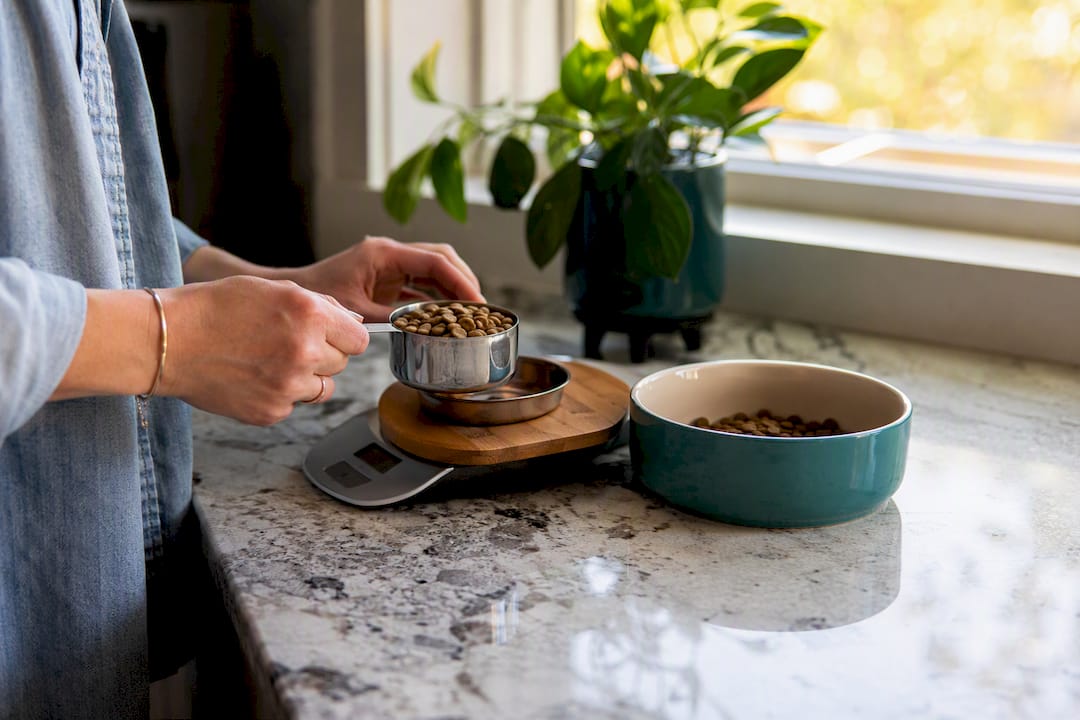
Start with the feeding guide on your dog food’s packaging, then adjust based on body condition rather than sticking rigidly to the chart. A dog carrying extra weight needs less than the guide suggests; a lean, active dog may need slightly more. Weigh food rather than eyeballing it. Cup measurements are notoriously inconsistent and lead to accidental overfeeding, which shows up as both weight gain and worse gas.
Timing matters as much as quantity. Two or three smaller meals, spaced through the day, tend to produce less gas than one large meal, because a smaller volume of food is easier for stomach acid and enzymes to break down before it reaches the colon. This is particularly useful for large or deep-chested breeds prone to bloat, where a single big meal carries other risks too.
Keep feeding times consistent. A dog fed at wildly different times each day tends to arrive at the bowl hungrier and eats faster as a result, undoing the benefit of a slow-feeder. Stick to a routine: same times, same portions, weighed rather than guessed, and reviewed every few weeks as your dog’s weight and activity level change.
Do probiotics and digestive enzymes actually help?
Probiotics work by shifting the balance of bacteria in the gut toward strains that produce less gas and support firmer stools, while prebiotics like MOS and FOS act as fuel for those beneficial bacteria specifically, rather than for the fermentation-prone species linked to smelly gas. Our everyday recipes already include MOS and FOS for this reason, so many dogs get this support simply through their daily food rather than needing a separate supplement.
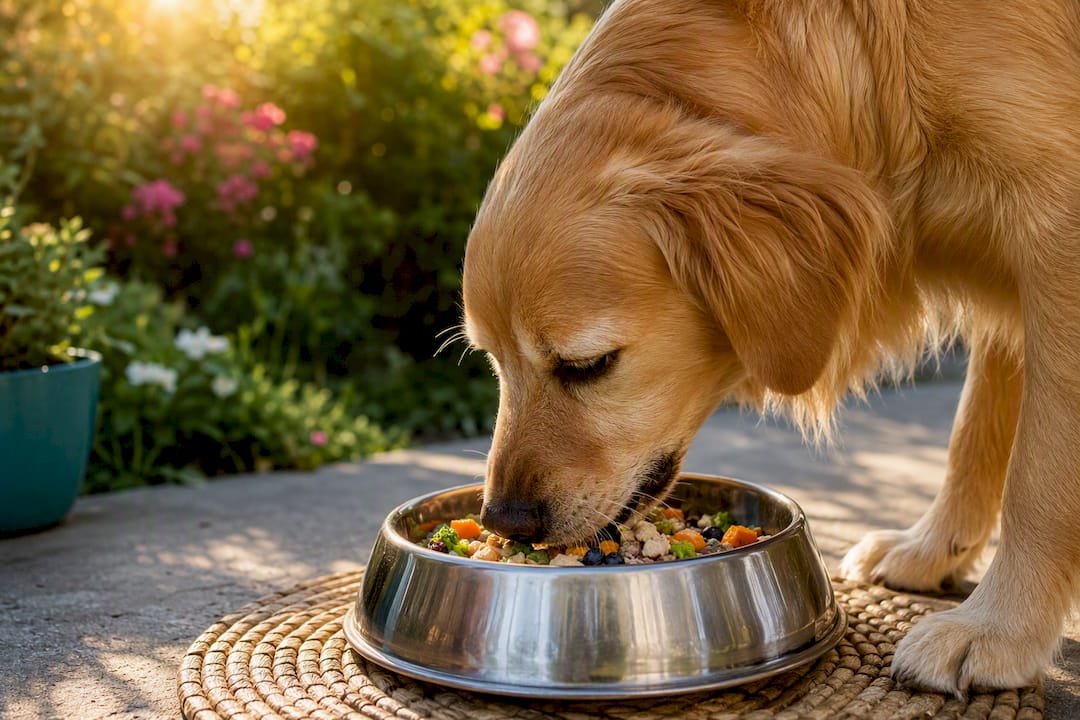
Digestive enzymes work differently. Rather than changing the bacterial population, they help break down fat, protein, and starch further up the gut, meaning less undigested material reaches the colon for bacteria to ferment in the first place. They’re worth discussing with your vet for dogs with confirmed pancreatic insufficiency, but they’re not usually a first step for otherwise healthy dogs with routine gas.
Some odour-control additives, such as Yucca schidigera or zinc acetate, exist on the market but sit as second-line options, not replacements for fixing the diet itself. If you want to add a probiotic supplement on top of a good diet, choose one recommended by your vet rather than the first tub you see online, and introduce it gradually alongside your food transition rather than all at once.
Author note from Glenn: a practical, realistic view
Diet-first fixes work for most gassy dogs, but they’re not magic. If gas persists past three clean weeks on a good diet, that’s not a diet failure. That’s your vet’s cue to look deeper, and it’s worth listening to.
Our recommendation: everyday kibble or Ultimate+ Digestive Care
If your dog’s gas is mostly down to fast eating, scraps, or a low-quality diet, an everyday complete kibble is usually enough. Ultimatepetfoods recipes use freshly prepared meat or fish, gently cooked at 82°C to help lock in freshness and nutrients, with human-grade ingredients and added MOS and FOS in every complete formula. They’re built for daily, lifelong feeding across breeds and life stages, not a short-term fix you swap out once symptoms ease.
If you suspect a genuine intolerance rather than simple poor digestibility, our Ultimate+ Functional Health Digestive Care range uses hydrolysed protein designed for everyday, targeted digestive support, sitting alongside our Skin & Coat Care, Weight Control & Joint Care, Dental Care, and Healthy Living formulas for other everyday needs. Start with our High Meat Chicken recipe if your dog just needs a cleaner, more digestible everyday diet, and follow our switching guide to introduce it gradually over 7 to 10 days.
Sources
- Dogs and gas | VCA Animal Hospitals
- Dog farting and gas | PDSA
- Vet nutrition guide 2025: flatulence in dogs | Ask A Vet
FAQ
What is the best dog food for dogs with gas?
A highly digestible diet built around a single named animal protein, modest fibre, and added prebiotics like MOS and FOS tends to work best. Dogs with suspected intolerance often do better on a hydrolysed formula.
What should I feed my gassy dog?
Feed a complete, low-residue diet free from soy, peas, and dairy, split into smaller meals, and cut out fatty table scraps. Our everyday kibble range and Ultimate+ Digestive Care formula are both built around this approach.
What can I give my dog to reduce his gas?
Slow-feeder bowls, smaller and more frequent meals, and a diet with added prebiotics are the most reliable first steps. Persistent cases may need a vet-recommended probiotic or a hydrolysed diet.
What foods cause gas in dogs?
Soy, peas and other legumes, dairy, and highly fermentable fibres such as inulin or beet pulp are the most common dietary triggers, alongside fatty table scraps and rubbish scavenged on walks.