

Best dog food for skin conditions: expert guide 2026

TL;DR:
- Protein sensitivities, mainly beef dairy and chicken, cause most skin issues in dogs, not grains.
- Elimination diets with novel or hydrolyzed proteins improve skin health over 4 to 12 weeks.
- Quality balanced nutrition with omega fatty acids and essential nutrients promotes skin repair.
If your dog is scratching, itching, or developing a dull coat, your first instinct might be to blame grains. It’s a common reaction, and one that’s driven by years of marketing rather than science. The truth is, protein sensitivities are the primary cause of food-related skin conditions in dogs, not grains. Beef, dairy, and chicken are the real culprits in the vast majority of cases. This guide cuts through the noise and gives you a clear, evidence-based path to choosing the best food for your dog’s skin health.
Table of Contents
- What causes skin conditions in dogs?
- How elimination diets and novel proteins improve skin health
- Nutritional essentials for healthy canine skin
- Do grain-free diets work for canine skin sensitivities?
- Switching dog food safely: step-by-step guide for sensitive skin
- Our perspective: why the right diet for skin is about quality, not marketing
- Explore premium dog food for skin conditions
- Frequently asked questions
Key Takeaways
| Point | Details |
|---|---|
| Most skin issues are protein-related | Dogs react more often to proteins like beef or chicken than to grains in their food. |
| Elimination diets are gold standard | Strict novel or hydrolysed protein diets for 6–12 weeks are the best way to diagnose food allergies. |
| Nutrients aid skin repair | Omega-3, omega-6, zinc, and vitamin E help soothe and repair sensitive canine skin. |
| Transition food changes carefully | Make changes over 7–10 days and monitor all treats and supplements to avoid flare-ups. |
What causes skin conditions in dogs?
Now that we’ve identified the most common misconception about grains, let’s look deeper at the actual dietary triggers. Many dog owners spend months switching between grain-free options without seeing any real improvement, and that’s because they’re solving the wrong problem.
The food allergy guidance is clear: adverse reactions to protein are responsible for the majority of food-related skin issues in dogs. Beef accounts for around 34% of cases, dairy for 17%, and chicken for 15%. Grains, by contrast, are only implicated in roughly 10 to 15% of cases. That’s a significant gap, and it matters enormously when you’re trying to find the right diet.
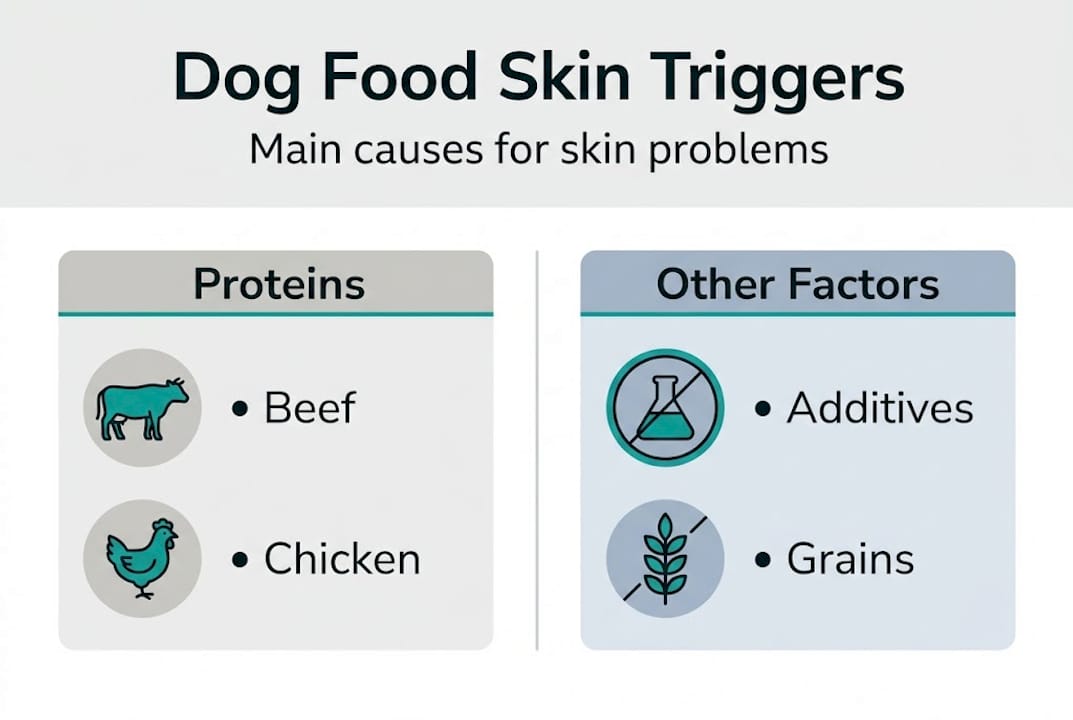
Here’s a quick overview of the most common dietary triggers:
| Ingredient | Approximate contribution to skin reactions |
|---|---|
| Beef | 34% |
| Dairy | 17% |
| Chicken | 15% |
| Wheat/Grains | 10–15% |
| Egg | ~10% |
Beyond diet, other factors can compound skin problems:
- Genetics: Certain breeds, including West Highland White Terriers and French Bulldogs, are predisposed to skin sensitivities
- Environmental allergens: Pollen, dust mites, and mould can trigger or worsen skin flare-ups
- Flea allergy dermatitis: One of the most common non-food causes of itching in dogs
- Poor-quality diets: Nutritionally incomplete foods can cause what’s known as ‘generic food dermatosis’
“The most common dietary triggers of canine skin conditions are proteins, not grains. Misidentifying the cause leads to ineffective dietary changes and prolonged discomfort for your dog.”
Our grain-free allergy guide goes into more detail on when grain-free diets are genuinely appropriate. And if you’re wondering whether your dog’s breed has specific dietary needs, our grain-free diet breeds resource is a helpful starting point.
How elimination diets and novel proteins improve skin health
Understanding what causes skin issues is only half the battle; let’s explore how to address them practically. The good news is that dietary skin conditions are among the most manageable, provided you follow the right process.
The gold standard for diagnosis is a 6 to 12 week elimination diet trial using novel or hydrolysed proteins. This means feeding your dog a single protein source they’ve never eaten before, or a hydrolysed diet where proteins are broken down into tiny fragments that the immune system cannot recognise as a threat.
Here’s a step-by-step approach to running an effective elimination trial:
- Choose a novel protein: Options like duck, venison, salmon, or rabbit work well for most dogs who’ve previously eaten chicken or beef-based foods
- Eliminate everything else: No treats, table scraps, flavoured medications, or chews during the trial period
- Commit to the timeline: Symptoms can take 4 to 8 weeks to resolve, so patience is essential
- Consider hydrolysed diets: These are particularly useful when you’re unsure which proteins your dog has already been exposed to
- Reintroduce carefully: Once symptoms clear, you can reintroduce single proteins one at a time to identify the specific trigger
| Diet type | Best for | Typical resolution time |
|---|---|---|
| Novel protein diet | Known protein exposure history | 6–12 weeks |
| Hydrolysed protein diet | Unknown or complex history | 4–8 weeks |
| Limited ingredient diet | Mild sensitivities | 4–6 weeks |
Our hydrolyzed protein guide explains the science behind this approach in plain language. You can also explore the benefits of hydrolysed food and weigh up the pros and cons of hydrolysed food before deciding.
Pro Tip: Keep a simple skin diary during the elimination trial. Note itching frequency, coat condition, and any digestive changes weekly. This makes it far easier to spot genuine improvement and share useful information with your vet.
Nutritional essentials for healthy canine skin
While novel proteins and elimination diets are critical in diagnosis, optimising nutrition accelerates skin healing. Even if you’ve identified and removed the offending protein, a diet lacking in key nutrients will slow recovery significantly.

Omega-3 and omega-6 fatty acids are proven to reduce itching by up to 40% and support skin barrier repair. That’s not a minor benefit. These fatty acids work by reducing inflammation, strengthening the lipid layer of the skin, and improving coat gloss and texture.
Here are the key nutrients your dog needs for healthy skin:
- Omega-3 (EPA and DHA): Found in oily fish like salmon and mackerel. Reduces inflammation and supports the skin barrier
- Omega-6 (linoleic acid): Found in plant oils like sunflower and evening primrose. Maintains skin moisture and elasticity
- Zinc: Essential for skin cell renewal and wound healing. Deficiency is surprisingly common in dogs fed low-quality diets
- Vitamin E: A natural antioxidant that protects skin cells from oxidative damage and supports immune function
- Biotin: Supports keratin production, which is the structural protein in skin and coat
💡 Did you know? Dogs fed nutritionally incomplete diets can develop persistent skin issues that have nothing to do with allergies. Upgrading to a complete, balanced diet often resolves these cases within weeks.
Our hydrolysed dog food benefits article explains how premium formulations are designed to deliver these nutrients consistently. You can also read about the broader grain-free diet benefits for dogs with skin sensitivities.
Pro Tip: If your dog’s food doesn’t list a named fish oil or specific omega source in the ingredients, it likely doesn’t contain enough to make a meaningful difference to skin health.
Do grain-free diets work for canine skin sensitivities?
It’s clear that nutrition matters, but what about the ongoing debate over grain versus grain-free dog food? This is where many owners feel confused, and understandably so.
The science is fairly straightforward. Grain-free diets are not superior for most skin allergies, and balanced grain-free foods are safe when formulated correctly. The key word there is balanced. The concern arises when grain-free foods rely heavily on legumes like peas and lentils as primary carbohydrate sources, which has been linked to potential heart issues in some dogs.
Here’s a balanced comparison to help you decide:
| Factor | Grain-inclusive diet | Grain-free diet |
|---|---|---|
| Appropriate for grain sensitivity | No | Yes |
| Appropriate for protein allergy | Yes (if correct protein) | Yes (if correct protein) |
| Risk of DCM (heart issues) | Low | Low if balanced; higher if legume-heavy |
| Generally recommended for skin | Only if grain-sensitive | Not universally superior |
When grain-free is genuinely appropriate:
- Your dog has a confirmed sensitivity to wheat, barley, or rye
- Your vet has recommended it as part of a broader dietary plan
- The formula is nutritionally complete and not dominated by legumes
- You’ve chosen a premium brand with transparent ingredient sourcing
“Choosing grain-free simply because it sounds healthier is not evidence-based. Choose it because your dog’s specific needs point to it.”
Our grain-free feeding guide and our resource on grain-free benefits for UK dogs can help you make a genuinely informed choice.
Switching dog food safely: step-by-step guide for sensitive skin
To get the best results from any diet change, it’s essential to transition carefully and monitor improvements closely. Rushing a food switch is one of the most common mistakes owners make, and it often leads to digestive upset that masks any skin improvements.
Follow this approach for a smooth and effective transition:
- Days 1 to 3: Feed 75% old food, 25% new food
- Days 4 to 6: Feed 50% old food, 50% new food
- Days 7 to 9: Feed 25% old food, 75% new food
- Day 10 onwards: Feed 100% new food
During the transition period, keep these points in mind:
- No treats or table scraps: Even a small amount of the wrong protein can invalidate an elimination trial
- Track symptoms weekly: Use a simple scale to note itching intensity, coat condition, and energy levels
- Address flea control simultaneously: Many skin issues are not food-related at all, and flea allergy dermatitis is extremely common
- Be patient: Genuine dietary improvement to skin takes 4 to 8 weeks, sometimes longer
Our sensitive digestion guide is particularly useful if your dog also experiences stomach upset during transitions. Research also shows that low-quality diets can cause a form of skin condition that resolves simply by upgrading to a complete, nutritionally balanced food.
Pro Tip: Take weekly photos of your dog’s skin and coat under the same lighting conditions. Visual comparisons over 8 weeks are often more revealing than day-to-day observation alone.
Our perspective: why the right diet for skin is about quality, not marketing
After exploring the evidence and practicalities, here’s our take based on research and real results. We see a lot of dog owners arrive frustrated after trying three or four grain-free foods with no improvement. The issue is rarely the grain. It’s almost always the protein, the quality of ingredients, or the nutritional completeness of the diet.
Marketing in the pet food industry is powerful and often misleading. Labels that shout ‘grain-free’, ‘ancestral diet’, or ‘wild-inspired’ can distract from what actually matters: whether the food is complete, digestible, and free from the specific protein your dog reacts to.
Research confirms that low-quality diets cause ‘generic food dermatosis’, a skin condition reversed simply by switching to a complete, balanced diet within 15 to 30 days. No novel protein required. No elimination trial. Just better food.
We believe that understanding not all hydrolysed protein is equal is one of the most important things a dog owner can learn. Quality, completeness, and transparency of ingredients are what separate genuinely skin-supportive foods from those that simply carry a trendy label. Trust the results you see in your dog, not the promises on the packaging.
Explore premium dog food for skin conditions
Ready to take action? Here’s where to start finding the best food for your dog’s skin. 🐾
At Ultimate Pet Foods, we’ve developed nutritionally complete, grain-free formulations specifically designed to support skin and coat health. Every recipe is built around high-quality, traceable ingredients with the right balance of omega fatty acids, zinc, and vitamins to support genuine skin repair from the inside out.
Explore our grain-free skin and coat care food to see our specialist range. You can also read more about the grain-free diet benefits or use our dry dog food comparison to find the right fit for your dog’s specific needs. Your dog’s skin deserves more than a marketing promise.
Frequently asked questions
Which protein is best for dogs with skin allergies?
Dogs with skin allergies often do best on novel or hydrolysed proteins such as duck, venison, or salmon. Your vet can help identify which option suits your dog’s specific history.
Are grain-free diets better for dogs with skin conditions?
Not necessarily. Only 10 to 15% of canine skin conditions are linked to grains, so most dogs benefit more from a change in protein source than a switch to grain-free.
How long does it take for a new diet to improve my dog’s skin?
Most experts recommend at least 4 to 8 weeks on a strict elimination diet before assessing improvement. Some dogs, particularly those with chronic conditions, may take longer.
Can supplements help my dog’s skin condition?
Yes. Omega-3, omega-6, zinc, and vitamin E are all clinically supported nutrients for canine skin repair and are most effective when included in a complete, balanced diet rather than added separately.


