
Vegetables good for dogs: top 10 safe picks
TL;DR:
- Safe vegetables like carrots, green beans, and pumpkin should be served plain, cooked appropriately, and in moderation, composing 10 to 20 percent of a dog’s diet. Proper preparation, including peeling skins and cutting into bite-sized pieces, minimizes health risks and aids digestion. Including traceable, named vegetables in complete dog food enhances nutritional value while maintaining transparency and safety.
Vegetables good for dogs are defined as plant-based foods that deliver genuine nutritional value, such as fibre, vitamins, and antioxidants, without posing a toxicity risk when served correctly. The American Kennel Club confirms that carrots, celery, green beans, peas, and broccoli are all safe in small, plain portions. Michigan State University Extension adds that preparation details, from peeling skins to removing seeds, are just as important as the choice of vegetable itself. At Ultimatepetfoods, we take that transparency further: every vegetable in our grain-free dry dog food recipes is named on the label, so you always know exactly what your dog is eating and why.
The best vegetables good for dogs: top 10 picks
1. Carrots
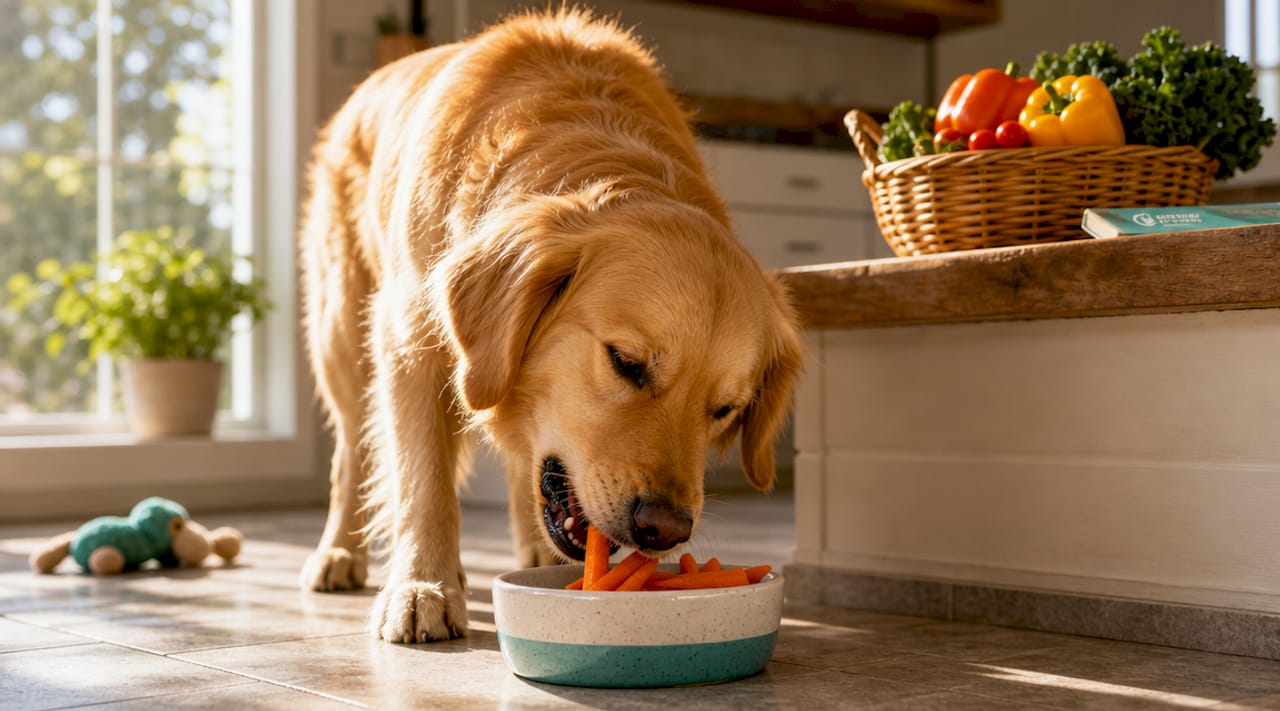
Carrots are one of the most dog-friendly veggies you can offer, and they earn their place for good reason. Raw carrots provide a satisfying crunch that supports dental health by gently scraping plaque from teeth. They are rich in beta-carotene, which the body converts to vitamin A to support eye health and immune function. Serve them raw as a treat or lightly steamed as a meal topper.
2. Green beans
Green beans are a low-calorie, high-fibre option that works particularly well for dogs managing their weight. They keep your dog feeling full without adding unnecessary calories to the daily intake. The key rule is to serve them plain. Fresh or frozen peas and green beans are safe, but canned versions often contain sodium levels that are unsafe for dogs, so always check the label.
3. Cucumber
Cucumber is roughly 96% water, making it a genuinely hydrating snack on warm days. It is very low in calories and contains small amounts of vitamins K, C, and B1. Peeling the cucumber skin and removing seeds before serving reduces the risk of digestive upset, particularly for dogs with sensitive stomachs. Slice into bite-sized pieces and serve chilled for a refreshing treat.
4. Broccoli
Broccoli delivers antioxidants and vitamin C, but it requires more care than most vegetables. It contains isothiocyanates, compounds that can cause gastric irritation in some dogs even after cooking. Cooking reduces choking risk and improves digestibility, but does not eliminate the irritation potential entirely. Feed only occasionally and in small florets, keeping it to a minor part of the meal rather than a regular addition.
Pro Tip: If your dog is new to broccoli, start with a single small floret and wait 24 hours before offering more. Any sign of loose stools or gas means broccoli is not the right fit for your dog.
5. Sweet potato
Sweet potato is one of the most nutrient-dense vegetables you can offer a dog. It is packed with dietary fibre, vitamin B6, vitamin C, and beta-carotene. Always serve it cooked, as raw sweet potato is hard to digest and can cause stomach discomfort. Baked or steamed with no seasoning is the safest approach, and it works beautifully as a warm meal topper on colder days.
6. Pumpkin
Pumpkin is the vegetarian equivalent of a digestive reset button. Its soluble fibre content means cooked pumpkin is commonly recommended by veterinarians to help regulate both constipation and diarrhoea by modulating stool consistency. A tablespoon of plain cooked or tinned pumpkin (with no added sugar or spice) stirred into your dog’s bowl is one of the simplest ways to support gut health between meals.
7. Peas
Peas offer a useful combination of plant-based protein and dietary fibre in a small, easy-to-serve package. Fresh or frozen peas are the safest choice. Avoid tinned peas, which frequently contain added salt. Peas also contain lutein, an antioxidant that supports eye and skin health. They can be mixed directly into your dog’s regular food or offered as a standalone treat straight from the freezer on a hot day.
8. Celery
Celery is about 95% water and provides a satisfying crunch alongside small amounts of vitamins A, C, and K. It is widely noted for its ability to freshen a dog’s breath, which makes it a practical as well as nutritious snack. Cut celery into small pieces to prevent any choking risk, particularly for smaller breeds. Its mild flavour means most dogs accept it readily without any persuasion.
9. Courgette (zucchini)
Courgette is one of the most underrated safe vegetables for dogs. It is low in calories, mild in flavour, and rich in fibre, making it easy to introduce even for fussy eaters. Both raw and cooked courgette are safe, though lightly steamed is easier on the digestive system. It is a particularly good option for dogs on a weight management plan, as it adds bulk to a meal without adding significant calories.
10. Spinach
Spinach is genuinely nutrient-dense, delivering iron, vitamins A, B, C, and K, and a range of antioxidants. However, it also contains oxalic acid, which in large amounts can interfere with calcium absorption and place strain on the kidneys. For healthy dogs, occasional small amounts of lightly steamed spinach are fine. Dogs with kidney conditions should avoid it entirely. Think of spinach as a nutritional bonus rather than a dietary staple.
How to prepare and serve vegetables safely
Preparation is where most feeding mistakes happen. Follow these steps to keep things safe and digestible for your dog.
- Serve everything plain. Seasonings cause vomiting and diarrhoea in dogs. No salt, oil, butter, garlic, or onion powder should ever touch your dog’s vegetables.
- Cook hard vegetables. Sweet potato, pumpkin, and broccoli should be steamed or baked before serving. Raw versions are difficult to digest and increase the risk of stomach upset.
- Peel waxy or tough skins. Cucumber skin, for example, can be harder to digest and may carry pesticide residue. Peeling takes seconds and removes the risk.
- Cut into appropriate sizes. Large chunks are a choking hazard, especially for small breeds. Bite-sized pieces are always the safer choice.
- Introduce one vegetable at a time. Adding multiple new foods simultaneously makes it impossible to identify which one caused a reaction. Introduce gradually and monitor for 24 to 48 hours.
- Avoid the onion family entirely. Onions, leeks, and garlic destroy red blood cells and can cause serious health issues. Wild mushrooms and asparagus should also be avoided. For a full list of foods to steer clear of, our guide on toxic foods for dogs covers everything in detail.
Pro Tip: A common and easily overlooked mistake is feeding dogs prepared human foods that contain hidden onion or garlic, such as soups, sauces, or stock. Always check ingredient labels on any cooked food before sharing it with your dog.
Quick comparison: veggies dogs can eat at a glance
| Vegetable | Key benefit | Serving style | Caution |
|---|---|---|---|
| Carrot | Beta-carotene, dental health | Raw or steamed | None for healthy dogs |
| Green bean | Low-calorie fibre | Plain, fresh or frozen | Avoid salted canned versions |
| Cucumber | Hydration, low calorie | Peeled, sliced | Remove seeds for sensitive dogs |
| Broccoli | Antioxidants, vitamin C | Cooked, small amounts | Isothiocyanates cause irritation |
| Sweet potato | Fibre, vitamins B6 and C | Cooked only | Never serve raw |
| Pumpkin | Digestive regulation | Plain cooked or tinned | No added sugar or spice |
| Peas | Protein, fibre, lutein | Fresh or frozen | Avoid salted tinned peas |
| Celery | Hydration, breath freshening | Chopped small | None for healthy dogs |
| Courgette | Low-calorie bulk | Raw or lightly steamed | None for healthy dogs |
| Spinach | Iron, vitamins, antioxidants | Lightly steamed, occasional | Avoid for dogs with kidney issues |
How much vegetable is right for your dog?
Vegetables should make up roughly 10 to 20% of your dog’s total daily diet. Exceeding this can cause vomiting, diarrhoea, or in the case of certain vegetables, cumulative toxicity. This means vegetables work best as treats or meal toppers rather than as a primary food source.
Portion size depends on your dog’s size and health status. A large Labrador can comfortably handle a handful of green beans as a treat, while a Chihuahua needs just a few small pieces of carrot to get the same benefit. Dogs with kidney disease, diabetes, or digestive conditions may need tailored guidance from their vet before you introduce new vegetables.
Here is a simple framework to follow:
- Small breeds (under 10 kg): 1 to 2 tablespoons of chopped vegetables per day
- Medium breeds (10 to 25 kg): 2 to 4 tablespoons per day
- Large breeds (over 25 kg): up to half a cup per day, split across meals
The most practical approach is to use vegetables as training treats or scatter them through your dog’s bowl as a topper. This keeps portions naturally controlled and adds variety without disrupting the nutritional balance of their main food. For guidance on safe portion sizes across all food types, our complete owner’s guide is a useful reference.
The foundation of your dog’s diet should always be a complete and balanced dry food. At Ultimatepetfoods, our grain-free recipes are made with freshly prepared meat or fish, gently cooked at 82°C to lock in nutrients and freshness. They include named vegetable and herb ingredients, clearly labelled so you can see exactly what goes in. Added prebiotics, MOS and FOS, support digestion and gut health every day, making vegetables a natural complement rather than a nutritional patch.
Key takeaways
The safest and most beneficial vegetables for dogs are those served plain, prepared correctly, and kept to 10 to 20% of the total daily diet alongside a complete, balanced food.
| Point | Details |
|---|---|
| Top safe choices | Carrots, green beans, pumpkin, peas, and courgette suit most dogs well. |
| Preparation is non-negotiable | Cook hard vegetables, peel tough skins, and never add seasoning or salt. |
| Portion control matters | Vegetables should make up 10 to 20% of the diet; use as treats or toppers. |
| Avoid toxic vegetables | Onions, leeks, garlic, and wild mushrooms must always be excluded from the diet. |
| Balance with complete food | Vegetables complement but do not replace a nutritionally complete dry dog food. |
Why I think vegetables deserve more credit in dog nutrition
I have spent years looking closely at what actually goes into dog food, and one thing that consistently surprises people is how much difference named, traceable vegetable ingredients make to a dog’s overall health. Not as a gimmick, but as a genuine nutritional contribution.
The mistake I see most often is treating vegetables as either a cure-all or an afterthought. Neither is right. A dog that gets a handful of raw carrots and a bowl of low-quality kibble is not eating well. But a dog whose complete dry food already includes labelled vegetables, prebiotics, and freshly prepared protein, and who also gets the occasional courgette slice or pumpkin spoonful as a treat, is genuinely thriving.
What I find most reassuring about the Ultimatepetfoods approach is the transparency. You can use the inside the dog bowl tool to select every ingredient, including every vegetable and herb, and see exactly what it does and how much is included. That level of honesty is rare in pet food, and it matters. When you know what is in the bowl, you can make confident decisions about what to add alongside it.
Vegetables are not a replacement for quality nutrition. They are a complement to it. Start small, prepare carefully, and let your dog’s response guide you.
— Glenn
Complete nutrition starts with what’s in the bowl
If you are already thinking carefully about which vegetables to add to your dog’s diet, you are the kind of owner who will appreciate knowing exactly what goes into their everyday food too.
At Ultimatepetfoods, our grain-free dry dog food is made with freshly prepared meat or fish, gently cooked at 82°C to preserve freshness and nutrients. Every vegetable and herb ingredient is named on the label, and our interactive tool lets you explore every single ingredient and its benefit. We also include prebiotics MOS and FOS to support digestion from the inside out. For dogs with specific health needs, our Ultimate+ Functional Health range offers targeted everyday support across Digestive Care, Skin & Coat Care, Weight Control & Joint Care, Dental Care, and Healthy Living, using hydrolysed proteins for gentle, effective nutrition.
FAQ
Can dogs eat vegetables every day?
Yes, most dogs can eat safe vegetables daily as long as portions stay within 10 to 20% of their total diet. Carrots, green beans, and courgette are particularly well-tolerated for regular feeding.
What fresh vegetables can dogs eat raw?
Carrots, cucumber, celery, courgette, and peas are all safe to serve raw. Hard vegetables like sweet potato and pumpkin should always be cooked first to improve digestibility.
Which vegetables are toxic to dogs?
Onions, leeks, garlic, and wild mushrooms are toxic to dogs and must be avoided entirely. Even small amounts of onion or garlic can destroy red blood cells and cause serious harm.
How do I introduce vegetables to a dog that has never had them?
Introduce one vegetable at a time in a small amount, then wait 24 to 48 hours before adding more. This allows you to identify any adverse reaction clearly and adjust accordingly.
Do vegetables replace the need for complete dog food?
No. Vegetables complement a balanced diet but do not provide the complete protein, fat, and micronutrient profile a dog needs daily. A nutritionally complete dry dog food should always form the foundation of every meal.