
Healthy dog snack ideas: wholesome treats your dog will love
TL;DR:
- Choosing healthy dog treats involves checking ingredient lists for recognized whole foods and avoiding artificial additives. Treats should not exceed 10% of your dog’s daily calories and be appropriate for their specific health needs. Simple homemade options like pumpkin oat sticks, blueberry yogurt pops, and lean protein bites offer safe, nutritious rewards for every dog.
Choosing the right snacks for your dog feels straightforward until you are standing in the pet aisle, scanning ingredient lists full of unfamiliar additives, and wondering whether “natural” or “grain-free” actually means anything. The truth is, healthy dog snacks ideas are everywhere online, but not all of them are genuinely good for your dog. We want to cut through the noise. In this guide, we share vet-informed, practical treat ideas covering homemade recipes, whole food options, and smart commercial choices, so you can reward your dog with confidence every single time.
Table of Contents
- Key takeaways
- What makes a healthy dog snack: the criteria that matter
- 1. Homemade pumpkin and oat snack sticks
- 2. Frozen blueberry yogurt pops
- 3. Lean protein-based snacks for sensitive dogs
- 4. Comparison of popular healthy dog snack options
- 5. Choosing snacks that suit your dog’s specific needs
- My honest take on the healthy snack conversation
- How Ultimatepetfoods supports your dog’s everyday nutrition
- FAQ
Key takeaways
| Point | Details |
|---|---|
| Follow the 10% rule | Treats should never exceed 10% of your dog’s daily calorie intake to avoid weight gain or pancreatitis. |
| Grain-free is not carb-free | Grain-free snacks often contain legumes or sweet potato, so always check the full ingredient list. |
| Xylitol is a hidden danger | Always read peanut butter labels carefully, as xylitol is highly toxic to dogs even in small amounts. |
| Freeze homemade batches | Pre-portioning and freezing homemade treats prevents overfeeding and keeps snacks fresh for weeks. |
| Match snacks to purpose | Training treats should be small and low-calorie; health-support treats may have a different composition. |
What makes a healthy dog snack: the criteria that matter
Before you start baking or shopping, it helps to know what actually separates a genuinely nutritious dog treat from one that simply sounds healthy on the packaging. We call these the foundational snack criteria, and they apply to both homemade dog snacks and commercial options alike.
Ingredient quality comes first. Look for snacks built around recognisable, whole-food ingredients: real meat, fish, vegetables, or fruit. Avoid long ingredient lists packed with artificial colours, flavourings, or preservatives. The shorter and cleaner the list, the better.
Calories matter more than most owners realise. Treats should not exceed 10% of your dog’s total daily calorie intake. For a 20-lb dog eating around 400 kcal per day, that is just 40 kcal from snacks. It sounds strict, but exceeding this regularly contributes to weight gain and can trigger serious conditions like pancreatitis.
- Prioritise high-protein, low-fat treats for dogs with digestive sensitivities or weight concerns
- Avoid anything containing artificial sweeteners, especially xylitol, which is highly toxic to dogs and can cause life-threatening insulin spikes within 10 to 60 minutes of ingestion
- Match treat size and texture to the purpose: training treats need small, low-calorie forms that are easy to chew and swallow quickly, while health-support treats can be more substantial
- Check for fat content below 5% if your dog is prone to pancreatitis or digestive upset
On the grain-free question: many owners assume grain-free means lower in calories or carbohydrates. It does not. Grain-free simply means no wheat, corn, or barley, but the carbohydrates often come from legumes, sweet potato, or other starches instead. Grain-free treats are a sensible choice for dogs with grain sensitivities, not an automatic health upgrade for every dog.
Pro Tip: Check your dog’s weight monthly if you regularly offer treats. Small daily additions add up fast, and a gentle squeeze around the ribs should reveal them easily without pressing hard.
1. Homemade pumpkin and oat snack sticks
These are one of the best starting points for anyone new to making treats at home. They require no fancy equipment, use ingredients you can find in any supermarket, and dogs love them.
The base recipe uses pure pumpkin puree, oat flour, unsweetened applesauce, and xylitol-free peanut butter, with optional cinnamon added for flavour. Here is how to put them together:
- Preheat your oven to 180°C and line a baking tray with greaseproof paper.
- Mix 1 cup of pure pumpkin puree with ½ cup of xylitol-free peanut butter and ½ cup of unsweetened applesauce until smooth.
- Stir in 2 to 2½ cups of oat flour until a firm dough forms. Add a pinch of cinnamon if using.
- Roll the dough to about 1cm thickness and cut into sticks or shapes appropriate for your dog’s size.
- Bake for 20 to 25 minutes until firm, then allow to cool completely before serving.
Nutritionally, these snacks offer soluble fibre from the pumpkin, which supports digestion, and a modest amount of natural sugars from the applesauce. They are low in fat, highly palatable, and easy to portion. For smaller dogs, cut the sticks shorter. For larger breeds, slightly thicker pieces work well as a chew.
Pro Tip: Always check the peanut butter label every single time you buy a new jar. Manufacturers sometimes update their recipes, and xylitol can appear under the name “birch sugar” on some labels.
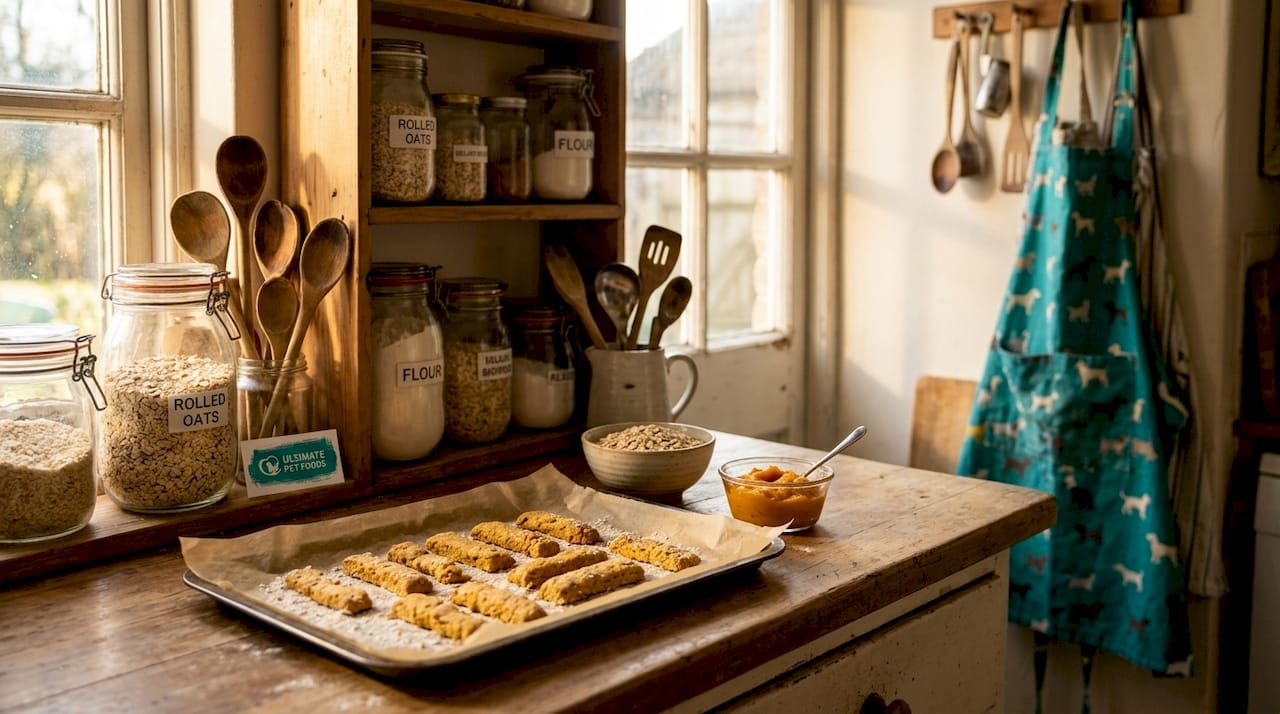
Store batches in an airtight container in the fridge for up to five days, or freeze in pre-portioned bags for up to three months.
2. Frozen blueberry yogurt pops
When the warmer months arrive, a cooling treat does wonders for your dog’s comfort and hydration. These three-ingredient frozen treats are one of the most popular healthy dog treats recipes for summer, and they come together in minutes.
The recipe calls for ¾ cup of blueberries, ¾ cup of plain Greek yogurt, and half a banana. Blend until smooth, pour into silicone moulds or an ice cube tray, and freeze for at least four hours.
A few things worth knowing before you make them:
- Use plain, unsweetened Greek yogurt only. Flavoured varieties contain added sugars and sometimes artificial sweeteners.
- Most dogs tolerate small amounts of yogurt well, but if your dog has known lactose sensitivity, start with a very small portion and monitor for loose stools.
- Blueberries are one of the safest fruits for dogs, rich in antioxidants and very low in calories at roughly 1 kcal per berry.
- Avoid dried fruits entirely. The drying process concentrates natural sugars significantly, and raisins in particular are toxic to dogs.
- Keep portions small: one to two small pops per day depending on your dog’s size and overall calorie budget.
Silicone moulds in paw or bone shapes make portioning easy and keep the treats appropriately sized. These pops also work beautifully as a slow-release distraction treat on warm afternoons.
3. Lean protein-based snacks for sensitive dogs
For dogs with digestive sensitivities, pancreatitis, or those who simply do better on lower-fat diets, lean proteins make the safest and most satisfying treat bases you can offer.
Safe options include plain cooked chicken breast, turkey breast, egg whites, and white fish such as cod or haddock. The key is preparation: boil or bake without added oils, butter, salt, or seasoning. A plain boiled chicken breast torn into small pieces is one of the most effective training treats there is.
- Chicken breast: high in protein, very low in fat, easy to portion into small pieces for training
- Turkey breast: similar nutritional profile to chicken, excellent for dogs who have developed sensitivities to common proteins
- Egg whites: cooked only, never raw. Fat is concentrated in the yolk, so egg whites alone are a lean, protein-rich option
- White fish: naturally low in fat and a good source of omega-3 fatty acids; poached or baked without seasoning is ideal
When choosing commercial treats for sensitive dogs, look for a fat content under 5% on the guaranteed analysis panel. Avoid treats with vague protein descriptions like “meat derivatives” and opt for those that clearly state the protein source. Our pancreatitis feeding guide goes deeper into safe dietary choices for dogs with this condition.
Whole foods like carrots and green beans are also excellent low-fat options. Carrots come in at around 4 kcal each, making them one of the most calorie-efficient crunchy treats available.
4. Comparison of popular healthy dog snack options
Use this table to quickly compare the most practical treat options by their nutritional profile and best use case.
| Snack | Approx. calories | Fat level | Best use | Grain-free? |
|---|---|---|---|---|
| Pumpkin and oat sticks (homemade) | 15–20 kcal per piece | Low | Daily reward, digestive support | Yes (oat flour used) |
| Frozen blueberry yogurt pops | 10–15 kcal per pop | Low | Cooling distraction, antioxidant boost | Yes |
| Boiled chicken breast pieces | 5–8 kcal per small piece | Very low | Training, sensitive stomach dogs | Yes |
| Raw carrot sticks | ~4 kcal per stick | Negligible | Low-calorie chew, dental health | Yes |
| Plain cooked egg white | ~17 kcal per white | Very low | Protein boost, training | Yes |
| Commercial grain-free treat (typical) | 10–30 kcal per piece | Varies | Training, everyday reward | Yes, check label |
| Banana slice | ~10 kcal per slice | Very low | Occasional reward, potassium source | Yes |
Keep this as a handy reference when you are planning your dog’s treat allocation for the week. Pair it with your dog’s daily kibble intake to stay within healthy calorie bounds.
5. Choosing snacks that suit your dog’s specific needs
No two dogs are exactly alike. A Border Collie in working condition needs treats managed differently from a senior Labrador on a weight management plan. Getting this right makes a genuine difference to your dog’s long-term health.
For grain-sensitive dogs, the grain-free feeding guide from Ultimatepetfoods explains what to look for in ingredient lists beyond the grain-free badge itself. Remember that grain-free treats often contain non-grain carbohydrate sources such as sweet potato or legumes, so the label alone tells only part of the story.
- Balance treat calories with your dog’s activity level. A working or highly active dog can sustain a broader treat allowance than a sedentary companion breed.
- For dogs managing their weight, stick to whole food options like carrot sticks or green beans as the primary snack. These are filling, low in calories, and nutritionally sound.
- Introduce any new homemade or natural snack gradually over three to four days to monitor for reactions, especially if your dog has known food sensitivities.
- Freeze pre-portioned batches of homemade treats to maintain consistent daily calorie control and prevent the easy habit of over-treating that creeps in when a fresh batch sits on the counter.
Pro Tip: Write the calorie count of each homemade batch on the storage bag before freezing. It takes ten seconds and removes all guesswork when you are handing out treats throughout the day.
For a broader resource on making your own nutritious options at home, the homemade treat recipes section on the Ultimatepetfoods blog is a great place to start.
My honest take on the healthy snack conversation
I have spoken with a lot of dog owners who feel overwhelmed by the snack aisle, and I genuinely understand why. The marketing language is relentless. “Natural,” “grain-free,” “superfood” — these words appear on packaging that often contains more starch than the grain-based alternative sitting next to it.
In my experience, the biggest mistake I see is owners treating grain-free as a quality guarantee rather than a simple description of what is absent. Reading the full ingredient list takes thirty seconds and tells you far more than any front-of-pack claim ever will.
The xylitol issue with peanut butter concerns me more than almost anything else in the homemade treat world. I have seen owners use the same brand for months without incident, then pick up a reformulated version without realising. Label checking needs to happen every purchase, not just the first time you buy something.
What I have found to work consistently well is keeping things simple. Plain proteins, recognisable vegetables, and the occasional fruit-based frozen treat cover the vast majority of what any dog actually needs from a snack. Complexity rarely adds nutritional value. It usually just adds risk.
— Glenn
How Ultimatepetfoods supports your dog’s everyday nutrition
Treats play a supporting role. The real foundation of your dog’s health is what goes in the bowl every day. At Ultimatepetfoods, we build that foundation with dry dog food made from freshly prepared meat and fish, gently cooked at 82°C to help lock in nutrients and natural flavour. Our recipes use human-grade ingredients with no artificial nasties, and every complete recipe is balanced for all breeds and life stages.
We also include added prebiotics (MOS and FOS) in our recipes to actively support digestion and gut health from the inside out. For dogs with specific health needs, our Ultimate+ Functional Health range uses hydrolysed proteins designed for targeted daily support across five areas: Digestive Care, Skin & Coat Care, Weight Control & Joint Care, Dental Care, and Healthy Living. If you are exploring a grain-free diet for your dog, we make it straightforward. Browse our dry dog food range or try a sample box to find the perfect recipe for your dog.
FAQ
What snacks are genuinely low in calories for dogs?
Whole foods like carrot sticks (around 4 kcal each), blueberries (around 1 kcal each), and plain cooked egg whites are among the lowest-calorie options you can offer a dog safely.
Can dogs eat Greek yogurt?
Plain, unsweetened Greek yogurt is safe for most dogs in small amounts. If your dog has lactose sensitivity, introduce it gradually and watch for loose stools.
Is grain-free the same as carb-free for dog treats?
No. Grain-free means no wheat or corn, but carbohydrates often come from legumes, sweet potato, or starches instead. Always check the full ingredient list.
How often should I give my dog homemade snacks?
Daily treats are fine as long as they stay within the 10% calorie rule. Freeze batches in pre-portioned amounts to make daily control easy and consistent.
What is the safest peanut butter to use in dog treats?
Choose a peanut butter that contains only peanuts and perhaps a small amount of salt. Check the label for xylitol or birch sugar every time you buy a new jar, as formulations can change without notice.