

Your guide to hypoallergenic dog diets for sensitive pets

TL;DR:
- Food allergies involve immune responses to specific proteins, causing persistent symptoms in dogs.
- An elimination diet trial of 8 to 12 weeks is essential to diagnose food allergies accurately.
- ‘Hypoallergenic’ labels are unregulated; formulation and vet guidance are key to effective diet choice.
Watching your dog scratch relentlessly, shake their head, or suffer an upset stomach is genuinely distressing. You know something is wrong, but the sheer volume of contradictory advice online can leave you more confused than when you started. Food allergies and sensitivities affect a real number of dogs, and while they are not the most common cause of itching, they can cause persistent, life-affecting symptoms when they do strike. The good news is that a structured, evidence-based approach to diet can make a meaningful difference. This guide gives you the practical steps, honest context, and expert-backed information to find the right hypoallergenic diet for your dog.
Table of Contents
- Understanding food allergies in dogs
- Choosing the right hypoallergenic dog diet
- How to run a hypoallergenic elimination diet trial
- Troubleshooting: common mistakes and how to stay on track
- Why most ‘hypoallergenic’ labels mislead—and what truly matters
- Explore premium hypoallergenic dog food solutions
- Frequently asked questions
Key Takeaways
| Point | Details |
|---|---|
| Vet consultation is vital | Always confirm food allergies with a vet and rule out other causes before changing diets. |
| Choose evidence-based diets | Understand the differences between novel and hydrolysed protein diets for your dog’s needs. |
| Follow elimination trials strictly | Stick to the prescribed diet with no extras for accurate diagnosis and best symptom reduction. |
| Ignore unregulated labels | Focus on ingredients, not brand claims, when choosing hypoallergenic foods. |
Understanding food allergies in dogs
Before you switch your dog’s food, it pays to understand exactly what you are dealing with. A food allergy is an immune-mediated response, meaning your dog’s immune system mistakenly identifies a food protein as a threat and mounts a reaction. A food intolerance, by contrast, is a digestive issue with no immune component. Think of it as a sensitivity rather than an alarm. The signs of food intolerance can sometimes overlap with allergy symptoms, which is why getting a clear diagnosis matters so much.
Symptoms of food-related reactions in dogs can include:
- Non-seasonal itching, particularly around the face, paws, and groin
- Recurrent ear infections
- Skin redness, rashes, or hot spots
- Vomiting or loose stools
- Excessive licking or chewing of paws
- Scooting or anal gland issues
The most common allergens include beef, chicken, dairy, eggs, and wheat, with proteins being the primary culprits rather than grains. This is a crucial point many owners miss: it is the protein source, not the grain, that usually triggers the immune response.
Worth knowing: Food allergies affect only 10 to 15% of allergy cases in dogs. Environmental allergens like pollen, dust mites, and flea saliva are far more common triggers. A vet consultation to rule out flea allergy dermatitis and atopic (environmental) dermatitis is essential before committing to a dietary overhaul.
This is not a reason to dismiss diet as a factor, but it is a reason to get a professional opinion first. Switching foods without a proper diagnosis can waste months and leave your dog no more comfortable. Understanding the benefits of hypoallergenic food is far more valuable once you have confirmed food is actually the issue.
Choosing the right hypoallergenic dog diet
Now that you can recognise the signs and causes of allergies, it is time to explore the available diet options. There are two primary approaches to hypoallergenic feeding, and understanding the difference between them helps you make an informed choice.
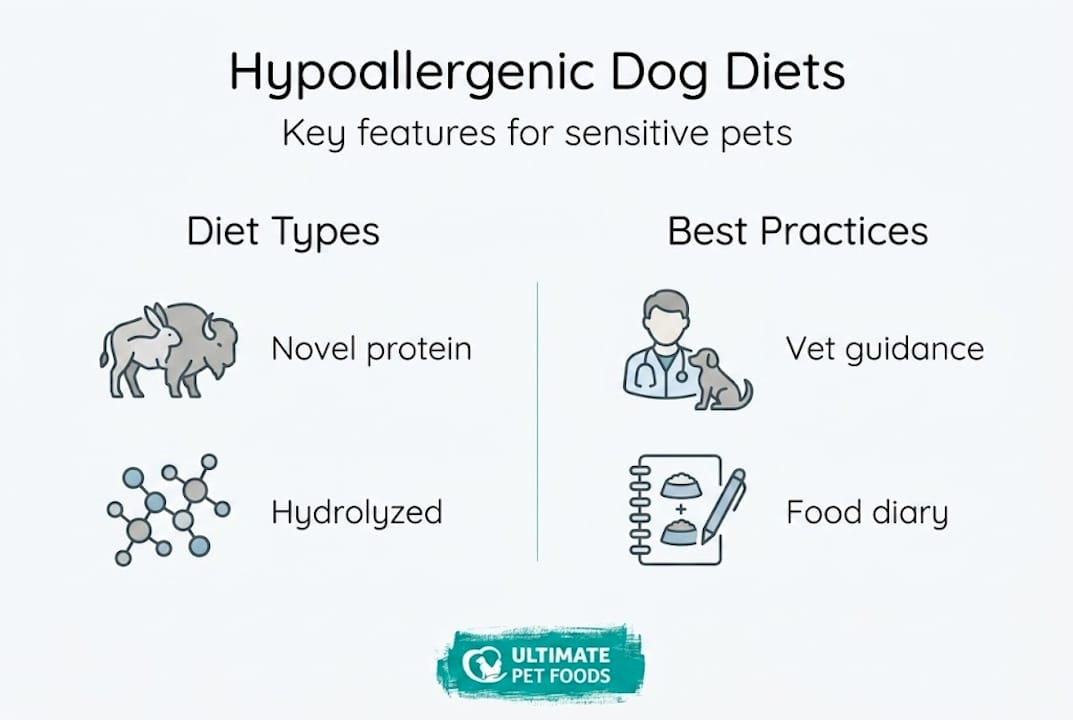
Hypoallergenic diets use two methods: novel protein diets, which feature a single protein your dog has never eaten before (such as duck, venison, or rabbit), and hydrolysed protein diets, where proteins are broken down into such small peptides that the immune system no longer recognises them as a threat.
| Diet type | How it works | Best suited for | Key consideration |
|---|---|---|---|
| Novel protein | Uses a single, unfamiliar protein source | Dogs with identified allergies to common meats | Requires careful history to ensure true novelty |
| Hydrolysed protein | Proteins broken into tiny peptides | Dogs with severe or multiple allergies | Usually more expensive; vet-prescribed options available |
| Limited ingredient | Fewer ingredients to reduce exposure | Mildly sensitive dogs or during monitoring | Still requires careful label reading |
Beyond the protein method, you will also encounter different formats: dry kibble, wet food, fresh-cooked, and raw. Each has merits. Dry food offers convenience and dental benefits, while wet or fresh options tend to be more palatable for sensitive or fussy dogs.

One important note: the term ‘hypoallergenic’ is not regulated in pet food. Manufacturers can use this label freely, so what makes dog food truly hypoallergenic for sensitive dogs comes down to the actual formulation, not the marketing language on the bag. Always check the full ingredient list and ensure the protein sources are genuinely novel or hydrolysed. Our guide to hypoallergenic dog diets breaks this down in more detail.
Pro Tip: Ask your vet for a full dietary history review before selecting a novel protein. If your dog has eaten duck in previous treats or mixed foods, it may no longer qualify as a truly novel protein for their system.
How to run a hypoallergenic elimination diet trial
Once you have selected a suitable diet, a disciplined elimination trial is the next critical step. This is the gold standard for diagnosing a food allergy, and it requires real commitment. An 8 to 12 week strict trial, using only the hypoallergenic diet with no treats, table food, or flavoured medications, is the recognised diagnostic benchmark.
Here is how to approach it step by step:
- Prepare your household. Inform everyone in the family about the trial rules. Even one illicit treat can compromise weeks of progress.
- Remove all previous foods. Transition to the new diet over 5 to 7 days to reduce digestive upset, then feed exclusively.
- Replace treats. Use small pieces of the new hypoallergenic food as rewards instead of commercial treats.
- Check all medications. Some flavoured tablets or chews contain protein sources that could skew results. Ask your vet for unflavoured alternatives.
- Keep a daily log. Note itching frequency, stool quality, energy levels, and any skin changes.
- Monitor closely. Expect the process to take time. More than 50% of dogs with food-responsive conditions need over four weeks before pruritus (itching) begins to drop.
- Re-challenge at the end. Reintroduce the original diet to confirm food is the cause. If symptoms return, a food allergy is confirmed.
| Trial phase | Duration | What to expect | Success indicator |
|---|---|---|---|
| Initial transition | 5 to 7 days | Possible mild digestive change | Stable stools, acceptance of new food |
| Active trial | 8 to 12 weeks | Gradual symptom reduction | Reduced itching, clearer skin |
| Re-challenge | 1 to 2 weeks | Return of symptoms if food-allergic | Symptom flare confirms diagnosis |
For a detailed walkthrough, our resource on elimination diet for dogs is an excellent companion to this process.
Pro Tip: Take weekly photos of any skin lesions or rash areas. Visual evidence makes it far easier to track subtle improvements over 12 weeks than relying on memory alone.
Troubleshooting: common mistakes and how to stay on track
Even with the best intentions, simple mistakes can derail a hypoallergenic diet. Here is how to avoid them.
The most important thing to internalise is this: strict adherence is everything. No treats, no table scraps, no flavoured medications. A single exposure to an allergen can restart the immune response and reset your progress. It is not about being rigid for its own sake. It is about getting a clear answer for your dog.
Common mistakes to watch for:
- Hidden allergens in unexpected places. Dental chews, pill pockets, flavoured wormers, and even some toothpastes can contain common proteins. Check every product your dog encounters.
- Shared feeding bowls. If you have multiple pets, cross-contamination is a real risk. Feed each pet separately and clean bowls thoroughly.
- Assuming improvement means resolution. Symptoms may reduce but not disappear entirely, especially if environmental allergies are also present. Do not abandon the trial early.
- Switching foods mid-trial. Introducing a second new food muddies the results. Stick to one diet for the full period.
- Forgetting the re-challenge phase. Without reintroducing the original food, you cannot confirm food is truly the cause.
If symptoms persist despite strict compliance after 8 weeks, revisit your vet. The issue may be environmental rather than dietary, or the chosen protein may not be as novel as assumed. Knowing how to spot the right food from the outset reduces the chance of this happening.
Keep a food diary throughout. Record every item your dog consumes, including medications, and note symptom changes. This record becomes invaluable if you need to revisit the trial or report back to your vet. Our allergen-free dog food tips offer further guidance on navigating labels and ingredients confidently.
Pro Tip: Create a simple daily checklist on your phone or a notepad. Tick off each meal, note any itching episodes, and flag anything unusual. Consistency in recording leads to clarity in results.
Why most ‘hypoallergenic’ labels mislead—and what truly matters
We want to be honest with you about something the pet food industry does not always make clear. ‘Hypoallergenic’ is an unregulated term in pet food marketing. Any brand can print it on packaging without clinical evidence to support the claim. This means that simply buying a product labelled hypoallergenic does not guarantee it will work for your dog.
In our experience, the owners who achieve the best long-term results are not necessarily those who find the most expensive brand. They are the ones who take a methodical approach: consulting their vet, running a proper elimination trial, and then using real results to guide future decisions. No label replaces that process.
Natural, minimally processed foods tend to carry fewer hidden additives and artificial flavourings that can complicate matters further. But even a clean-label product still needs scrutiny. The protein source, the processing method, and whether it is genuinely novel for your individual dog all matter far more than any marketing term. Explore what genuine relief for sensitive pets actually looks like in practice, and use this knowledge to make choices that are right for your dog, not just the ones that sound appealing on a bag.
Explore premium hypoallergenic dog food solutions
You now have the knowledge to approach your dog’s diet with confidence and clarity. The next step is finding the right food to put that knowledge into practice.
At Ultimate Pet Foods, we offer a range of natural, grain-free options specifically formulated for sensitive dogs. Whether you are exploring a novel protein like our venison dog food or trying to narrow down the best fit for your pet, our dog food comparison tool makes it straightforward. Not sure where to begin? Our sample box lets your dog try before you commit, so you can find their favourite without any guesswork. 🐾
Frequently asked questions
What is the difference between a food allergy and food intolerance in dogs?
A food allergy triggers an immune response, typically showing as skin irritation or ear infections, whereas a food intolerance is a digestive reaction with no immune involvement.
How long does it take for symptoms to improve on a hypoallergenic diet?
Over 50% of food-responsive dogs need more than four weeks before itching reduces, and full improvement can take up to 12 weeks in some cases.
Are ‘hypoallergenic’ dog foods always safe for sensitive pets?
Not automatically. Since ‘hypoallergenic’ is unregulated as a pet food label, always read the full ingredient list and consult your vet before switching.
Can I include treats or table scraps during an elimination diet trial?
No. Strict elimination requires removing all treats, table food, and flavoured medications to ensure the trial gives you accurate, usable results.


