

What makes dog food hypoallergenic? Essentials for sensitive dogs

TL;DR:
- Hypoallergenic dog food reduces common dietary triggers but is not completely allergen-free.
- Main approaches include hydrolyzed proteins and limited ingredient diets to minimize immune responses.
- Unique novel proteins like insect or plant-based sources offer promising options for sensitive dogs.
If you’ve ever stood in a pet shop aisle staring at labels that say “hypoallergenic” and wondered what it actually means, you’re not alone. Many dog owners assume hypoallergenic food is simply free from all allergens, but the reality is far more nuanced than that. Sensitivities in dogs are triggered by specific ingredients, and choosing the right diet requires understanding what your dog is actually reacting to. In this article, we’ll clarify what hypoallergenic really means in dog nutrition, explore how these foods are formulated, look at novel protein options, and bust a few stubborn myths along the way.
Table of Contents
- What does hypoallergenic mean in dog food?
- How hypoallergenic dog foods work: hydrolysed and limited ingredient diets
- Do novel proteins make a difference for allergic dogs?
- Busting the myths: nutrition, fat content, and what really triggers allergies
- A practical perspective: what actually works for sensitive pets
- Explore better dog food options for sensitivities
- Frequently asked questions
Key Takeaways
| Point | Details |
|---|---|
| Protein is the main allergen | Most dog food sensitivities are due to proteins such as beef or chicken, not grains. |
| Hydrolysed and limited ingredient options | Dogs with true food allergies benefit most from hydrolysed protein or limited ingredient diets. |
| Novel proteins offer alternatives | Plant and insect proteins are emerging as low-risk, effective options for hypoallergenic diets. |
| Fat myths debunked | Hypoallergenic dog food has similar fat content to standard diets and does not cause cholesterol problems. |
| Most allergies are not food-related | The majority of dog skin allergies come from environmental triggers, not their diet. |
What does hypoallergenic mean in dog food?
The word “hypoallergenic” means less likely to cause an allergic reaction, not completely allergen-free. In dog food, it refers to recipes that remove or reduce the most common dietary triggers, making them gentler for sensitive stomachs and reactive immune systems. Our guide to hypoallergenic diets covers this in detail, but the short version is this: not every itchy, uncomfortable dog has a food allergy.
In fact, 90% of dog allergy cases are caused by environmental factors, not food. Pollen, dust mites, mould, and even household cleaning products are far more frequent culprits than anything in your dog’s bowl. Food allergies account for only 10 to 15% of allergy-related skin complaints in dogs. That’s a surprisingly small number, and it matters when you’re deciding whether a dietary change is the right first step.
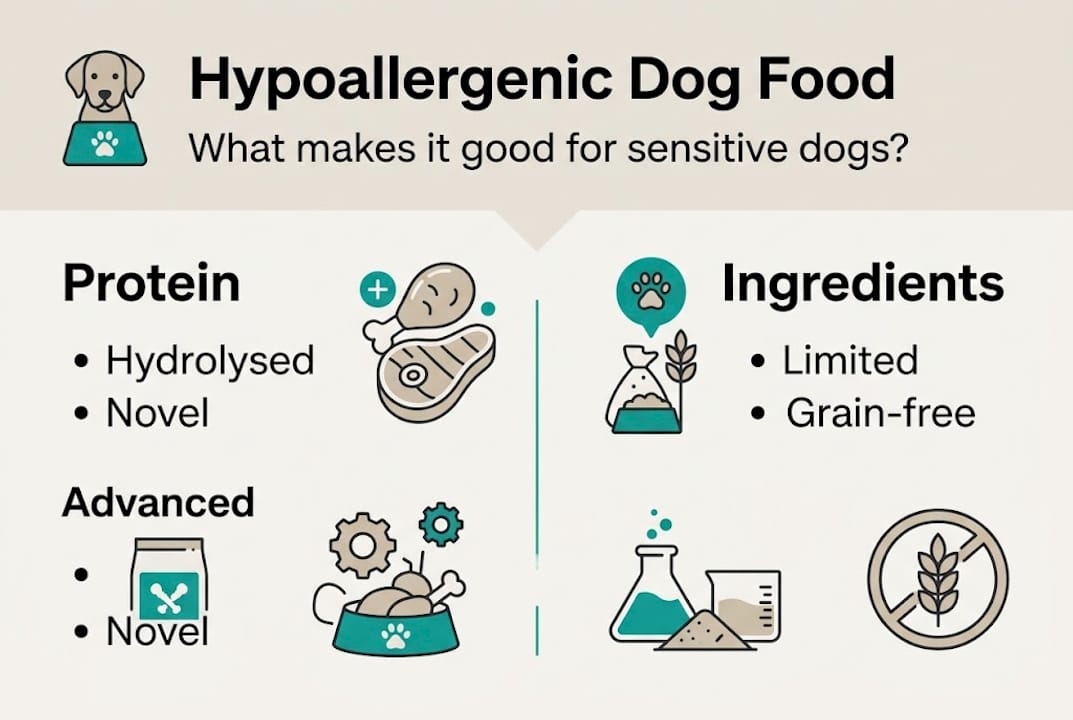
When food is the problem, the main offenders are almost always proteins, not grains. Beef, chicken, dairy, eggs, and wheat gluten are the most commonly reported dietary allergens in dogs. The immune system mistakenly identifies a protein molecule as a threat and mounts a response, which typically shows up as itchy skin, ear infections, or digestive upset. Learning to identify hypoallergenic dog foods means knowing which proteins your dog has been exposed to and which ones are genuinely novel.
Here’s a quick summary of the most common dietary allergens in dogs:
- Beef (most frequently reported)
- Chicken and poultry
- Dairy products
- Eggs
- Wheat gluten
- Soy
Understanding the benefits for sensitive dogs starts with recognising that a hypoallergenic diet is a targeted tool, not a blanket fix. It works best when you know what you’re working with.
Pro Tip: Before switching your dog’s food, keep a simple symptom diary for two weeks. Note when reactions occur, what your dog ate, and any environmental changes. This makes it much easier to pinpoint triggers.
How hypoallergenic dog foods work: hydrolysed and limited ingredient diets
Now that we’re clear on what makes a food hypoallergenic, let’s look at the main scientific strategies manufacturers use to reduce allergic reactions.
There are two primary approaches: hydrolysed protein diets and limited ingredient diets (LID). Both aim to reduce the immune system’s exposure to recognised allergens, but they do it in different ways.
Hydrolysed proteins are proteins that have been broken down into tiny fragments using a process called enzymatic hydrolysis. The fragments are so small that the immune system often fails to recognise them as threats, which means no allergic response is triggered. Our hydrolyzed dog food guide explains the process clearly, and the hydrolyzed protein benefits are well documented for dogs with confirmed food sensitivities.

Limited ingredient diets take a different route. Rather than altering the protein itself, they simply reduce the total number of ingredients to minimise the chance of exposure to a known allergen. Fewer ingredients means fewer potential triggers. As research shows, hydrolysed and LID diets use common proteins treated to break down allergens, while limited ingredient diets reduce cross-reactivity but risk incomplete allergen removal.
Neither approach is perfect. Cross-contamination during manufacturing is a real concern with LID foods, and incomplete hydrolysis can still leave enough intact protein to provoke a reaction in highly sensitive dogs. Our limited ingredient breakdown and understanding LID diets resources are worth reading if you’re considering this route.
Here’s a quick comparison to help you decide:
| Feature | Hydrolysed protein diet | Limited ingredient diet |
|---|---|---|
| How it works | Protein broken into tiny fragments | Fewer ingredients overall |
| Best for | Confirmed protein allergy | Suspected but unconfirmed allergy |
| Risk | Incomplete hydrolysis | Cross-contamination |
| Palatability | Can be lower | Generally higher |
| Cost | Typically higher | Moderate |
When choosing between the two, consider these steps:
- Confirm whether your dog has a true food allergy or a food intolerance (symptoms differ).
- Start with a limited ingredient diet if the allergen is unknown.
- Move to a hydrolysed diet if LID does not resolve symptoms within 8 to 12 weeks.
- Reintroduce single ingredients one at a time to identify the specific trigger.
- Maintain the elimination diet strictly throughout the trial period.
Pro Tip: Always consult your vet before starting an elimination diet. A proper food trial takes 8 to 12 weeks of strict dietary control, and a vet can help you interpret the results accurately.
Do novel proteins make a difference for allergic dogs?
Alongside hydrolysed and limited ingredient diets, novel proteins are another practical solution worth exploring.
A novel protein is simply a protein source your dog has never eaten before. Because the immune system can only react to proteins it has previously encountered, introducing an entirely new source can sidestep an existing sensitivity altogether. Common novel proteins include venison, kangaroo, duck, salmon, and increasingly, insect and plant-based options.
The logic is straightforward. If your dog has spent years eating chicken-based food and now reacts to chicken, switching to a protein like venison or duck removes the trigger entirely. Our article on top protein sources for dogs gives a thorough overview of the nutritional value across different options.
What’s particularly exciting is the emerging evidence around insect and plant proteins. Plant and insect proteins have less than 2% sensitisation rates in allergic dogs, making them genuinely promising novel options. That’s a remarkably low trigger rate compared to traditional proteins.
Here’s a helpful overview of novel protein options and their typical allergen risk:
| Protein source | Allergen risk | Notes |
|---|---|---|
| Venison | Very low | Rarely encountered in commercial diets |
| Duck | Low to moderate | Growing in popularity |
| Insect (e.g. black soldier fly) | Very low (<2%) | Sustainable and hypoallergenic |
| Plant-based (e.g. lentil, pea) | Very low (<2%) | Good for multi-protein sensitivities |
| Salmon | Low | Also supports skin and coat health |
Introducing a novel protein diet safely is important. Here’s what we recommend:
- Transition gradually over 7 to 10 days to avoid digestive upset.
- Avoid mixed protein foods during the trial period to keep results clear.
- Check every ingredient, including treats and dental chews, for hidden allergens.
- Give it time: a minimum of 8 weeks is needed to assess whether symptoms improve.
It’s worth noting that novel proteins won’t help if your dog’s reaction is to a non-protein allergen, such as a specific carbohydrate or food additive. In those cases, a broader dietary review is necessary.
Busting the myths: nutrition, fat content, and what really triggers allergies
Even with the right ingredients, popular myths can cloud smart choices. Let’s clear up the most common misconceptions.
Myth 1: Hypoallergenic dog food is high in fat
This is simply not true. Research shows that the average fat content in hypoallergenic diets matches maintenance diets at around 35g per 1000kcal, debunking the myth that they lead to high cholesterol or weight gain. Hypoallergenic foods are formulated to meet standard nutritional requirements, not to be nutritionally extreme in any direction.
Myth 2: Most dog allergies are caused by food
As we noted earlier, only 10 to 15% of canine allergy cases are food-related. The majority are environmental. Jumping straight to a dietary overhaul before ruling out environmental triggers can mean months of unnecessary food changes with no improvement. Our hypoallergenic diet tips include a checklist for ruling out non-food triggers first.
Myth 3: Grain-free automatically means hypoallergenic
Grains are rarely the primary allergen. Most dogs react to proteins, not carbohydrates. A grain-free food can still contain chicken, beef, or dairy, which are far more likely culprits. Grain-free and hypoallergenic are related concepts, but they are not the same thing.
“The focus of a hypoallergenic diet should be on protein source and ingredient transparency, not simply on what has been removed.”
Here’s what to look for when reading labels on your dog’s food:
- Single named protein source (e.g. “duck” not “poultry”)
- Short ingredient list with recognisable items
- No artificial preservatives, colours, or flavourings
- Clear allergen statements and manufacturing transparency
- No vague terms like “meat derivatives” or “animal by-products”
Our guide to hypoallergenic diets walks you through label reading in more detail, because what’s not on the label can matter just as much as what is.
A practical perspective: what actually works for sensitive pets
Here’s something most guides won’t tell you: managing a sensitive dog’s diet is rarely a straight line. We’ve spoken with hundreds of pet owners who’ve done everything right on paper and still found themselves back at square one after a few weeks. The truth is, individual variation is enormous. Two dogs with identical symptoms can respond completely differently to the same hypoallergenic formula.
Label transparency is still a genuine problem in the pet food industry. Cross-contamination warnings are inconsistent, and “hypoallergenic” is not a regulated term, so it can appear on packaging without meeting any specific standard. That’s why choosing hypoallergenic for your dog should always involve scrutinising the full ingredient list, not just the front-of-pack claim.
We’d also encourage you not to overlook your home environment. New cleaning products, a change in bedding, or a different walking route can all trigger flare-ups that look identical to food reactions. Build a genuine relationship with your vet, be patient with the process, and trust that with the right approach, most sensitive dogs do find lasting relief. 🐾
Explore better dog food options for sensitivities
If your dog is showing signs of sensitivity, the good news is that there are genuinely excellent food options designed with their comfort in mind.
At Ultimate Pet Foods, we specialise in natural, premium recipes that are gentle on sensitive systems. Our grain-free dog diets are crafted with clearly labelled, single-source proteins and no artificial nasties. If your dog struggles with itchy skin or a dull coat alongside digestive issues, our skin and coat grain-free food is specifically formulated to support both. Every recipe is built around transparency, quality, and your dog’s long-term wellbeing. Because every wag and bounce starts with the right bowl. 🐶
Frequently asked questions
What ingredients are most likely to cause allergies in dogs?
Proteins such as beef, chicken, and dairy are responsible for the majority of food allergies in dogs, rather than grains or carbohydrates. Identifying and removing the specific protein trigger is the most effective dietary strategy.
Are grain-free diets always hypoallergenic?
No. Grains are not the main allergen for most dogs, so removing them does not automatically make a food hypoallergenic. A grain-free recipe can still contain common protein allergens like chicken or beef.
Will switching to hypoallergenic dog food stop my dog’s itching?
Not necessarily. 90% of canine allergy cases are linked to environmental factors rather than food, so dietary changes alone may not resolve symptoms. A thorough investigation of both diet and environment is the most reliable approach.
What are hydrolysed proteins and why are they used?
Hydrolysed proteins are broken down into tiny fragments that the immune system is less likely to recognise as allergens, reducing the chance of a reaction. They are particularly useful for dogs with confirmed protein sensitivities.
Is fat content higher in hypoallergenic dog food?
No. Studies show fat content in hypoallergenic diets is broadly equivalent to standard maintenance diets at around 35g per 1000kcal. There is no evidence that hypoallergenic foods lead to elevated cholesterol or weight gain in dogs.


