

How to identify hypoallergenic dog foods for sensitive pets

Choosing the right food for a dog with allergies or sensitivities can feel overwhelming. With countless products claiming hypoallergenic benefits, distinguishing genuinely suitable options from marketing hype becomes challenging. Many dog owners struggle to interpret ingredient labels and understand which formulations truly address their pet’s needs. This guide provides clear, actionable steps to recognise hypoallergenic dog foods, helping you make informed decisions that improve your pet’s health and comfort.
Table of Contents
- Key takeaways
- Understanding hypoallergenic dog food and its benefits
- What to look for when identifying hypoallergenic dog foods
- Steps to trial and verify hypoallergenic dog food effectiveness
- Common mistakes and tips for choosing natural, quality hypoallergenic dog foods
- Explore specialised hypoallergenic dog food options
- Frequently asked questions
Key Takeaways
| Point | Details |
|---|---|
| Beware marketing hype | Look for clear ingredient declarations to distinguish genuinely hypoallergenic options from marketing claims. |
| Hydrolysed versus novel proteins | Understand the difference between hydrolysed proteins and novel protein diets to guide selection. |
| Common trigger ingredients | Identify ingredients such as beef, dairy, wheat, chicken, eggs, soy and corn that commonly trigger sensitivities. |
| Trial and monitor response | Conduct a structured feeding trial and keep a symptom diary to confirm whether a diet suits your dog. |
Understanding hypoallergenic dog food and its benefits
Hypoallergenic dog food refers to formulations designed to minimise allergic reactions by eliminating or reducing common dietary allergens. These foods typically avoid ingredients known to trigger sensitivities, such as wheat, soy, dairy, beef, and chicken. Instead, they feature alternative protein sources or specially processed proteins that your dog’s immune system is less likely to recognise as threats.
Hypoallergenic diets reduce allergic reactions by using hydrolysed proteins, which are broken down into smaller molecular components. This process makes proteins virtually unrecognisable to the immune system, preventing the allergic cascade. Novel protein diets take a different approach, introducing proteins your dog has never consumed before, such as venison, duck, or kangaroo.
The benefits extend beyond simply reducing itching or digestive upset. Dogs on appropriate hypoallergenic diets often experience:
- Significant reduction in skin inflammation and chronic scratching
- Improved coat quality with less dullness or excessive shedding
- Better digestive function with fewer episodes of vomiting or diarrhoea
- Increased energy levels as discomfort diminishes
- Reduced ear infections often linked to food sensitivities
Recognising food allergy symptoms helps you understand when hypoallergenic options become necessary. Common signs include persistent itching, especially around paws, ears, and face, red or inflamed skin, recurrent ear infections, gastrointestinal disturbances, and excessive licking or chewing of paws. Some dogs develop hives or facial swelling after eating trigger ingredients.
Pro Tip: Keep a detailed symptom diary for two weeks before switching foods. Document scratching frequency, stool consistency, and energy levels. This baseline helps you measure improvements accurately during food trials.
Understanding why hypoallergenic dog food matters for sensitive pets sets the foundation for making informed selections. The next step involves knowing exactly what to look for when examining product labels and ingredient lists.
What to look for when identifying hypoallergenic dog foods
Identifying genuinely hypoallergenic dog foods requires careful examination of ingredient lists and packaging claims. Start by understanding which ingredients commonly trigger allergic responses. The most frequent culprits include beef, dairy, wheat, chicken, eggs, soy, and corn. Products marketed as hypoallergenic should explicitly avoid these ingredients or use them in hydrolysed form.
Novel protein sources represent a cornerstone of many hypoallergenic formulations. These proteins come from animals your dog has likely never eaten, reducing the probability of pre-existing sensitivities. Look for ingredients such as:
- Venison or deer meat
- Duck or other game birds
- Rabbit or hare
- Kangaroo or exotic meats
- Fish varieties like salmon or white fish
- Insect proteins such as cricket or black soldier fly larvae
Recognising novel proteins and allergen absence proves critical when selecting hypoallergenic foods. However, novel proteins alone do not guarantee hypoallergenic status. The complete formulation matters.

Label terminology requires careful interpretation. Terms like “grain-free” indicate the absence of wheat, corn, rice, and other grains, which benefits dogs with grain sensitivities but does not address protein allergies. “Limited ingredient” formulations contain fewer components, making it easier to identify potential triggers. These typically include one protein source, one carbohydrate source, and essential vitamins and minerals.
Hydrolysed protein formulations deserve special attention. These products undergo enzymatic processing that breaks proteins into tiny fragments, typically below 10,000 Daltons in molecular weight. At this size, proteins rarely trigger immune responses. Quality hydrolysed foods list specific hydrolysed proteins, such as “hydrolysed chicken” or “hydrolysed soy protein isolate,” rather than vague terms.
| Feature | What to look for | Red flags |
|---|---|---|
| Protein source | Single novel protein or hydrolysed protein clearly named | Multiple proteins, vague terms like “meat meal” |
| Carbohydrates | Single source like sweet potato or peas | Multiple grains, unnamed “cereal” |
| Additives | Minimal, natural preservatives | Artificial colours, flavours, or preservatives |
| Ingredient list | Short, recognisable ingredients | Long lists with chemical names |
Understanding the difference between hydrolysed and regular food helps you choose appropriately for your dog’s specific needs. Hydrolysed options work best for severe allergies, whilst novel protein diets suit dogs with milder sensitivities or those undergoing elimination trials.
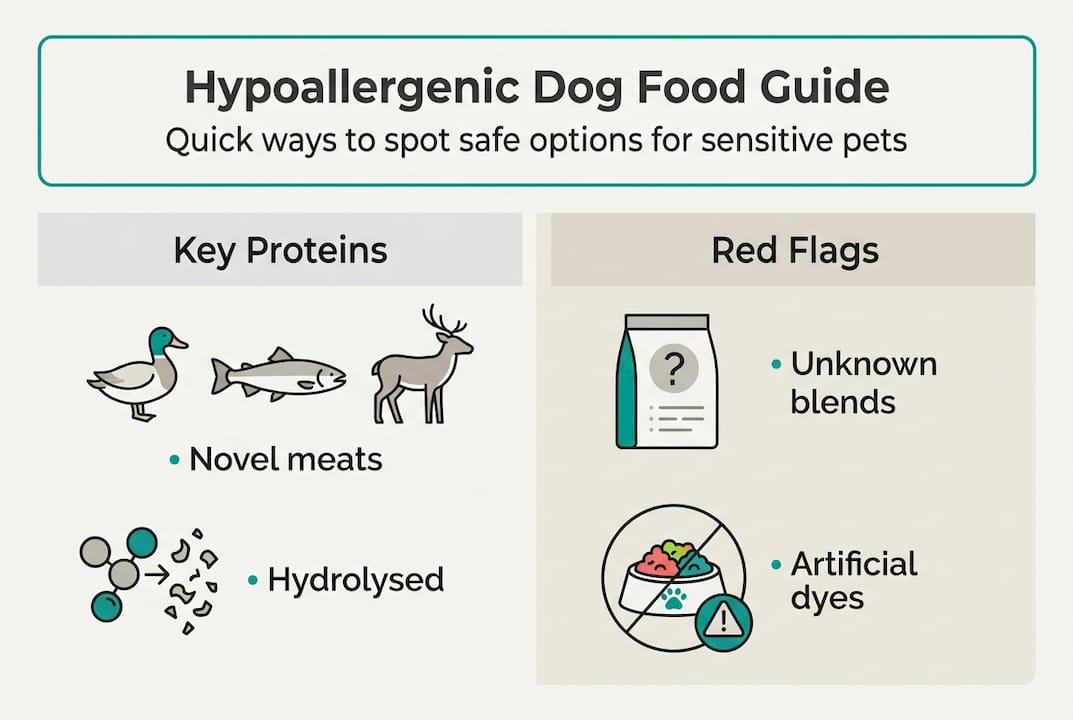
Pro Tip: Photograph ingredient labels when shopping. Compare them at home without time pressure, checking each component against known allergens and verifying the protein source meets hypoallergenic criteria.
Packaging claims require scrutiny beyond face value. “Hypoallergenic” is not a regulated term in pet food, meaning manufacturers can use it liberally. Verify claims by examining actual ingredients rather than relying on marketing language. Look for foods specifically formulated for sensitive stomachs that transparently list all components.
Steps to trial and verify hypoallergenic dog food effectiveness
Successfully identifying suitable hypoallergenic food extends beyond selection to proper trialling and verification. Elimination trials typically last 8-12 weeks to accurately identify food sensitivities and allow sufficient time for previous allergens to clear your dog’s system and symptoms to resolve.
Follow this systematic approach for effective food trials:
- Consult your veterinarian before starting to rule out other health conditions mimicking food allergies
- Select one hypoallergenic food with a single novel protein or hydrolysed formulation
- Eliminate all other food sources including treats, table scraps, flavoured medications, and chews
- Feed only the selected hypoallergenic food and fresh water for the entire trial period
- Monitor and document symptoms weekly using your baseline diary for comparison
- After 8-12 weeks, assess whether symptoms have improved, resolved, or remained unchanged
- If successful, consider a challenge test by reintroducing the old food briefly to confirm the connection
Patience proves essential during trials. Many owners expect immediate results, but the immune system needs time to calm down after removing triggers. Skin symptoms often improve within 4-6 weeks, whilst digestive issues may resolve faster, sometimes within 2-3 weeks. However, complete resolution can take the full 12 weeks.
Common mistakes undermine trial effectiveness:
- Switching foods too quickly before allowing adequate assessment time
- Permitting family members to give unauthorised treats or scraps
- Using flavoured medications or supplements containing allergens
- Choosing foods with multiple novel proteins simultaneously
- Stopping the trial prematurely when symptoms initially worsen
Monitoring symptoms systematically provides objective evidence of improvement. Track specific metrics rather than relying on general impressions. Record scratching episodes per day, stool consistency scores, ear redness levels, and overall energy. Photographic documentation of skin condition proves particularly valuable for comparing before and after states.
| Symptom | Before trial | Week 4 | Week 8 | Week 12 |
|---|---|---|---|---|
| Scratching frequency | 20+ times daily | 15 times daily | 8 times daily | 2-3 times daily |
| Skin redness | Severe, widespread | Moderate, localised | Mild, improving | Minimal, nearly resolved |
| Stool quality | Loose, frequent | Firming up | Consistent, formed | Normal, regular |
| Ear infections | Active infection | Clearing | Clear | Clear |
The sensitive stomach food approach emphasises gradual transitions even when switching to hypoallergenic options. Mix 25% new food with 75% old food for three days, then 50-50 for three days, then 75-25 for three days, before feeding 100% new food. This prevents digestive upset from sudden dietary changes.
Pro Tip: Create a dedicated trial journal with dated entries. Include daily symptom scores, weekly weight checks, and monthly photographs. This documentation helps your veterinarian assess progress and provides invaluable data if you need to try alternative foods.
Common mistakes and tips for choosing natural, quality hypoallergenic dog foods
Avoiding common pitfalls when selecting hypoallergenic foods significantly improves outcomes. Many dog owners rush the process, switching foods every few weeks when they do not see immediate improvement. This approach prevents accurate identification of suitable options and keeps your dog in a constant state of dietary flux.
Ignoring ingredient quality represents another frequent error. Not all hypoallergenic foods offer equal nutritional value. Some use low-quality protein sources or excessive fillers to reduce costs whilst maintaining hypoallergenic claims. Prioritise foods featuring whole-food ingredients, named meat sources as the first ingredient, and minimal processing.
Natural, whole-food ingredients support overall health beyond allergy management. Quality hypoallergenic ingredients benefit pets holistically, providing superior nutrition whilst addressing sensitivities. Look for foods containing:
- Named meat or fish as the primary ingredient
- Whole vegetables and fruits rather than by-products
- Natural preservatives like mixed tocopherols instead of artificial options
- Omega-3 fatty acids from identifiable sources such as salmon oil
- Probiotics and prebiotics supporting digestive health
Grain-free options benefit many sensitive dogs, but require careful evaluation. Whilst grains trigger allergies in some pets, grain-free does not automatically mean hypoallergenic. Some grain-free foods replace grains with legumes or potatoes, which can cause sensitivities in certain dogs. Assess the complete formulation rather than focusing solely on grain absence.
Supplier transparency and sourcing deserve scrutiny. Quality manufacturers provide detailed information about ingredient origins, manufacturing processes, and quality control measures. Look for companies that:
- Disclose specific ingredient sources and suppliers
- Conduct regular testing for contaminants and allergens
- Maintain clear communication channels for customer questions
- Provide batch-specific information and traceability
- Follow rigorous manufacturing standards
Pro Tip: Contact manufacturers directly with questions about ingredient sourcing and processing methods. Companies confident in their quality readily provide detailed answers. Evasive or vague responses suggest potential quality concerns.
Reading beyond marketing claims protects against misleading products. Packaging often features appealing images and persuasive language that may not reflect actual nutritional value. Focus on the ingredient list and guaranteed analysis rather than front-of-package claims. Verify that “natural” actually means minimal processing and recognisable ingredients, not just a marketing term.
“The best hypoallergenic food is the one your individual dog tolerates well. What works perfectly for one sensitive dog may not suit another. Systematic trialling with quality ingredients gives you the best chance of finding the right match.”
Expert advice emphasises individualisation. Whilst general guidelines help narrow options, your dog’s unique sensitivities determine the ideal food. Some dogs thrive on novel protein diets, whilst others require hydrolysed formulations. Age, breed, activity level, and concurrent health conditions all influence optimal choices.
Consider grain-free diet benefits within the context of your dog’s complete health profile. Grain-free formulations suit many sensitive dogs, particularly those with grain allergies, but are not universally necessary. Match the diet to your dog’s specific needs rather than following trends.
Explore specialised hypoallergenic dog food options
Now that you understand how to identify and trial hypoallergenic foods, finding quality products becomes the next step. Ultimate Pet Foods offers specialised hypoallergenic and grain-free options formulated with natural, premium ingredients specifically for sensitive dogs. Each product features carefully selected proteins and limited ingredients designed to minimise allergic reactions whilst providing complete nutrition.
Their range includes novel protein formulations and grain-free recipes that address various sensitivities. Detailed guides help you understand grain-free diet benefits and grain-free ingredients so you can make informed decisions. The dry dog food comparison tool simplifies selecting the best option for your pet’s unique needs.
Frequently asked questions
How long should I trial a new hypoallergenic dog food before seeing results?
You should trial hypoallergenic food for 8-12 weeks minimum before assessing results. Skin symptoms typically improve within 4-6 weeks, whilst digestive issues may resolve faster. Complete resolution often requires the full 12-week period as your dog’s immune system calms down.
Are grain-free diets always the best for dogs with allergies?
Grain-free diets benefit dogs with grain sensitivities but are not universally necessary for all allergies. Many dogs react to proteins like beef or chicken rather than grains. Grain-free options work well for grain-allergic dogs, but protein source matters more for most sensitivities.
What is the difference between hydrolysed protein and novel protein diets?
Hydrolysed protein diets use proteins broken down into tiny molecular fragments that rarely trigger immune responses, making them ideal for severe allergies. Novel protein diets feature proteins your dog has never eaten before, reducing the likelihood of pre-existing sensitivities. Both approaches effectively manage allergies through different mechanisms.
Can I mix hypoallergenic dog food with regular food?
Mixing hypoallergenic food with regular food defeats the purpose during elimination trials, as you need to eliminate all potential allergens. After successfully identifying a suitable hypoallergenic food and resolving symptoms, mixing is not recommended as it reintroduces potential triggers. Stick exclusively to the hypoallergenic option that works.
Are hypoallergenic foods suitable for all dog breeds?
Hypoallergenic foods suit any breed experiencing food allergies or sensitivities, though certain breeds show higher predisposition to allergies. Breeds like Golden Retrievers, Bulldogs, and German Shepherds commonly develop sensitivities. Hypoallergenic options benefit any dog showing allergy symptoms regardless of breed, size, or age.


