
Guide to canine joint-friendly diets for UK dog owners
The single most effective thing you can do for your dog’s joints today is switch to a complete, calorie-controlled, omega-3-enriched kibble and commit to reaching their ideal body weight. That combination addresses the two biggest drivers of joint deterioration: mechanical load and inflammation. Ultimatepetfoods Weight Control & Joint Care and Ultimate Superfoods 80 are both well-suited as everyday bases, made with freshly prepared meat or fish, gently cooked at 82°C to lock in nutrients, and formulated as complete and balanced recipes for lifelong feeding.
Here is what to do right now:
- Switch gradually. Transition over 7–10 days, mixing the new kibble with the old in increasing proportions to avoid digestive upset.
- Replace high-calorie treats immediately. Swap biscuits and chews for single-ingredient options such as cooked sweet potato or air-dried meat pieces, keeping treats to no more than 10% of daily calories.
- Weigh every meal. Use kitchen scales rather than cups; even small daily overfeeding accumulates quickly.
- Set a realistic trial window. Dietary changes typically take 2–3 months to produce measurable improvements in mobility, so track progress with photos and a simple mobility diary rather than expecting overnight change.
- Check MOS and FOS are included. These prebiotics support digestion and nutrient absorption, both of which matter when you are managing calorie intake carefully.
Pro Tip: Weigh your dog every two weeks and record it. A consistent downward trend, however slow, is the clearest early sign that the plan is working.
Table of Contents
- How does diet actually influence your dog’s joint health?
- What nutrients and ingredients should you look for?
- Complete joint-support diets versus add-on supplements
- How to build a practical feeding plan for joint support
- How to monitor progress and when to call your vet
- Common myths and safety notes you should know
- Why Ultimatepetfoods is our recommendation for everyday joint support
- Key takeaways
- What the evidence tells us, and what most guides miss
- Ultimatepetfoods makes everyday joint support straightforward
- Useful sources
- FAQ
How does diet actually influence your dog’s joint health?
Diet matters for joints through two distinct routes: mechanical load and inflammatory chemistry. Every extra kilogram your dog carries increases the force travelling through cartilage with each step, accelerating wear. At the same time, excess fat tissue is metabolically active and releases pro-inflammatory compounds that worsen joint pain independently of weight alone.

Canine Arthritis Management states that weight control is the primary dietary goal for arthritic dogs, and that losing approximately 6% of excess body weight significantly reduces lameness. This is not a dramatic transformation, just a modest, consistent loss that your dog’s joints will feel almost immediately.
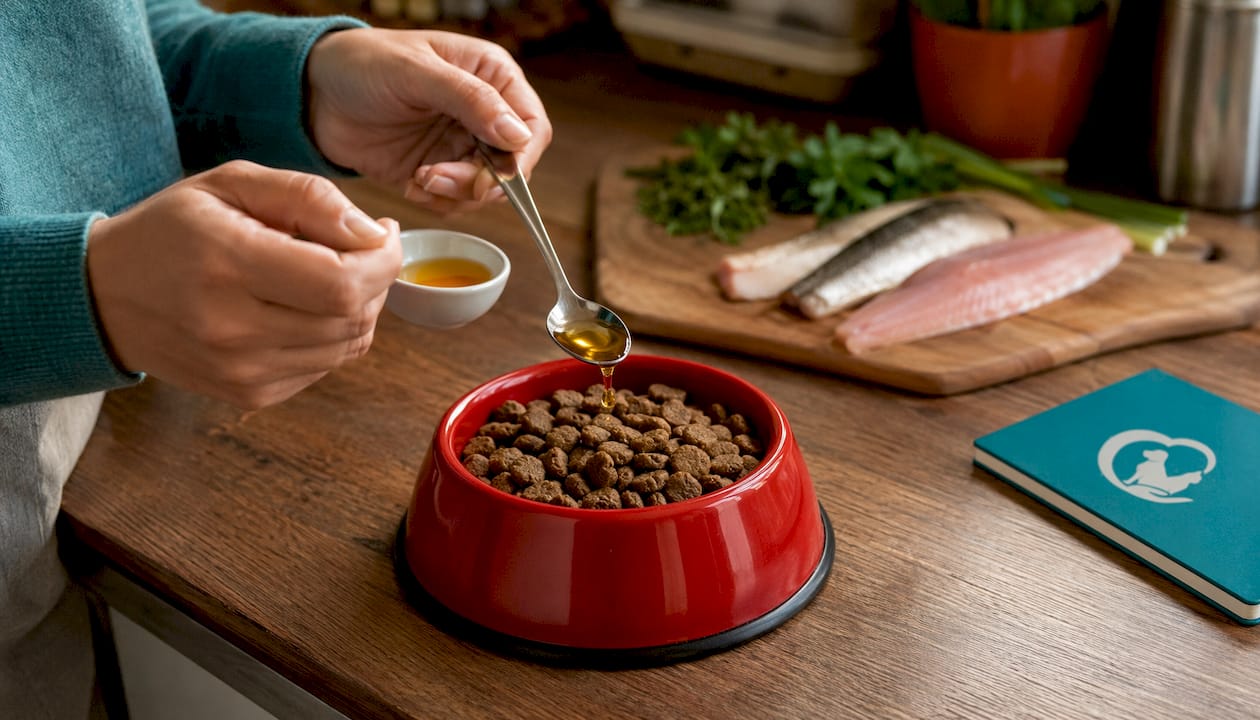
The second route is nutritional. Omega-3 fatty acids, specifically EPA and DHA from oily fish sources, compete with arachidonic acid in the inflammatory cascade. When EPA and DHA are present in sufficient quantities, the body produces less potent inflammatory mediators, reducing joint swelling and pain. Adequate high-quality protein also preserves the muscle mass that supports and protects joints, which is especially relevant for senior dogs whose muscle maintenance becomes harder with age.
Long-term calorie restriction studies in dogs have shown delayed onset of radiographic arthritis and longer lifespans, reinforcing that this is a lifelong commitment to calorie control, not a short-term fix.
What nutrients and ingredients should you look for?
Prioritise EPA/DHA omega-3, adequate high-quality protein, controlled energy density, and specific joint actives where evidence supports them. Green-lipped mussel and collagen have qualified clinical support; glucosamine and chondroitin have weaker and more variable evidence.
| Nutrient | Role in joint health | Key food sources | Evidence strength |
|---|---|---|---|
| Omega-3 (EPA/DHA) | Reduces inflammatory mediators; supports cartilage | Oily fish (salmon, mackerel, sardines), green-lipped mussel | Strong — 2022 systematic review supports clinical benefit |
| High-quality protein | Maintains muscle mass supporting joints | Freshly prepared chicken, fish, eggs | Strong — essential for all life stages |
| Green-lipped mussel | Contains EPA, DHA, and unique lipid fractions; reduces lameness | Whole mussel, mussel extract | Moderate — clinical trials show significant PVF improvement |
| Collagen hydrolysate | Supports cartilage matrix; may reduce lameness | Bone broth, collagen supplements, formulated diets | Moderate — preliminary evidence supports lameness reduction; dosing not yet standardised |
| Glucosamine/chondroitin | Structural components of cartilage | Shellfish, formulated supplements | Weak — 2022 meta-analysis found inconclusive analgesic effect |
| Antioxidants (vitamins E and C) | Reduce oxidative stress in joint tissue | Vegetables, quality kibble | Moderate — supportive role in multimodal care |
| Prebiotics (MOS and FOS) | Support digestion and nutrient absorption | Formulated kibble with added prebiotics | Practical — supports gut health and weight management indirectly |
| Hydration | Lubricates joints; supports kidney function | Fresh water, wet food, water-rich vegetables | Foundational — often underestimated |
Practical whole-food sources worth knowing about for UK feeders:
- Oily fish (tinned sardines in spring water, fresh salmon offcuts) added occasionally as a topper — a small amount goes a long way for EPA/DHA.
- Eggs (cooked) provide high-quality protein and are gentle on digestion.
- Green-lipped mussel is most reliably delivered through a formulated kibble or a quality supplement, since raw mussel is not practical for daily feeding.
- Cooked sweet potato makes an excellent low-calorie treat and provides antioxidants.
Always count any whole-food additions against your dog’s daily calorie allowance. A tablespoon of fish oil, for example, adds meaningful calories that can undermine weight loss if not accounted for.
Pro Tip: Look for omega-3 from oily fish sources listed explicitly on the ingredient panel, not just “fish oil” with no species named. Named sources give you more confidence about EPA and DHA content.
Complete joint-support diets versus add-on supplements
The clearest answer here: start with a complete, omega-3-enriched, calorie-controlled diet as your everyday base. Add supplements selectively, under veterinary guidance, only when diet alone cannot meet your dog’s therapeutic needs.
Complete diets have real advantages. The omega-3 dose is built in, so there is no risk of adding excess calories through fish oil capsules. Nutrient balance is guaranteed by the formulation, and portion control is straightforward. Built-in omega-3 in mobility diets simplifies dosing, reduces extra calories from supplements, and is more convenient for owners managing weight alongside joint care.
Supplements are a different story. Quality varies considerably across the market, dosing is often inconsistent, and the evidence base for some popular actives is thinner than the packaging suggests.
The caregiver placebo effect is also a genuine concern. When owners invest emotionally and financially in a supplement, they often perceive improvement even when objective measures show none. Veterinary practitioners recommend objective monitoring tools precisely to counteract this bias. A practical decision flow:
- Try a complete joint/weight formula first for a full 2–3 month trial with objective monitoring.
- Add a specific nutraceutical (such as green-lipped mussel extract or collagen hydrolysate) only if the diet trial shows partial but insufficient improvement, and discuss with your vet.
- Reassess and stop any supplement that produces no measurable change after a proper trial period.
How to build a practical feeding plan for joint support
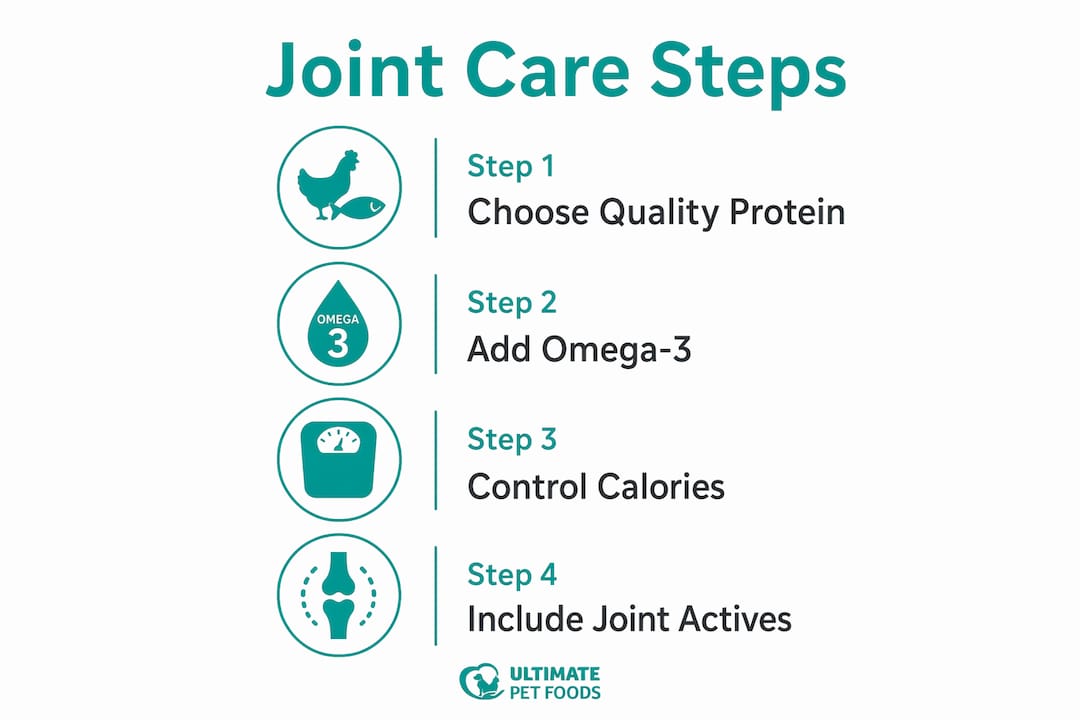
Step 1: Choose a complete joint or weight-management formula. Look for named meat or fish as the first ingredient, a declared EPA/DHA content, and a complete and balanced status. Ultimatepetfoods Weight Control & Joint Care and Ultimate Superfoods 80 both meet these criteria, with recipes gently cooked at 82°C using human-grade ingredients and added MOS and FOS for digestive support.
Step 2: Calculate target calories using body condition score (BCS). Use a 9-point BCS scale rather than breed averages. Aim for a score of 5/9 or below for long-term joint benefit. Your vet can help you set a safe daily calorie target; for weight loss, dogs may need around 60% of their maintenance energy requirement at their target weight, so a purpose-formulated diet is important to avoid nutrient shortfalls.
Step 3: Transition over 7–10 days. Mix old and new food gradually, increasing the proportion of new kibble each day. A slow transition protects digestion and improves long-term acceptance.
Step 4: Monitor and adjust every two weeks. Weigh your dog and adjust portions to achieve a steady, gradual loss if weight reduction is the goal, monitored carefully.
| Dog size | Approx. starting weight | Maintenance portion (guide) | Weight-loss portion (guide) |
|---|---|---|---|
| Small breed | 5–10 kg | 80 g/day | — |
Portions are indicative starting points only. Always follow the feeding guide on your specific product and adjust with vet advice based on your dog’s BCS and activity level.
Treat swaps that work in practice:
- Single-ingredient sweet potato treats are low in calories and naturally sweet, making them ideal training rewards.
- Cooked carrot sticks or green beans add crunch with minimal calorie impact.
- Break training treats into pea-sized pieces; the frequency of reward matters more to your dog than the size.
- Fresh water should always be available, and you can add a splash of low-sodium bone broth to encourage drinking, particularly in older dogs who may not drink enough.
How to monitor progress and when to call your vet
Expect gradual change, not a sudden transformation. Use a 2–3 month trial with objective measures, and resist the urge to judge results after just a few weeks.
Weekly monitoring checklist:
- Body condition score (weigh and score every two weeks)
- Willingness to walk on lead without lagging or limping
- Ability to use stairs or get on/off furniture
- Enthusiasm for play or interaction
- Appetite and stool quality (a sign that the diet is agreeing with them)
Short video clips taken at the same time each week are surprisingly useful. Watching them back-to-back over two months often reveals improvements that are invisible day to day.
Red flags that need veterinary attention now:
- Sudden onset of lameness or refusal to bear weight
- Visible joint swelling, heat, or pain on gentle touch
- Neurological signs such as stumbling, knuckling, or loss of coordination
- Rapid weight loss or gain despite consistent feeding
If progress stalls after a properly executed 2–3 month diet trial, book a veterinary assessment. Your vet may recommend adjunctive analgesia, physiotherapy, hydrotherapy, or advanced imaging. Diet is a powerful tool, but it works best as part of a multimodal plan.
Common myths and safety notes you should know
Many popular beliefs about joint nutrition are oversimplified. Weight control and consistent, complete feeding matter far more than any single “miracle” ingredient.
Myth-busting:
- “Glucosamine is a proven pain reliever.” The evidence is nuanced. The 2022 meta-analysis found glucosamine and chondroitin produced no significant improvement in peak vertical force compared to placebo in controlled trials. It may have a role in some dogs, but it should not be the centrepiece of a joint plan.
- “More omega-3 is always better.” Omega-3 is dose-dependent and calorie-dense. Fish oil contains approximately 10 kcal per gram, so adding large amounts can undermine weight loss. Built-in omega-3 in a formulated kibble avoids this problem.
- “Raw diets prevent arthritis.” No reliable evidence supports this claim. Poorly balanced raw or homemade recipes carry real risks, including calcium-to-phosphorus imbalances that can cause developmental skeletal disease in growing dogs, particularly large breeds.
- “Supplements are always safe because they are natural.” Some supplements interact with medications, and excess fat-soluble vitamins can accumulate to harmful levels. Always discuss new supplements with your vet.
Safety callouts:
- Unbalanced homemade diets and mineral imbalances are a genuine risk; one UK study found many foods labelled “complete” did not meet mineral and trace element requirements.
- Excess calcium in growing large-breed puppies can cause angular limb deformity, a serious and preventable condition.
- If your dog has food sensitivities that may be driving inflammation, consider discussing hydrolysed protein options with your vet. Ultimatepetfoods’ Ultimate+ Functional Health range uses hydrolysed proteins for targeted everyday support, including a Weight Control & Joint Care formula designed for dogs with sensitivities.
Always choose a complete and balanced recipe for lifelong feeding, not a short-term fix.
Why Ultimatepetfoods is our recommendation for everyday joint support
Ultimatepetfoods dry kibble earns its place as the recommended everyday base in this guide because the formulations align directly with what the evidence supports: complete nutrition, calorie-conscious recipes, high-quality protein, and built-in omega-3 from named fish sources.
Every recipe is made with freshly prepared meat or fish, gently cooked at 82°C to help lock in freshness and nutrients. Human-grade ingredients mean you know exactly what your dog is eating. MOS and FOS prebiotics are included to support digestion and gut health, which matters when you are managing calorie intake carefully and need every nutrient to be absorbed efficiently.
The Ultimate+ Functional Health range goes further for dogs with specific needs. Using hydrolysed proteins, it is designed for targeted everyday support across five categories: Digestive Care, Skin & Coat Care, Weight Control & Joint Care, Dental Care, and Healthy Living. The Weight Control & Joint Care formula is particularly relevant for dogs managing arthritis alongside sensitivity issues, and it requires no prescription. For dogs without sensitivities, Ultimate Superfoods 80 provides an 80% meat content, grain-free, complete recipe that supports muscle maintenance and delivers a strong nutritional profile for joint health and mobility.
Before making therapeutic dietary changes, particularly for dogs already on medication, discuss the plan with your vet. Ultimatepetfoods products are designed for everyday feeding, not as a replacement for veterinary care.
Key takeaways
Weight management combined with a complete, omega-3-enriched kibble is the highest-impact dietary strategy for canine joint health, with measurable improvements typically emerging over a 2–3 month trial.
| Point | Details |
|---|---|
| Weight control is the priority | Losing approximately 6% of excess body weight significantly reduces lameness in arthritic dogs. |
| Omega-3 has the strongest evidence | A 2022 systematic review confirmed omega-3 diets are effective for managing OA symptoms; built-in EPA/DHA avoids the calorie burden of separate supplements. |
| Glucosamine evidence is weak | The same 2022 meta-analysis found chondroitin–glucosamine produced no consistent analgesic effect in controlled trials. |
| Monitor objectively for 2–3 months | Use weekly video, BCS scoring, and a mobility diary; dietary effects are gradual and easy to miss without structured tracking. |
| Ultimatepetfoods for everyday feeding | Weight Control & Joint Care and Ultimate Superfoods 80 are complete, gently cooked at 82°C, and include MOS and FOS for digestion. |
What the evidence tells us, and what most guides miss
The conventional wisdom in canine joint nutrition tends to fixate on supplements: glucosamine tablets, fish oil capsules, green-lipped mussel powders. Owners spend considerable money on these products, often with genuine hope and sometimes with genuine results. But the evidence hierarchy is clear, and most popular guides bury the most important finding at the bottom.
Weight management is not one tool among many. It is the primary intervention, and everything else is secondary. A dog carrying excess weight who receives the best omega-3 supplement on the market will still experience more joint pain than a lean dog on a standard complete diet. The mechanical reality of cartilage compression does not care about nutraceuticals.
What also gets underplayed is the caregiver placebo effect. When you love your dog and you are trying hard to help them, you will notice improvement. That is human nature, not self-deception. But it is exactly why objective monitoring matters so much: the weekly weigh-in, the video clip, the mobility chart. These tools protect you from investing in something that is not working, and they give you genuine confidence when something is.
The other thing worth saying plainly: a complete, well-formulated kibble fed at the right portion is not a compromise. It is the most reliable way to deliver consistent nutrition, controlled calories, and built-in joint actives every single day, without the complexity of managing multiple supplements. Simplicity, in this case, is the evidence-based choice.
Ultimatepetfoods makes everyday joint support straightforward
Choosing the right food for a dog with joint concerns does not need to be complicated. Ultimatepetfoods offers three clear pathways depending on your dog’s needs.
Ultimate Superfoods 80 is a high-meat, grain-free complete kibble with 80% chicken content, gently cooked at 82°C with human-grade ingredients and added MOS and FOS. It is a strong everyday choice for active dogs and those needing muscle support alongside joint care. The Weight Control & Joint Care formula from our Ultimate+ Functional Health range uses hydrolysed proteins for dogs with sensitivities, targeting weight management and joint support in a single, complete daily feed. Both are designed for lifelong feeding, not short-term intervention.
Not sure where to start? Try a sample box to find the right fit for your dog before committing to a full bag. You can also browse the full Ultimate Superfoods 80 product page for detailed nutritional information and feeding guides. As always, if your dog is already on medication or has been diagnosed with osteoarthritis, speak with your vet before making significant dietary changes.
Useful sources
The recommendations in this guide draw on peer-reviewed research and professional veterinary guidance. Key sources are listed below for further reading.
| Source | What it covers |
|---|---|
| Canine Arthritis Management — Weight Management | Primary guidance on weight control as the central intervention for arthritic dogs |
| Canine Arthritis Management — Diet & Supplements | Evidence review of dietary approaches and nutraceuticals, including ACCLAIM-style product scrutiny |
| 2022 Systematic Review and Meta-Analysis (PMC) | Peer-reviewed analysis confirming omega-3 efficacy and questioning chondroitin–glucosamine for analgesia |
| Collagen Hydrolysates in Canine OA — Narrative Review (PMC) | Current evidence on collagen supplementation, mechanisms, and dosing gaps |
| Green-Lipped Mussel Clinical Trial (Frontiers in Veterinary Science) | Prospective RCT comparing PCSO, glucosamine, and carprofen for hip OA |
| UK Vet Companion Animal CPD Article | Practitioner guidance on supplement selection, caregiver placebo, and objective monitoring |
| Managing Canine Osteoarthritis — VetTimes PDF | Clinical overview including calorie restriction evidence and mineral balance risks |
FAQ
What is the most important dietary change for a dog with joint pain?
Reaching and maintaining an ideal body weight is the single most impactful dietary intervention. Canine Arthritis Management reports that losing approximately 6% of excess body weight produces a significant reduction in lameness.
Does glucosamine actually help dogs with arthritis?
The evidence is mixed and generally weak. A 2022 systematic review and meta-analysis found that glucosamine and chondroitin produced no consistent analgesic effect in controlled trials, and it should not be relied upon as a primary pain management strategy.
How long before I see improvement from a joint-support diet?
Allow 2–3 months for dietary changes to produce measurable improvements in mobility. Track progress weekly with video clips and body condition scoring rather than relying on day-to-day impressions.
Is Ultimatepetfoods Weight Control & Joint Care suitable for everyday feeding?
Yes. It is a complete and balanced formula designed for lifelong daily feeding, not short-term use. It uses hydrolysed proteins, is gently cooked at 82°C, and includes MOS and FOS for digestive support.
Can I add homemade food to support my dog’s joints?
Occasional whole-food additions such as cooked oily fish or sweet potato can complement a complete kibble, but homemade diets used as a primary feed carry real risks of mineral imbalance. Always count additions against your dog’s daily calorie allowance and keep a complete, balanced kibble as the foundation.
This article is general educational information, not veterinary advice. Always consult your vet or a qualified canine nutritionist before making significant dietary changes, particularly if your dog is on medication or has a diagnosed health condition.