

Best supplements for dogs: evidence-based picks for health

TL;DR:
- Most dogs on complete diets do not require multivitamins if their food is nutritionally balanced.
- Targeted supplements like omega-3s and joint support can benefit dogs with specific health needs.
- Choosing high-quality, vet-approved supplements tailored to your dog’s breed, age, and health is essential.
Not every dog needs a supplement cabinet full of bottles, and that’s actually good news. Most dogs on complete diets do not require multivitamins at all, provided their food is properly balanced and nutritionally complete. But for dogs with joint stiffness, itchy skin, food sensitivities, or those eating home-cooked meals, the right supplement can make a genuinely meaningful difference. This guide cuts through the noise to help you understand when supplements are worth it, which ones have real science behind them, and how to choose options that are safe, natural, and suited to your dog’s individual needs.
Table of Contents
- When does your dog actually need supplements?
- The top evidence-backed supplements for dogs
- Choosing safe, natural, and high-quality supplements
- Tailoring supplements to your dog’s unique needs
- Our perspective: why evidence and customisation are everything
- Supporting your dog’s health journey with trusted solutions
- Frequently asked questions
Key Takeaways
| Point | Details |
|---|---|
| Evidence over hype | Most dogs do not need supplements unless addressing a specific health concern. |
| Targeted choices matter | Supplements like omega-3s and joint support are backed by solid research for common issues. |
| Quality is crucial | Choose high-purity, natural supplements with the NASC seal and avoid human vitamins. |
| Customise by dog needs | Tailor supplement programmes to breed, age, diet, and unique sensitivities for best results. |
When does your dog actually need supplements?
This is the question most owners skip straight past, and it’s the most important one to answer first. If your dog eats a complete, commercially prepared food that meets recognised nutritional standards, the honest answer is that a daily multivitamin is probably unnecessary. Their food is already doing the heavy lifting.
That said, there are specific situations where targeted supplementation genuinely helps. Large breeds benefit from early joint support, allergy-prone dogs respond well to omega-3 fatty acids for skin health, and dogs on home-cooked diets often have nutritional gaps that a well-chosen supplement can fill. These are the edge cases where supplements move from optional extras to genuinely useful tools.
Here are the key scenarios where supplementation is worth discussing with your vet:
- Large or giant breeds growing quickly or entering their senior years, where joint cartilage support becomes a priority early
- Dogs with itchy skin or seasonal allergies, where omega-3s can calm inflammation from the inside out
- Home-cooked or raw-fed dogs, where a balanced multivitamin helps cover any gaps in the diet
- Senior dogs experiencing reduced mobility, cognitive changes, or slower digestion
- Dogs recovering from illness or surgery, where targeted nutrients can support healing
When you do decide to add a supplement, quality control matters enormously. Look for the NASC quality seal on any product you consider, and always check with your vet before starting, especially if your dog is on medication. One critical point: never give your dog human vitamins. The dosages and formulations are completely different, and some ingredients that are safe for people, such as xylitol or high doses of vitamin D, can be toxic to dogs.
For owners feeding homemade dog food supplements are particularly important to understand, as even a carefully prepared meal can fall short of essential nutrients without the right additions. If you want a broader overview before diving into specifics, our guide to 7 essential supplements for dogs is a great place to start.
Pro Tip: If your dog’s food packaging states it is “complete and balanced” and meets FEDIAF or AAFCO nutritional standards, you likely do not need to add a general multivitamin. Focus instead on targeted supplements for specific health concerns.
The top evidence-backed supplements for dogs
Once you know your dog could benefit from supplementation, it pays to focus on options that have genuine research behind them rather than marketing claims. Here are the supplements we consistently recommend, and the science that supports them.
1. Omega-3 fatty acids (EPA and DHA)
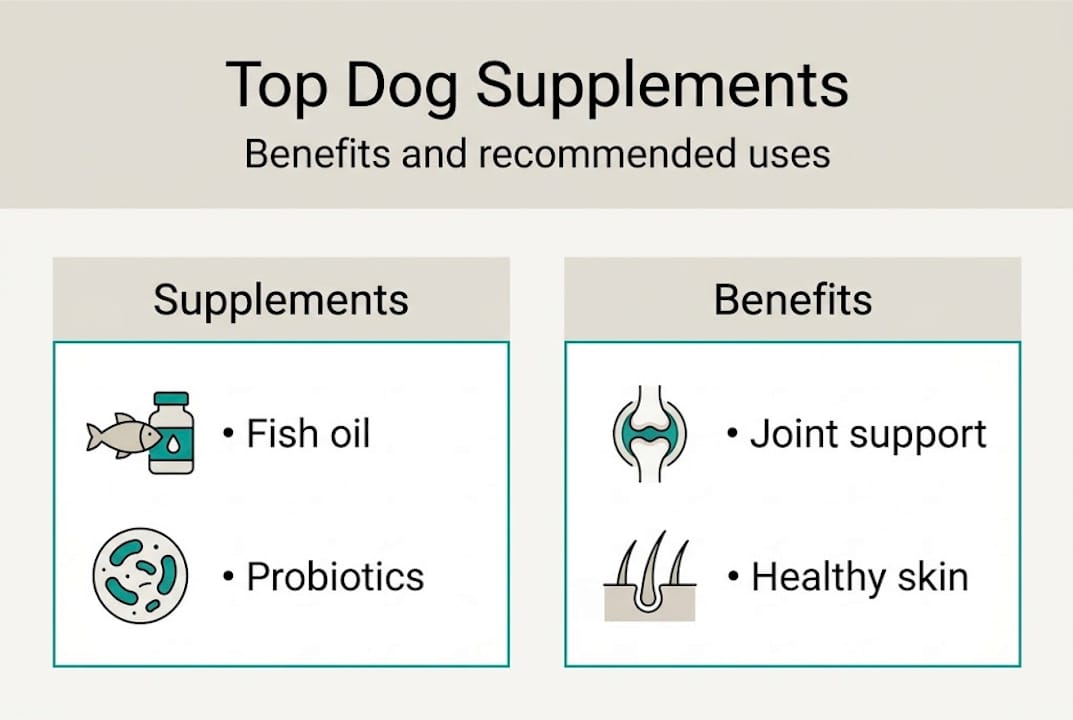
Fish oil is arguably the most well-supported supplement in canine nutrition. EPA and DHA from fish oil are widely recommended for their anti-inflammatory properties, supporting skin and coat condition, joint comfort, heart health, brain function, and even kidney health. For dogs with dry, flaky skin or persistent scratching, omega-3s are often the first supplement a vet will suggest. You can learn more about how omega-3 for dogs works in practice on our dedicated page.

2. Joint support supplements
For dogs with stiffness or reduced mobility, a combination approach tends to work best. A multicenter double-blind trial involving 46 dogs found that a joint supplement containing eggshell membrane, krill omega-3, astaxanthin, hyaluronic acid, and Boswellia significantly improved pain interference scores compared to placebo over 90 days. Separately, a randomised trial in 20 dogs with osteoarthritis showed that a nutraceutical combining fish oil, turmeric, Boswellia, and avocado-soya unsaponifiables performed comparably to the prescription NSAID mavacoxib in reducing pain and lameness. That is a remarkable finding. Explore our joint health support and glucosamine and chondroitin pages for more detail.
3. Probiotics
A healthy gut is the foundation of so much else. Probiotics support digestion, strengthen the immune response, and can even improve skin conditions linked to gut imbalance. They are particularly useful after a course of antibiotics or during periods of dietary transition.
4. Antioxidants
Vitamins C and E, as well as astaxanthin and other plant-derived antioxidants, help neutralise free radicals that accumulate with age. For senior dogs, antioxidant support can contribute to better cognitive function and overall vitality.
| Supplement | Primary benefit | Best suited for |
|---|---|---|
| Fish oil (EPA/DHA) | Skin, coat, joints, heart | Itchy, arthritic, or ageing dogs |
| Eggshell membrane | Joint cushioning and mobility | Large breeds, senior dogs |
| Probiotics | Gut health, immunity | Sensitive stomachs, post-antibiotics |
| Boswellia | Anti-inflammatory joint relief | Dogs with osteoarthritis |
| Antioxidants | Cellular protection, cognition | Senior or high-activity dogs |
Choosing safe, natural, and high-quality supplements
With promising options identified, the next challenge is knowing how to choose well. The supplement market is largely unregulated, which means quality varies enormously between brands. A cheap product might contain lower concentrations of active ingredients, harmful fillers, or even contaminants.
For fish oils specifically, wild Alaskan salmon and pollock oils are preferred for their purity, natural triglyceride form, and low contaminant levels. Brands such as Zesty Paws, Nordic Naturals, and Pet Honesty are frequently cited by vets for their quality standards. The triglyceride form is absorbed more efficiently than the ethyl ester form found in cheaper products, so it genuinely matters.
Here is what to look for when reading a supplement label:
- NASC quality seal: The National Animal Supplement Council seal indicates the manufacturer follows strict quality control and adverse event reporting standards
- Named, natural ingredients: Look for specific named sources such as “wild salmon oil” or “New Zealand green-lipped mussel” rather than vague terms like “marine lipid concentrate”
- No artificial additives: Avoid products with artificial colours, flavours, or unnecessary preservatives
- Species-specific dosing: Dosages should be clearly listed for dogs by weight, not adapted from human products
- Transparent manufacturing: Reputable brands share third-party testing results or certificates of analysis
For dogs with skin sensitivities, our guide to omega fatty acids and skin health explains exactly how these nutrients work at a cellular level. And if you are navigating skin-friendly dog food guidance alongside supplements, combining the two approaches tends to deliver the best results.
Pro Tip: When introducing a new supplement to a sensitive dog, start with half the recommended dose for the first two weeks. This allows their system to adjust and makes it easier to identify any adverse reactions before they escalate.
| Quality indicator | What to look for | Red flag |
|---|---|---|
| Certification | NASC quality seal | No certification listed |
| Ingredient source | Named, natural origins | Vague or generic terms |
| Form (for fish oil) | Triglyceride form | Ethyl ester form |
| Dosing | Dog-specific by weight | Human dosing adapted |
| Testing | Third-party verified | No testing information |
Tailoring supplements to your dog’s unique needs
Finding a quality product is only part of the picture. The supplement that works brilliantly for your neighbour’s Border Collie may not be what your Labrador needs at all. Breed, age, lifestyle, and existing health conditions all shape the right approach.
Large breeds benefit from early joint support, ideally starting before visible symptoms appear. Breeds like German Shepherds, Golden Retrievers, and Rottweilers are genetically predisposed to hip dysplasia and elbow problems, so proactive supplementation from around 12 to 18 months can be a genuinely smart move. Our guide to food and joint health for dogs explores how nutrition and supplementation work together.
For allergy-prone or itchy dogs, omega-3 fatty acids are the starting point, but you may also want to consider a probiotic to support the gut-skin axis. Research increasingly shows that gut health and skin health are closely linked, meaning a supplement that supports one often benefits the other.
Here is a practical checklist to help you match supplements to your dog’s profile:
- 🐾 Puppy of a large breed: Consider a joint supplement with eggshell membrane or green-lipped mussel from around 12 months
- 🐾 Adult dog with itchy skin: Start with a high-quality fish oil; add a probiotic if the skin issue is persistent
- 🐾 Senior dog (7+ years): Omega-3s, joint support, and an antioxidant blend are all worth discussing with your vet
- 🐾 Home-cooked or raw-fed dog: A complete multivitamin formulated for dogs is essential to fill nutritional gaps
- 🐾 Dog recovering from illness: Probiotics and omega-3s can support recovery; always follow veterinary guidance
For dogs managing both weight and mobility challenges, our weight and joint support formula combines targeted nutrition with functional ingredients in a single, convenient solution.
Pro Tip: Keep a simple health diary for your dog when starting a new supplement. Note energy levels, coat condition, stool quality, and mobility weekly. After 6 to 8 weeks, you will have a clear, objective picture of whether it is working.
Our perspective: why evidence and customisation are everything
We have seen the supplement aisle grow enormously over the past decade, and with that growth has come a lot of noise. The honest truth is that most dogs do not need a scattergun approach of multiple multivitamins. What they need is targeted support, chosen on the basis of their individual health profile and backed by real evidence.
Generic advice like “give your dog fish oil” is a starting point, not a strategy. The dogs we see thrive are the ones whose owners have taken the time to understand the specific issue, whether that is joint inflammation, gut sensitivity, or skin reactivity, and chosen a supplement with clinical evidence behind it. That is a very different thing from grabbing the cheapest bottle off a shelf.
We also believe strongly that supplements work best as part of a broader nutritional approach, not as a fix for a poor-quality diet. If the foundation is solid, the right supplement becomes a precision tool rather than a crutch. Our guide to essential supplements explained reflects this philosophy throughout.
Supporting your dog’s health journey with trusted solutions
Evidence and customisation are the foundation, and we are here to help you put both into practice with confidence. At Ultimate Pet Foods, we have developed our range specifically for dogs with sensitivities, targeted health needs, and owners who refuse to compromise on ingredient quality.

Whether your dog needs support for their digestion, skin, coat, or joints, our formulas are built around natural, carefully sourced ingredients that work in harmony with the right supplements. Explore the grain-free diet benefits that underpin our approach, or discover our digestive care dog food and skin and coat defence food ranges. Every wag, bounce, and cuddle starts with the right nutrition. 🐾
Frequently asked questions
Do all dogs need supplements if they eat commercial dog food?
Most dogs on complete diets do not need extra supplements unless they have specific health issues or sensitivities, as properly formulated commercial foods already provide all essential nutrients.
Which supplement helps the most with a dog’s itchy skin?
Omega-3 fatty acids from fish oil are the most widely supported option, as EPA and DHA actively reduce inflammation linked to skin allergies and help restore the skin’s natural barrier.
Are human vitamin tablets safe for dogs?
No. Human vitamins can be toxic to dogs due to different dosages and potentially harmful ingredients; always choose pet-specific products with clear quality assurances.
How can I tell if a supplement is high quality?
Look for the NASC quality seal, clearly named natural ingredients, and wild Alaskan or pollock oils in triglyceride form, alongside transparent third-party testing information from the manufacturer.


