
How to Groom Your Dog Naturally for Healthy Skin and Coat
Most british dog owners do not realize that regular grooming can reduce vet visits by up to 40 percent each year. Cleanliness and coat care are critical for both your pet’s comfort and overall health. From brushing out stubborn tangles to checking for hidden skin issues, setting up a gentle routine creates a happier, healthier companion. Discover practical steps backed by trusted british animal organizations and learn how simple changes can make grooming easier and stress free for both you and your dog.
Table of Contents
- Stage 1: Prepare Your Space And Gentle Grooming Tools
- Stage 2: Brush Out Tangles And Remove Loose Fur
- Stage 3: Bathe With Natural, Hypoallergenic Products
- Stage 4: Trim Nails And Check Ears Safely
- Stage 5: Inspect Coat And Skin For Health Issues
Quick Summary
| Key Insight | Explanation |
|---|---|
| 1. Create a Calm Grooming Environment | Select a quiet, warm area for grooming and use non-slip mats to help your dog feel at ease throughout the process. |
| 2. Use Appropriate Grooming Tools | Choose brushes specific to your dog’s coat length to ensure effective grooming that avoids discomfort and promotes a positive experience. |
| 3. Bathe with Dog-Specific Products | Only bathe your dog when necessary, using lukewarm water and hypoallergenic shampoos suited for canine skin to avoid irritation. |
| 4. Trim Nails and Inspect Ears Carefully | Handle nails and ears gently, using the right tools and maintaining hygiene, to ensure your dog’s comfort and health during grooming. |
| 5. Regularly Inspect Coat and Skin | Conduct thorough checks for skin issues during grooming to detect potential health problems early, ensuring a healthy coat and skin. |
Stage 1: Prepare your space and gentle grooming tools
Grooming your dog starts with creating a calm, comfortable environment and selecting the right tools. The Kennel Club recommends choosing grooming equipment specific to your dog’s coat type, which means understanding your furry friend’s unique needs before you begin.
Start by selecting a quiet, warm area in your home where your dog feels relaxed. A non slip mat or grooming table works best, providing stability and preventing your pup from feeling anxious. Gather your tools beforehand: a pin brush for smoothing fur, a slicker brush for removing tangles, soft cloths, and gentle metal combs. Blue Cross suggests using different brushes depending on your dog’s coat length, so ensure you have the right equipment.
Pro tip: Keep treats nearby to reward your dog and make grooming a positive experience. A calm demeanour from you will help your dog stay relaxed and cooperative during the process. Remember that patience and gentleness are key to successful, stress free grooming sessions.
Stage 2: Brush out tangles and remove loose fur
Now that your grooming area is prepared, it is time to tackle those pesky tangles and loose fur. Blue Cross recommends using specific brushes tailored to your dog’s coat length to ensure effective and comfortable grooming for your furry companion.
Guide Dogs UK suggests starting with a gentle massage to loosen dead hair and dirt before brushing. Begin by running your fingers through your dog’s coat, identifying any knots or matted areas. Use a pin brush for smooth, short-haired breeds and a slicker brush for dogs with medium to long coats. Brush in the direction of hair growth, using gentle but firm strokes to remove loose fur and prevent discomfort.
Pro tip: Work in small sections and reward your dog with treats to make the experience positive. If you encounter a stubborn tangle, use a metal comb to carefully work it out without pulling or causing pain. Remember to be patient and gentle throughout the process.
Stage 3: Bathe with natural, hypoallergenic products
The Kennel Club advises selecting specialised dog shampoos rather than human products to maintain your dog’s delicate skin health. Bathing should be a careful process, using gentle natural products specifically formulated for canine skin and coat types.
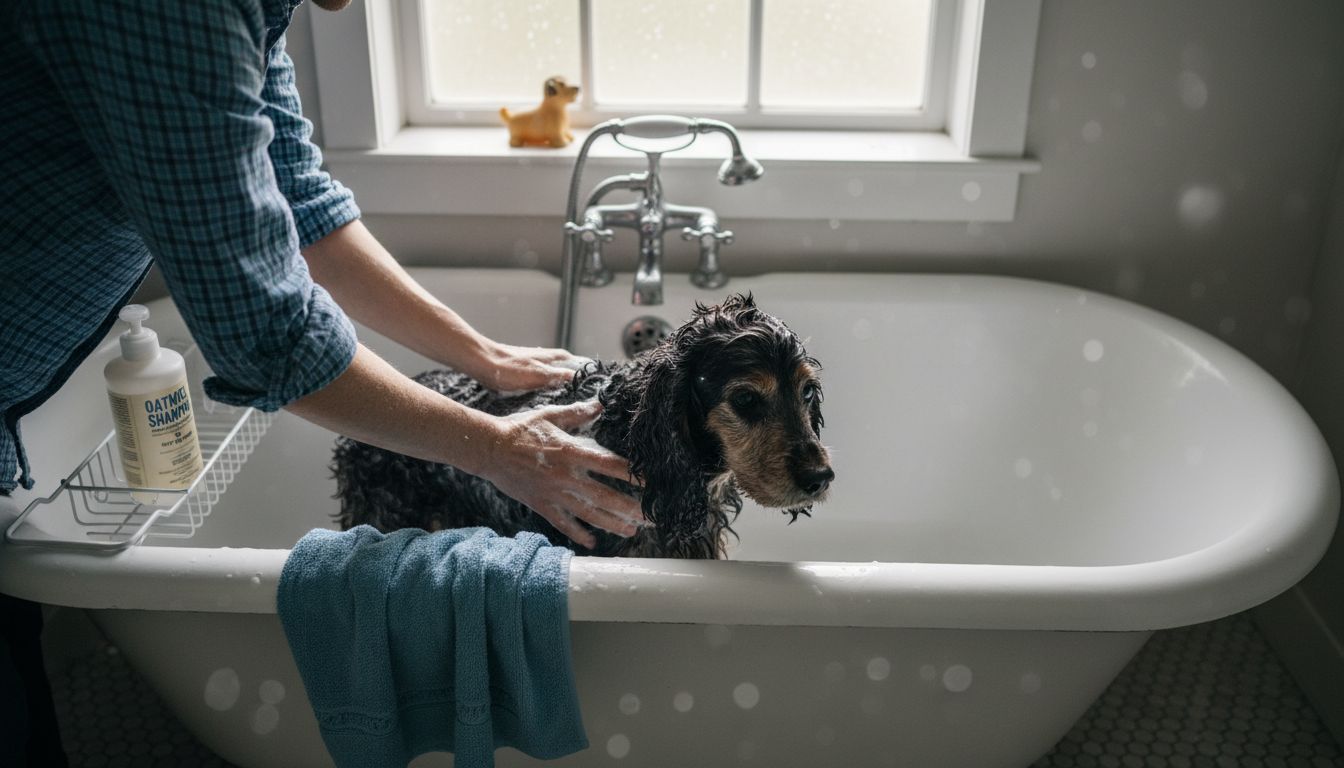
Blue Cross recommends bathing dogs only when absolutely necessary, which typically means when your dog is visibly dirty or has an unpleasant odour. When bathing, use lukewarm water and a hypoallergenic shampoo, working the product gently into your dog’s coat while avoiding the eyes and ears. Start at the neck and work your way down, ensuring thorough but gentle coverage.
Pro tip: Always rinse completely to prevent skin irritation, and use a soft towel to dry your dog carefully. For dogs with sensitive skin, consider natural dog nutrition strategies that support coat health to complement your grooming routine. Pat dry rather than rubbing, which can cause tangles and discomfort.
Stage 4: Trim nails and check ears safely
Blue Cross highlights the critical importance of regular ear and nail care as part of your dog’s comprehensive grooming routine. This stage requires patience, gentle handling, and careful attention to prevent discomfort or potential injury.
Guide Dogs UK recommends thoroughly washing your hands before and after handling your dog to maintain proper hygiene. For nail trimming, use specialised dog nail clippers and cut small amounts at a time, avoiding the quick (the sensitive blood vessel inside the nail). When checking ears, gently fold back the ear flap and look for signs of redness, unusual discharge, or unpleasant odour that might indicate infection.
Pro tip: If your dog seems anxious during nail trimming, introduce the clippers gradually by letting them sniff and get comfortable with the tool. Consider keeping natural treats that support overall canine health nearby to reward calm behaviour and make the experience positive.
Stage 5: Inspect coat and skin for health issues
Blue Cross recommends thorough grooming as a critical method for monitoring your dog’s overall skin and coat health, ensuring early detection of potential problems before they become serious concerns. A comprehensive skin inspection involves carefully examining your dog’s entire body for any unusual changes or signs of discomfort.
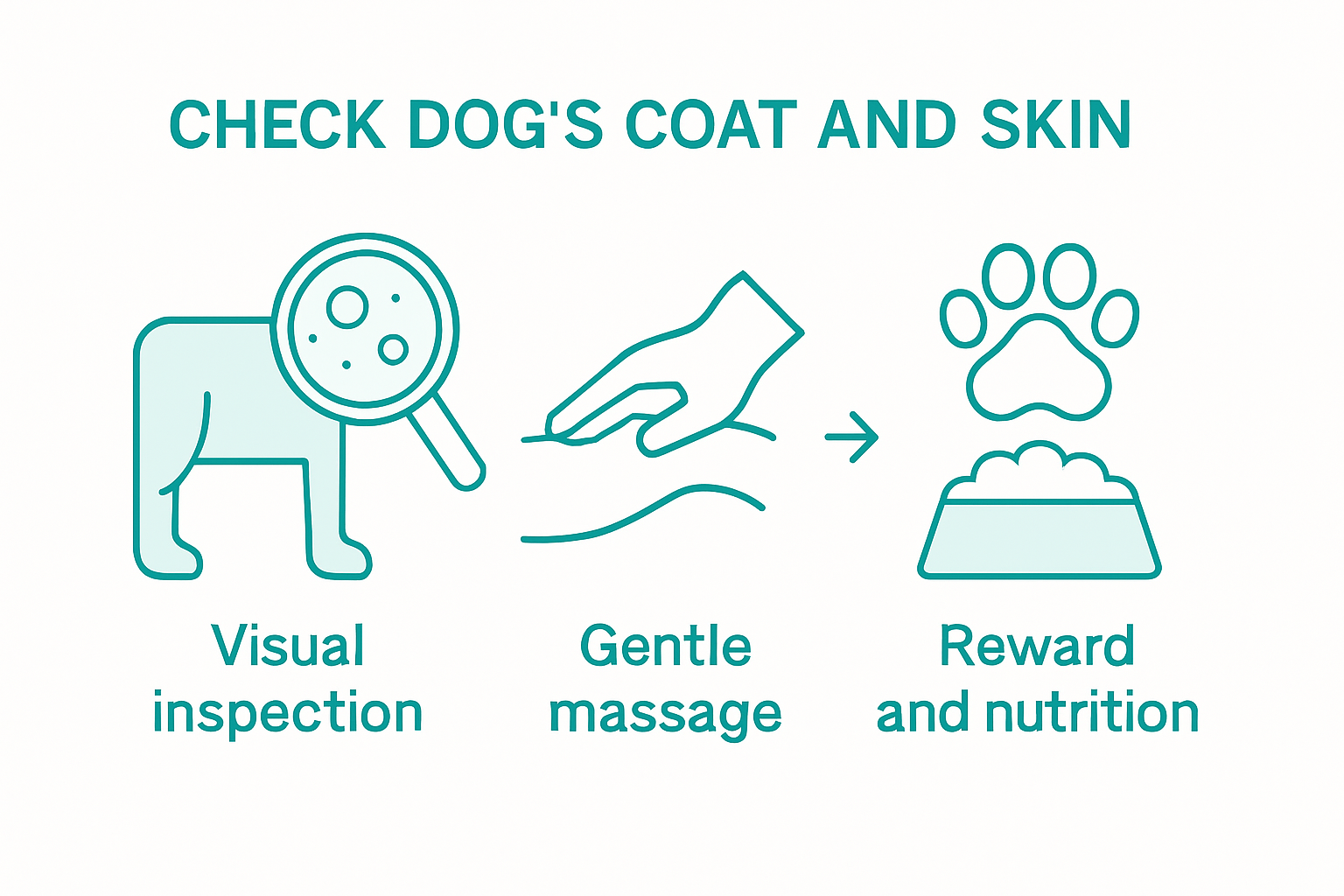
Guide Dogs UK suggests using a gentle massaging technique while examining your dog’s coat, which helps stimulate hair follicles and allows you to feel for any hidden lumps, bumps, or skin irregularities. Look for signs such as redness, swelling, unusual odours, excessive scratching, bald patches, or changes in skin texture. Pay special attention to areas like armpits, groin, between toes, and around ears where skin issues often first develop.
Pro tip: Consistent nutrition plays a significant role in skin health, so consider supporting your dog’s coat and skin through targeted nutritional strategies that promote a robust immune system and healthy skin barrier. If you notice anything unusual during your examination, consult your veterinarian promptly.
Enhance Your Dog’s Grooming Routine with Natural Nutrition
Grooming your dog naturally is essential for maintaining healthy skin and a shiny coat but the journey does not end with brushing and bathing. Many pet owners find that supporting coat health from within through tailored nutrition addresses common challenges such as dryness, irritation, and dull fur. If you want to treat your dog to a complete care approach combining gentle grooming with premium, natural foods designed specifically for their needs explore our collections at Ultimate Pet Foods.

Discover how feeding your dog high-quality grain-free blends can complement your grooming efforts by promoting a robust skin barrier and reducing sensitivities. Whether you have a lively puppy or a senior companion check out our Blends for our Senior Dogs for nutrition that supports coat vitality. Start your dog’s journey to natural health and shine today with carefully selected ingredients for visible benefits. Visit https://ultimatepetfoods.co.uk now and enjoy a special Discount 15% Offer for Our Sample customers to experience premium nutrition made simple.
Frequently Asked Questions
How can I prepare my space for grooming my dog naturally?
To prepare your space for grooming, create a calm and comfortable environment by choosing a quiet area in your home. Use a non-slip mat or grooming table to provide stability, and gather gentle grooming tools appropriate for your dog’s coat type.
What tools should I use for gentle dog grooming?
Select grooming tools based on your dog’s coat type, such as a pin brush for smooth, short-haired breeds and a slicker brush for medium to long coats. Ensure you have soft cloths and gentle metal combs ready to address any tangles or loose fur.
How should I bathe my dog using natural products?
When bathing your dog, use lukewarm water and hypoallergenic dog shampoo specifically designed for canine skin. Be sure to rinse thoroughly to avoid irritation, focusing on gentle application while avoiding the eyes and ears.
What methods can I use to trim my dog’s nails safely?
Trim your dog’s nails by using specialised dog nail clippers and cutting small amounts at a time to avoid hurting the quick. Gradually introduce your dog to the clippers to reduce anxiety and ensure a calm trimming experience.
How can I check my dog’s coat and skin for health issues effectively?
Inspect your dog’s coat and skin regularly by examining their entire body for unusual changes like redness, swelling, or unusual odours. Use a gentle massaging technique to stimulate the skin and help in detecting hidden lumps or irritations.
What role does nutrition play in my dog’s skin and coat health?
Consistent nutrition is crucial for maintaining your dog’s skin and coat health. Focus on providing a balanced diet that supports a strong immune system and healthy skin barrier, enhancing the effectiveness of your grooming efforts.
Recommended
- 7 Natural Dog Food Tips for a Shiny, Healthy Coat
- 7 Ways Natural Dog Food Helps Skin Problems
- Understanding Dog Food for Skin Issues – Ultimate Pet Foods
- Skin and Coat Wellness Dog Treat to Aid, Support a Health & Shiny Coat – Ultimate Pet Foods
- Managing Winter Dog Shedding: Tips to Keep Your Home Fur-Free – iPupPee
- Master Your Natural Hair Routine for Optimal Growth | MyHair