
How to check dog food quality: a practical guide
Selecting the right dog food can feel overwhelming when faced with endless brands, confusing labels, and conflicting nutritional claims. Many health-conscious dog owners struggle to confidently assess whether a product truly supports their pet’s wellbeing or simply relies on clever marketing. Understanding how to evaluate ingredients, nutritional adequacy, and suitability for your dog’s specific health needs transforms this challenge into an empowering process. This guide provides clear, practical steps to help you make informed decisions about your dog’s nutrition with confidence.
Table of Contents
- Key takeaways
- What you need to check before evaluating dog food
- Step-by-step guide to evaluating dog food quality
- How to consider your dog’s specific health needs when choosing food
- Common mistakes and how to avoid them when checking dog food quality
- Improve your dog’s diet with trusted natural dog food
- How to check dog food quality - frequently asked questions
Key Takeaways
| Point | Details |
|---|---|
| First ingredient matters | The first ingredient should be a named animal protein such as chicken or salmon. |
| Quality carbohydrate sources | Opt for digestible complex carbohydrates such as sweet potato, peas or lentils rather than corn or wheat fillers. |
| Avoid artificial additives | Avoid by products, rendered fats and artificial colours and opt for natural preservatives such as mixed tocopherols. |
| Vet guidance essential | Consider your dog’s life stage health needs and sensitivities, and consult a veterinarian before making significant dietary changes. |
What you need to check before evaluating dog food
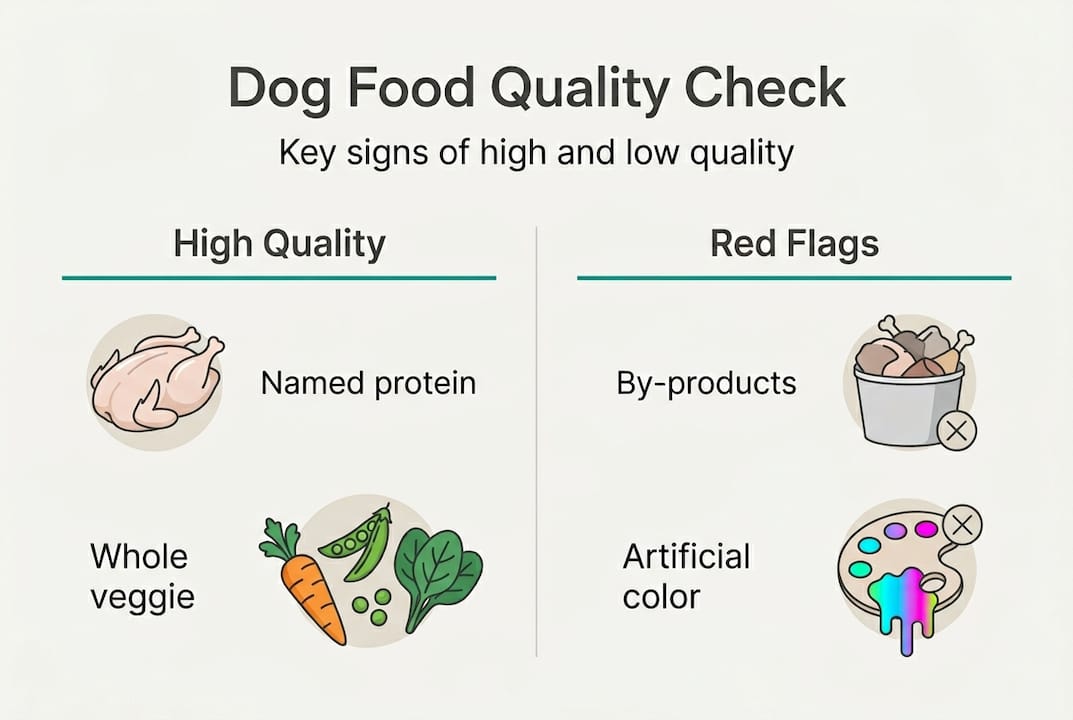
Before diving into specific product comparisons, you need foundational knowledge about what makes dog food nutritionally sound. Understanding how to read dog food ingredients is fundamental to identifying quality food options. Ingredients appear in descending order by weight, so the first few items reveal the food’s primary composition. Named animal proteins like chicken, beef, or salmon should dominate the top positions, whilst vague terms like “meat meal” or “animal derivatives” signal lower quality.
Familiarise yourself with basic canine nutritional requirements before shopping. Dogs need specific ratios of protein, fat, carbohydrates, vitamins, and minerals that vary by life stage, size, and activity level. Puppies require higher protein and calcium for growth, whilst senior dogs benefit from joint-supporting nutrients and controlled calories. Knowing these fundamentals helps you spot whether a food genuinely meets your dog’s needs or falls short despite attractive packaging.
Gather practical tools to streamline your evaluation process. Keep a notepad or use your smartphone to photograph labels and compare products side by side. Create a shortlist of ingredients your dog should avoid based on known sensitivities or allergies. Many owners discover their dogs react poorly to common fillers like corn, wheat, or soy, or to specific proteins like beef or chicken.
Recognise poor-quality ingredients that frequently appear in lower-grade foods. By-products, rendered fats, artificial colours, and chemical preservatives offer minimal nutritional value and may trigger adverse reactions. Excessive grain content, particularly in dogs with sensitivities, can lead to digestive issues and inflammation. Learning to spot these red flags saves time and protects your dog’s health.
Pro Tip: Consult your veterinarian before making significant dietary changes, especially if your dog has existing health conditions like kidney disease, diabetes, or food allergies. Professional guidance ensures your evaluation considers medical factors beyond general nutrition principles.
Step-by-step guide to evaluating dog food quality
Start your evaluation by examining the first ingredient on the label. Spot quality dog food by confirming that a named animal protein occupies the top position. “Chicken” or “salmon” indicates whole meat, whilst “chicken meal” represents concentrated protein with moisture removed. Both can be nutritious, but whole meat contains more water, so its position may be slightly misleading. Look for at least two animal protein sources within the first five ingredients.

Evaluate carbohydrate sources for digestibility and nutritional contribution. Quality foods use sweet potato, peas, or lentils rather than corn or wheat fillers. These complex carbohydrates provide sustained energy and contain beneficial fibre for digestive health. Avoid foods listing multiple grain fragments like “ground corn,” “corn gluten meal,” and “corn bran” separately, a tactic manufacturers use to push less desirable ingredients lower on the list whilst maintaining high overall grain content.
Scrutinise the label for artificial additives that offer no nutritional benefit. Chemical preservatives like BHA, BHT, and ethoxyquin have raised health concerns, whilst natural alternatives like mixed tocopherols (vitamin E) and rosemary extract safely preserve freshness. Artificial colours serve purely cosmetic purposes, as dogs don’t care about food appearance. Their presence suggests the manufacturer prioritises human perception over canine nutrition.
Confirm the food meets complete and balanced nutritional standards through FEDIAF or similar certification. This statement indicates the product underwent feeding trials or laboratory analysis proving it provides all essential nutrients in appropriate ratios. Check that the certification matches your dog’s life stage, whether puppy, adult, or senior. Foods labelled “for intermittent or supplemental feeding only” lack complete nutrition and shouldn’t serve as primary diets.
| Quality indicator | What to look for | Red flag |
|---|---|---|
| Protein source | Named meats (chicken, beef, fish) in top 3 ingredients | Vague terms like “meat meal” or “animal derivatives” |
| Carbohydrates | Sweet potato, peas, lentils | Multiple corn or wheat fragments |
| Preservatives | Natural options (mixed tocopherols, rosemary) | BHA, BHT, ethoxyquin |
| Nutritional claim | “Complete and balanced” with FEDIAF statement | “Supplemental feeding only” or no certification |
| Manufacturing | Named facilities with quality control processes | No sourcing information or transparency |
Review manufacturing transparency and ingredient sourcing practices. Reputable brands openly share where ingredients originate and how products are made. Look for foods manufactured in facilities with rigorous quality control, regular testing, and clear recall procedures. Companies that provide batch numbers and traceability demonstrate accountability. Vague sourcing information or reluctance to disclose manufacturing details should raise concerns about quality consistency.
Pro Tip: Compare guaranteed analysis percentages across similar products, but remember that dry matter basis provides more accurate comparisons than as-fed basis, especially when comparing wet and dry foods. Convert percentages by removing moisture content to see true nutrient concentrations.
How to consider your dog’s specific health needs when choosing food
Tailoring food choices to your dog’s individual requirements ensures optimal health outcomes beyond general nutrition principles. Identify any known allergens or ingredients that trigger adverse reactions in your dog. Common culprits include specific proteins like chicken or beef, grains like wheat or corn, and dairy products. Elimination diets help pinpoint sensitivities, but this process requires patience and careful observation. Once you’ve identified problematic ingredients, scrutinise every label to ensure complete avoidance.
Consider specialised formulations designed for specific health concerns. Dogs with skin issues benefit from foods rich in omega-3 fatty acids from fish oil or flaxseed, whilst joint problems respond well to added glucosamine and chondroitin. Weight management formulas feature controlled calories and increased fibre for satiety. Grain-free diet benefits dogs with allergies or skin sensitivities by eliminating common inflammatory triggers. Match the food’s functional benefits to your dog’s documented needs rather than choosing based on marketing claims alone.
Consult your veterinarian when introducing new foods, particularly if your dog has chronic health conditions. Medical conditions like kidney disease, diabetes, or pancreatitis require precise nutritional management that standard commercial foods may not provide. Prescription diets formulated for specific diseases undergo rigorous testing and offer therapeutic benefits beyond basic nutrition. Your vet can recommend appropriate options and monitor your dog’s response through regular check-ups.
Recognise that protein source variety matters for dogs with sensitivities. Rotating between different protein sources like lamb, fish, and turkey prevents overexposure to single proteins and reduces sensitisation risk. However, abrupt changes can upset digestion, so transition gradually over seven to ten days by mixing increasing amounts of new food with the old. Monitor for signs of intolerance like itching, digestive upset, or changes in stool quality.
Watch for adverse food reactions that indicate poor compatibility. Symptoms include persistent scratching, red or inflamed skin, ear infections, vomiting, diarrhoea, or excessive gas. These signs may develop immediately or emerge gradually over weeks. Keep a food diary noting what your dog eats and any symptoms that appear. This record helps identify patterns and provides valuable information for veterinary consultations. Understanding dog foods to avoid based on your dog’s unique sensitivities prevents repeated exposure to problematic ingredients.
Common mistakes and how to avoid them when checking dog food quality
Many owners prioritise price over ingredient quality, assuming expensive foods automatically offer superior nutrition or that budget options provide adequate nourishment. Neither assumption holds true universally. Premium pricing sometimes reflects marketing costs rather than ingredient quality, whilst some moderately priced foods contain excellent ingredients. Evaluate each product on its nutritional merits rather than cost alone. Calculate cost per feeding rather than per bag, as nutrient-dense foods require smaller portions and often prove more economical long-term.
Don’t trust vague labelling or undisclosed ingredient sources that obscure what you’re actually feeding your dog. Terms like “meat and animal derivatives” provide no transparency about protein quality or origin. Similarly, “cereals” could mean anything from whole grains to processed fragments. Dog food premium factors include transparent labelling that specifies exact ingredients and their sources. Reputable manufacturers have nothing to hide and willingly provide detailed information.
Beware of foods containing unnecessary fillers and artificial additives that bulk up products without nutritional contribution. Corn and wheat gluten, whilst protein sources, offer incomplete amino acid profiles compared to animal proteins. Excessive grain content dilutes nutritional density and may trigger sensitivities. Artificial flavours compensate for poor ingredient quality by making unpalatable food more appealing. If a food needs chemical enhancement to entice dogs, question its fundamental quality.
Quality dog food doesn’t require artificial flavours or colours to appeal to dogs. These additives serve human preferences, not canine nutritional needs. Focus on whole food ingredients that provide genuine health benefits rather than cosmetic appeal.
Regularly check for recalls or safety alerts affecting your chosen brand. Even reputable manufacturers occasionally face contamination issues or formulation errors. Subscribe to recall notification services or check the Food Standards Agency website monthly. Understanding dog food recalls insights helps you respond quickly if problems arise. Keep batch numbers and purchase dates recorded so you can verify whether your specific product is affected.
Ensure the food you select matches your dog’s life stage and activity level. Puppy foods contain higher calories and calcium for growth, whilst senior formulas offer joint support and controlled calories. Active working dogs need more protein and fat than sedentary companions. Feeding inappropriate life stage formulas can lead to nutritional imbalances. An adult dog eating puppy food may gain excessive weight, whilst a puppy on adult food might not receive adequate nutrients for proper development.
Improve your dog’s diet with trusted natural dog food
Now that you understand how to evaluate dog food quality, putting this knowledge into practice becomes straightforward with the right resources. Discovering grain-free diet benefits tailored for health-conscious dogs helps you make informed choices that support your pet’s wellbeing. Natural, grain-free formulations eliminate common allergens whilst providing complete nutrition through high-quality proteins and digestible carbohydrates.
Exploring grain-free dog food ingredients reveals exactly what makes these formulations effective for dogs with sensitivities or those simply thriving on species-appropriate nutrition. Transparent ingredient lists and clear nutritional information empower you to apply the evaluation criteria you’ve learned. Comparing options through a comprehensive dry dog food comparison streamlines your decision-making process by highlighting key differences in protein sources, nutritional profiles, and suitability for various health needs.
How to check dog food quality - frequently asked questions
What key ingredients indicate high-quality dog food?
High-quality dog food features named animal proteins like chicken, beef, or salmon as the first ingredient, followed by wholesome carbohydrates such as sweet potato or peas. Look for natural preservatives, absence of artificial colours or flavours, and transparent sourcing information. Understanding how to read dog food ingredients helps you identify these quality markers quickly and confidently.
How can I tell if dog food meets nutritional needs?
Check for a “complete and balanced” statement with FEDIAF certification matching your dog’s life stage. The guaranteed analysis should show appropriate protein and fat percentages for your dog’s age and activity level. Reputable foods undergo feeding trials or laboratory analysis proving they provide all essential nutrients in correct ratios. Consulting complete and balanced dog food explained clarifies what these certifications mean for your dog’s health.
What should I avoid in dog food for my pet’s health?
Avoid artificial preservatives like BHA and BHT, unnamed meat sources labelled as “meat meal” or “animal derivatives,” and excessive grain fillers. Chemical colours and flavours serve no nutritional purpose and may trigger sensitivities. Learning about dog foods to avoid helps you recognise these problematic ingredients across different brands and formulations.
How often should I review my dog’s food quality?
Reassess your dog’s food every six months or whenever you notice health changes like weight fluctuations, coat quality decline, or digestive issues. Life stage transitions require immediate review, as nutritional needs change significantly between puppy, adult, and senior years. Stay informed about recalls and formulation changes from your chosen brand.
Can grain-free diets benefit all dogs?
Grain-free diets particularly benefit dogs with grain sensitivities, allergies, or inflammatory conditions, but healthy dogs without these issues can also thrive on them. Some dogs with specific cardiac conditions may require veterinary guidance regarding grain-free formulations. Evaluate your individual dog’s health status and consult your vet if uncertain whether grain-free nutrition suits your pet’s needs.