
Complete Nutrition for Dogs – Why It Matters
Choosing the right food for a dog with sensitive digestion or unique health needs can feel overwhelming. Health-conscious owners across the United Kingdom want reassurance that every meal gives their companion genuine support, not just filler ingredients. With nutrition guided by rigorous FEDIAF standards, truly complete nutrition for dogs means far more than meeting basic needs – it is a thoughtful balance of nutrients that helps your pet thrive and enjoy better wellbeing at every life stage.
Table of Contents
- Defining Complete Nutrition For Dogs
- FEDIAF Standards And Legal Requirements
- Types Of Complete Dog Food In The UK
- Key Nutrients And Health Benefits
- Common Risks And Misconceptions
- Alternatives To Complete Diets And Supplementation
Key Takeaways
| Point | Details |
|---|---|
| Complete Nutrition | A balanced dog diet must include proteins, fats, carbohydrates, vitamins, minerals, and water for optimal health throughout all life stages. |
| FEDIAF Standards | Adherence to FEDIAF’s nutritional guidelines ensures that dog food meets legal requirements and maintains animal health. |
| Nutritional Risks | Common misconceptions about dog diets can lead to nutritional imbalances; consulting a veterinarian is essential for informed dietary choices. |
| Dietary Alternatives | Diverse nutritional strategies, such as homemade or raw diets, require careful planning and professional guidance to ensure balanced nutrition. |
Defining complete nutrition for dogs
Complete nutrition for dogs represents far more than simply filling their food bowl. It’s a scientific approach to providing balanced, essential nutrients that support optimal health throughout every stage of a dog’s life. FEDIAF’s Nutritional Guidelines establish a comprehensive framework defining precisely what constitutes nutritionally complete dog food.
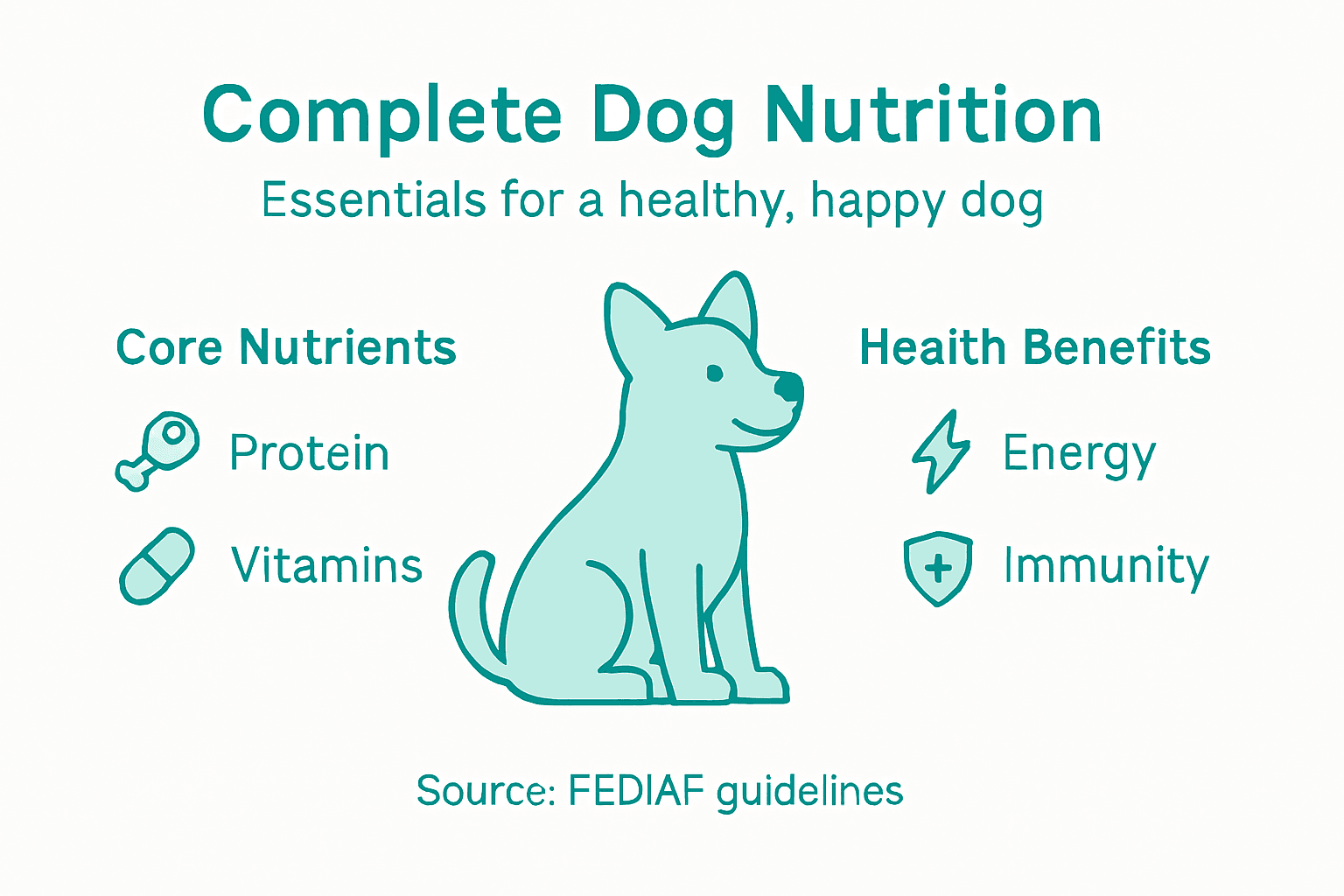
A complete diet must include six critical nutrient categories that work synergistically to maintain canine wellbeing:
- Proteins: Building blocks for muscle, tissue repair, and immune function
- Carbohydrates: Primary energy source and digestive system support
- Fats: Essential for hormone production and nutrient absorption
- Vitamins: Crucial for metabolic processes and cellular health
- Minerals: Support bone strength, nerve function, and enzyme reactions
- Water: Fundamental for all bodily functions and nutrient transportation
Pet food manufacturers must carefully balance these nutrients to ensure dogs receive appropriate quantities for their specific life stage. Puppies, adult dogs, and senior canines have distinctly different nutritional requirements, which means a truly complete nutrition plan adapts to changing physiological needs.
The goal of complete nutrition extends beyond mere survival – it’s about enabling dogs to thrive. By providing carefully formulated meals that meet comprehensive nutritional standards, owners can support their dog’s energy levels, immune system, coat health, and overall quality of life.
Pro tip: Consult with your veterinarian to understand your specific dog’s unique nutritional needs, as factors like breed, age, weight, and health conditions can significantly impact dietary requirements.
FEDIAF standards and legal requirements
The European Pet Food Industry Federation (FEDIAF) plays a critical role in establishing legal nutritional standards for dog nutrition across the United Kingdom and European Union. These comprehensive guidelines serve as the primary regulatory framework that ensures pet food manufacturers meet stringent nutritional requirements to protect animal health.
Under these standards, dog food manufacturers must demonstrate compliance with detailed nutritional profiles that specify precise nutrient levels for different life stages. The key requirements include:
- Minimum protein content appropriate to dog’s age and breed
- Balanced mineral composition supporting bone and muscle development
- Essential fatty acid percentages for optimal metabolic function
- Vitamin levels that meet comprehensive health benchmarks
- Caloric density calculations for different dog sizes and activity levels
- Mandatory nutritional declarations on packaging
The FEDIAF Nutritional Guidelines are not merely recommendations but legally enforceable standards that protect both animal welfare and consumer interests. These guidelines require manufacturers to conduct rigorous nutritional testing and provide transparent information about their product’s nutritional composition, ensuring dogs receive balanced and safe nutrition.
Moreover, these standards evolve continuously, reflecting the latest scientific research in canine nutrition. Regular updates incorporate emerging understanding of canine metabolic needs, ensuring that pet food regulations remain at the forefront of nutritional science and animal health protection.
Pro tip: Always check your dog food’s packaging for FEDIAF compliance statements, which indicate the product meets established nutritional standards for complete and balanced nutrition.
Types of complete dog food in the UK
The United Kingdom offers a diverse range of commercially available complete dog foods designed to meet the nutritional needs of dogs across different life stages and health conditions. These comprehensive nutrition options fall into several primary categories, each serving unique dietary purposes and preferences for dog owners.
Dog food types in the UK can be broadly categorised into three main formats:
- Dry Kibble: Convenient, shelf-stable, and typically most cost-effective
- Wet Food: Higher moisture content, often more palatable for fussy eaters
- Semi-Moist: A hybrid option with moderate moisture levels
Within these formats, UK veterinary guidance identifies specialised nutrition ranges tailored to specific life stages and health requirements:
- Puppy Formulas: Higher protein and calorie content to support growth
- Adult Maintenance: Balanced nutrition for everyday health
- Senior Dog Diets: Reduced calories, enhanced joint support
- Breed-Specific Formulations: Customised for particular breed characteristics
- Therapeutic Diets: Addressing specific health conditions
Nutritional composition varies significantly between these types, with some focusing on specific dietary needs such as weight management, digestive health, or allergies. The key is selecting a complete food that provides balanced nutrition appropriate for your individual dog’s requirements.
To help you distinguish the key dog food types, here’s a concise comparison:
| Format | Typical Benefits | Storage & Convenience | Suitability for Specific Needs |
|---|---|---|---|
| Dry Kibble | Easy handling, dental health aids | Long shelf life, minimal prep | Best for active dogs, weight management |
| Wet Food | Higher moisture, enhanced palatability | Requires refrigeration, quick use | Ideal for picky eaters, hydration support |
| Semi-Moist | Soft texture, moderate moisture | Moderate shelf life, quick serving | Useful for older dogs with chewing issues |
Pro tip: Consult with your veterinarian to determine the most suitable complete dog food type for your dog’s specific age, breed, and health profile.
Key nutrients and health benefits
Understanding the essential nutrient profile for dogs is crucial for maintaining optimal canine health and supporting their overall wellbeing. Each nutrient plays a vital role in supporting physiological functions, growth, and long-term vitality.
The key nutrients essential for comprehensive dog nutrition include:
- Proteins: Building blocks for muscle development and tissue repair
- Amino Acids: Critical for enzyme production and immune system function
- Essential Fatty Acids: Support skin, coat, and brain health
- Vitamins: Regulate metabolic processes and support cellular functions
- Minerals: Contribute to bone strength and nerve transmission
- Carbohydrates: Provide energy and support digestive health
These nutrients deliver multiple health benefits when balanced correctly. UK veterinary guidance highlights that proper nutrition can support:
- Enhanced immune system resilience
- Optimal weight management
- Improved digestive function
- Healthy skin and coat condition
- Strong muscular and skeletal development
Nutritional composition directly impacts a dog’s ability to fight disease, maintain energy levels, and support cognitive function. Each nutrient works synergistically, demonstrating that complete nutrition is far more than simply filling a food bowl – it’s about providing targeted, scientifically formulated support for every aspect of canine health.

Pro tip: Rotate protein sources in your dog’s diet to ensure a comprehensive amino acid profile and prevent potential nutritional monotony.
Common risks and misconceptions
Navigating the complex world of dog nutrition requires understanding the potential dietary pitfalls that can compromise canine health. Many dog owners inadvertently make nutritional choices that seem well-intentioned but may actually harm their pet’s long-term wellbeing.
Common misconceptions about dog nutrition include:
- Homemade Diets: Believing these are automatically healthier without professional guidance
- Human Food: Assuming table scraps are safe or nutritionally equivalent to dog food
- One-Size-Fits-All: Thinking the same diet works for every dog regardless of age or breed
- Treat Overload: Believing extra treats don’t significantly impact overall nutrition
- Grain-Free Myths: Misunderstanding the role of grains in balanced dog nutrition
Significant nutritional risks can arise from several key misconceptions:
- Nutritional Imbalance: Homemade diets often lack critical nutrients
- Caloric Excess: Overfeeding leads to obesity and related health issues
- Inappropriate Life Stage Nutrition: Feeding adult food to puppies or seniors
- Supplement Misuse: Adding unnecessary or unbalanced nutritional supplements
- Ignoring Individual Health Needs: Overlooking breed-specific or medical dietary requirements
More critically, dog owners often misunderstand the complexity of nutritional requirements. What seems like a loving gesture – such as sharing human food or creating homemade meals – can potentially introduce nutritional deficiencies or dangerous ingredients that compromise canine health.
Here’s a summary of common nutrition misconceptions and their potential impact:
| Misconception | Possible Health Risk | Recommended Corrective Action |
|---|---|---|
| Homemade diets are ideal | Nutrient deficiencies, improper balance | Consult expert or use vet-approved recipes |
| Human food is safe | Digestive upset, toxicity | Feed only formulated dog food |
| One diet fits all | Age or breed-specific issues | Choose diet based on individual needs |
| Excessive treats | Obesity, nutritional imbalance | Limit treats, account for calories |
| Grain-free is healthiest | Unnecessary exclusion, lack of nutrients | Assess dog’s real dietary sensitivities |
Pro tip: Always consult with a veterinary nutritionist before making significant changes to your dog’s diet, and carefully read nutritional labels to ensure comprehensive nutritional coverage.
Alternatives to complete diets and supplementation
Exploring nutritional alternatives to traditional dog food reveals a complex landscape of dietary options that require careful consideration and expert guidance. Dog owners increasingly seek diverse nutritional strategies that go beyond conventional complete diets.
Alternative diet approaches include:
- Homemade Diets: Customised meals prepared at home
- Raw Food Diets: Uncooked meat and natural ingredients
- Plant-Based Formulations: Vegetarian or vegan dog nutrition
- Veterinary Therapeutic Diets: Specialised nutrition for specific health conditions
- Partial Supplementation: Adding targeted nutrients to existing diets
Key considerations for alternative nutrition strategies involve addressing potential nutrient deficiencies:
- Protein Source Diversity
- Mineral and Vitamin Supplementation
- Caloric Density Calculations
- Breed and Age-Specific Requirements
- Individual Health Condition Adaptations
Complex dietary alternatives demand rigorous nutritional planning. Safe supplementation guidance emphasises the critical need for professional consultation to prevent potential nutritional imbalances that could compromise canine health.
Pro tip: Consult a veterinary nutritionist before implementing any significant dietary changes to ensure complete and balanced nutrition for your dog.
Support Your Dog’s Health with Truly Complete Nutrition
Ensuring your dog receives complete nutrition tailored to their life stage and health needs is essential to their wellbeing. This article highlights the importance of balanced nutrients and the risks of nutritional imbalances. If you want to address your dog’s specific dietary requirements with natural, grain-free options that promote optimal health, explore our range of Dog Treats - Healthy & Natural with Functional Benefits – Ultimate Pet Foods. Each product is thoughtfully crafted to support digestion, coat quality, and overall vitality.

Take the next step to optimise your dog’s diet today. Visit Ultimate Pet Foods to discover premium complete diets and download helpful guides from our Digital Downloads for Pet Owners - Ultimate Pet Foods. Offering expert-backed nutrition solutions ensures your dog thrives at every stage of life. Act now to give your dog the nutrition they truly deserve.
Frequently Asked Questions
What constitutes complete nutrition for dogs?
Complete nutrition for dogs includes a balanced blend of proteins, carbohydrates, fats, vitamins, minerals, and water. These nutrients must be tailored to meet the specific needs based on the dog’s life stage, ensuring optimal health and wellbeing.
How do FEDIAF standards affect dog food quality?
FEDIAF standards set legal nutritional requirements that pet food manufacturers must follow. These guidelines specify the necessary nutrient levels for dogs across various life stages, ensuring that the food is safe, balanced, and supports the health of pets.
What types of complete dog food are available?
Complete dog food options include dry kibble, wet food, and semi-moist food. Each format has unique benefits, such as convenience, palatability, and moisture content, catering to different dietary needs and preferences.
How can I identify the best complete nutrition for my dog?
To identify the best nutrition for your dog, consult with your veterinarian to assess your dog’s specific needs based on age, breed, weight, and health conditions. Always check the packaging for compliance with FEDIAF standards to ensure balanced nutrition.