
BARF Diet for Dogs: Health Impact in the UK
Confusion often sets in when you try to sort fact from opinion about raw feeding for your dog. With so many voices championing different diets, it is easy to wonder if the BARF diet truly delivers the benefits claimed or masks hidden risks. For British dog owners seeking grain-free, natural solutions to support sensitive stomachs and health issues, understanding the real differences between raw feeding myths and evidence-based canine nutrition can help you make smart, confident choices for your companion.
Table of Contents
- BARF Diet Definition And Misconceptions
- Core Ingredients And Feeding Principles
- Potential Health Benefits For Dogs
- Safety, Hygiene, And UK Guidelines
- Comparing BARF With Other Dog Diets
Key Takeaways
| Point | Details |
|---|---|
| BARF Diet Overview | The BARF diet aims to replicate ancestral canine eating patterns using raw ingredients, but careful planning is crucial to ensure nutritional balance. |
| Health Risks | Raw feeding poses potential risks, including nutritional deficiencies and pathogens; consulting a veterinary nutritionist is essential. |
| Comparison with Commercial Diets | BARF diets have a higher protein content but require more preparation than commercial diets, which offer convenience and standardised nutrition. |
| Safety Considerations | Strict hygiene practices are necessary when handling raw food to avoid zoonotic infections and ensure pet safety. |
BARF diet definition and misconceptions
The BARF diet, an acronym standing for “Bones And Raw Food” or “Biologically Appropriate Raw Food,” represents a controversial approach to canine nutrition that aims to mimic dogs’ ancestral eating patterns. Raw food feeding strategies emphasise providing uncooked ingredients that supposedly reflect a dog’s natural dietary evolution.
Unlike traditional commercial dog foods, the BARF diet typically comprises:
- Raw meat cuts
- Unprocessed bones
- Raw organ meats
- Fresh vegetables
- Small quantities of fruits
- Supplemental oils and herbs
However, this dietary approach is not without significant challenges. Raw meat-based diets pose considerable health risks that pet owners must carefully consider. Potential complications include nutritional imbalances, pathogen transmission, and increased infection risks for both animals and humans.
Common misconceptions about the BARF diet often revolve around its perceived naturalness and health benefits. While proponents argue that raw feeding mimics wild canine diets, veterinary nutritionists caution that modern dogs have different nutritional requirements compared to their ancestors. Homemade raw diets, in particular, frequently lack essential nutrients and can lead to significant health problems if not meticulously planned.
Here is a summary of key risks and misconceptions surrounding the BARF diet:
| Aspect | Common Misconception | Evidence-Based Concern |
|---|---|---|
| Nutritional balance | Natural diets are always ideal | Nutrient deficiencies are common |
| Pathogen safety | Raw is safer for dogs | Infection risks to dogs and humans |
| Diet planning needed | Any raw mix is sufficient | Veterinary guidance is essential |
| Suitability for dogs | All breeds benefit equally | Needs vary by age and health status |
Pro tip: Always consult a professional veterinary nutritionist before transitioning your dog to a raw feeding regime to ensure balanced nutrition and minimise potential health risks.
Core ingredients and feeding principles
The BARF diet emphasises a carefully constructed nutritional approach that aims to replicate dogs’ ancestral dietary patterns. Raw feeding strategies typically involve a complex mix of ingredients designed to provide comprehensive nutritional support.
Traditional BARF diet composition usually includes:
- Approximately 60% raw meaty bones
- 40% mix of vegetables, eggs, and grains
- Fresh raw meat varieties including:
- Chicken
- Pork
- Lamb
- Venison
- Supplemental nutrients like:
- Brewer’s yeast
- Kelp
- Dried parsley
Feeding principles for the BARF diet are intricate and demand meticulous planning. Natural canine nutrition strategies stress the importance of proportional nutrient distribution, taking into account individual factors such as the dog’s age, breed, weight, and activity level.

The ultimate goal of this dietary approach is to provide a nutritionally balanced meal that mimics the diverse diet of wild canines, focusing on whole, unprocessed ingredients. However, pet owners must exercise caution and consult veterinary nutritionists to ensure the diet meets their dog’s specific nutritional requirements and prevents potential health risks.
Pro tip: Gradually introduce raw food components and carefully monitor your dog’s digestive response to ensure a smooth dietary transition.
Potential health benefits for dogs
The BARF diet has attracted significant attention for its potential health advantages, with proponents arguing that it more closely mimics dogs’ evolutionary nutritional patterns. Comparative microbiome research suggests that raw feeding can produce notable biological changes in canine digestive systems.
Potential health benefits frequently cited by BARF diet supporters include:
- Improved coat quality
- Enhanced muscle condition
- Better immune system function
- More natural digestive processes
- Potential reduction in chronic health problems
- Increased protein and fat intake
- Lower carbohydrate consumption
Interestingly, scientific investigations have revealed complex metabolic impacts. Natural canine nutrition studies indicate that raw diets can alter metabolite profiles, potentially influencing overall canine health. However, these benefits are not without nuance, as the research also highlights potential risks such as the presence of pathogenic bacteria.
While the BARF diet presents intriguing potential, veterinary professionals emphasise the critical importance of balanced nutrition and careful implementation. Pet owners should approach this dietary strategy with informed caution, consulting nutritional experts to ensure their dog’s specific health requirements are comprehensively met.
Pro tip: Consult a veterinary nutritionist to develop a personalised raw feeding plan that addresses your individual dog’s unique nutritional needs and health profile.
Safety, hygiene, and UK guidelines
The BARF diet introduces significant safety considerations that pet owners must carefully navigate. European raw meat guidelines emphasise critical protocols to minimise health risks associated with raw feeding.
Key safety and hygiene practices include:
- Freezing meat to deactivate potential parasites
- Using separate food preparation surfaces
- Implementing thorough hand washing techniques
- Avoiding cross-contamination between raw ingredients
- Maintaining strict kitchen hygiene standards
- Regularly sanitising food preparation areas
- Using dedicated utensils for raw food preparation
Veterinary professionals highlight several critical concerns with raw feeding. Veterinary safety recommendations underscore the importance of understanding potential zoonotic infection risks, particularly in households with vulnerable individuals such as young children, elderly, or immunocompromised family members.
The UK regulatory landscape surrounding raw pet diets remains complex, with ongoing discussions about standardisation and safety protocols. While no absolute prohibition exists, veterinary bodies strongly recommend professional consultation and meticulous preparation to mitigate potential health risks associated with raw feeding practices.
Pro tip: Consult your veterinarian and conduct comprehensive research before implementing a BARF diet to ensure you can maintain the highest standards of food safety and animal nutrition.
Comparing BARF with other dog diets
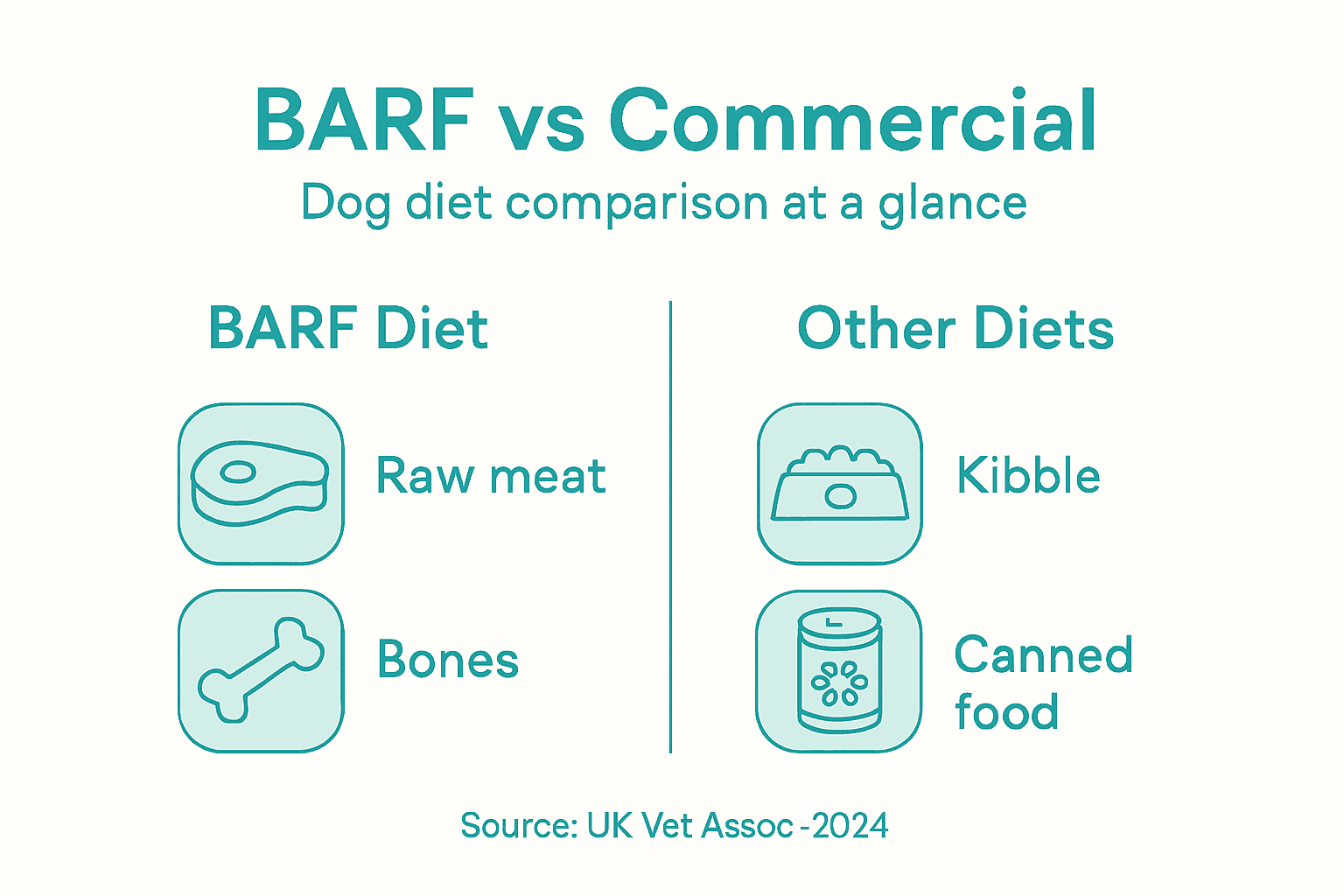
The landscape of canine nutrition presents multiple dietary approaches, each with distinct characteristics and potential benefits. Comparative nutritional research reveals significant differences between BARF and conventional commercial diets in nutrient composition and digestive health impacts.
Key comparative aspects include:
- Nutrient Profile Differences:
- BARF: Higher protein and fat content
- Commercial Diets: Higher carbohydrate and fiber levels
- Microbiome Impact:
- BARF: Distinct bacterial composition
- Commercial Diets: More standardised gut bacteria
- Preparation Methods:
- BARF: Raw, unprocessed ingredients
- Commercial Diets: Cooked, formulated nutrition
- Convenience Factors:
- BARF: Requires careful preparation
- Commercial Diets: Ready-to-serve
Species-appropriate nutrition strategies emphasise that each dietary approach has unique advantages and potential drawbacks. Commercial diets offer consistent nutritional standards and convenience, while BARF aims to mimic ancestral feeding patterns with potentially more natural ingredients.
Below is a side-by-side comparison of BARF and commercial diets in terms of practical implications:
| Feature | BARF Diet | Commercial Diets |
|---|---|---|
| Preparation effort | High, requires careful handling | Minimal, ready-to-serve |
| Customisation level | Easily tailored to the dog | Limited, mostly fixed blends |
| Storage needs | Requires freezer and raw storage | Dry kibble or canned goods |
| Regulatory control | Less standardised oversight | Strictly regulated in UK |
Veterinary professionals consistently recommend individualised nutritional planning, acknowledging that no single diet suits all dogs. Factors such as age, breed, health conditions, and individual metabolic needs play crucial roles in determining the most appropriate dietary approach.
Pro tip: Consult a veterinary nutritionist to develop a personalised diet plan that considers your dog’s unique nutritional requirements and health profile.
Discover Balanced Nutrition Beyond the BARF Diet
Navigating the complexities and safety concerns of the BARF diet can feel overwhelming for any dog owner passionate about natural feeding. While raw food may seem a natural choice, ensuring your dog receives a nutritionally balanced and safe diet is essential for their long-term health and wellbeing. Key challenges such as avoiding nutritional imbalances and managing hygiene risks highlight the importance of professional guidance and carefully crafted meal plans.
For those seeking a practical and science-backed alternative, explore our range of premium, grain-free options designed to support digestion, coat health, and overall vitality. Our Dry Dog Food | Grain-Free & Science-Backed Kibble offers carefully selected natural ingredients, providing tailored nutrition for different breeds and life stages. Whether you want to maintain optimal health or address specific needs, our range combines quality with convenience without compromising on natural goodness.
Take control of your dog’s diet today by visiting Ultimate Pet Foods and discover how our expertly formulated collections can complement your commitment to your dog’s health. Start your journey with confidence and provide the nutrition your dog truly deserves by browsing our complete collections designed to meet diverse nutritional requirements.
Frequently Asked Questions
What is the BARF diet for dogs?
The BARF diet, short for “Bones And Raw Food” or “Biologically Appropriate Raw Food,” is a feeding strategy that aims to replicate the natural dietary patterns of dogs by providing uncooked ingredients, including raw meats, bones, and vegetables.
What are the potential health benefits of the BARF diet?
Proponents of the BARF diet claim potential health benefits such as improved coat quality, enhanced muscle condition, better immune function, and more natural digestive processes. However, these benefits are nuanced and should be approached with caution.
What are the risks associated with the BARF diet?
The BARF diet can pose several risks, including nutritional imbalances, pathogen transmission, and increased infection risks for both dogs and humans. It’s crucial for pet owners to consult veterinary nutritionists to ensure the diet meets their dog’s needs safely.
How can pet owners ensure safe preparation of BARF diet meals?
To ensure safe preparation of BARF meals, pet owners should follow guidelines such as freezing meat to eliminate parasites, using separate surfaces and utensils for raw food, and maintaining strict kitchen hygiene to prevent cross-contamination.
Recommended
- Can Dogs Be Vegan? Health and Legal Impacts UK
- UK Dog Food Industry 2025 – Statistics & Trends – Ultimate Pet Foods
- UK Dog Food Industry 2025 – Statistics & Trends
- Should Dogs Eat Raw Bones? Dental, Health & Safety Facts
- Top 6 Lifelypets.com Alternatives in 2026 for Stylish Pet Owners – Dev Rove Studio